

2 Comprehensive Electrochemistry of Tc …
23
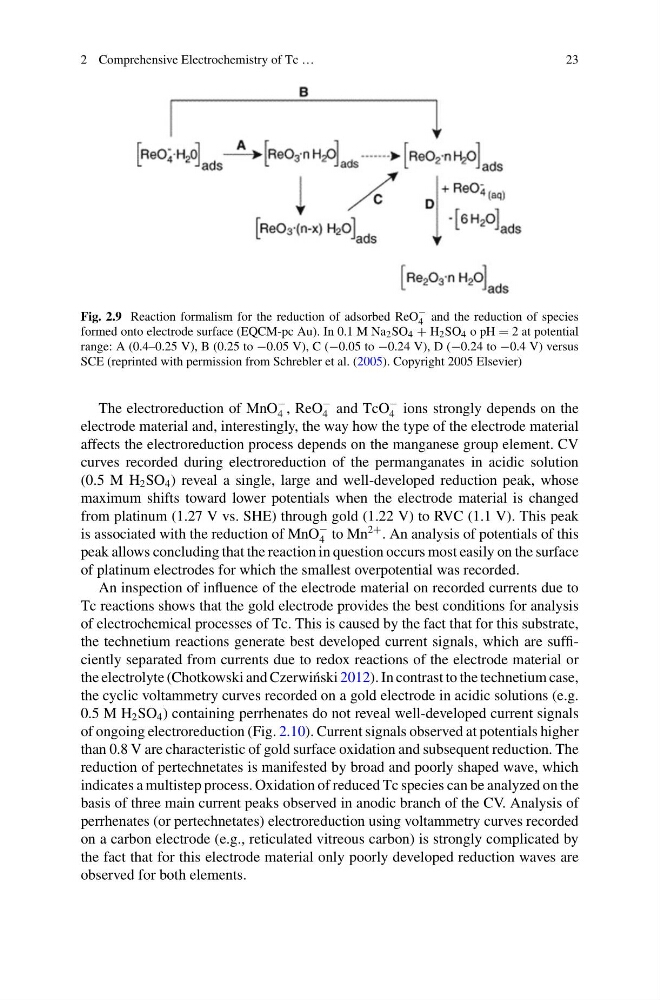
Fig. 2.9 Reaction formalism for the reduction of adsorbed ReO
−
4 and the reduction of species
formed onto electrode surface (EQCM-pc Au). In 0.1 M Na 2 SO 4 + H 2 SO 4 o pH = 2 at potential
range: A (0.4–0.25 V), B (0.25 to −0.05 V), C (−0.05 to −0.24 V), D (−0.24 to −0.4 V) versus
SCE (reprinted with permission from Schrebler et al. (2005). Copyright 2005 Elsevier)
The electroreduction of MnO
−
4 , ReO
−
4 and TcO
−
4 ions strongly depends on the
electrode material and, interestingly, the way how the type of the electrode material
affects the electroreduction process depends on the manganese group element. CV
curves recorded during electroreduction of the permanganates in acidic solution
(0.5 M H 2 SO 4 ) reveal a single, large and well-developed reduction peak, whose
maximum shifts toward lower potentials when the electrode material is changed
from platinum (1.27 V vs. SHE) through gold (1.22 V) to RVC (1.1 V). This peak
is associated with the reduction of MnO
−
4 to Mn
2+ . An analysis of potentials of this
peak allows concluding that the reaction in question occurs most easily on the surface
of platinum electrodes for which the smallest overpotential was recorded.
An inspection of influence of the electrode material on recorded currents due to
Tc reactions shows that the gold electrode provides the best conditions for analysis
of electrochemical processes of Tc. This is caused by the fact that for this substrate,
the technetium reactions generate best developed current signals, which are sufficiently separated from currents due to redox reactions of the electrode material or
the electrolyte (Chotkowski and Czerwi´ nski 2012). In contrast to the technetium case,
the cyclic voltammetry curves recorded on a gold electrode in acidic solutions (e.g.
0.5 M H 2 SO 4 ) containing perrhenates do not reveal well-developed current signals
of ongoing electroreduction (Fig. 2.10). Current signals observed at potentials higher
than 0.8 V are characteristic of gold surface oxidation and subsequent reduction. The
reduction of pertechnetates is manifested by broad and poorly shaped wave, which
indicates a multistep process. Oxidation of reduced Tc species can be analyzed on the
basis of three main current peaks observed in anodic branch of the CV. Analysis of
perrhenates (or pertechnetates) electroreduction using voltammetry curves recorded
on a carbon electrode (e.g., reticulated vitreous carbon) is strongly complicated by
the fact that for this electrode material only poorly developed reduction waves are
observed for both elements.
23
Fig. 2.9 Reaction formalism for the reduction of adsorbed ReO
−
4 and the reduction of species
formed onto electrode surface (EQCM-pc Au). In 0.1 M Na 2 SO 4 + H 2 SO 4 o pH = 2 at potential
range: A (0.4–0.25 V), B (0.25 to −0.05 V), C (−0.05 to −0.24 V), D (−0.24 to −0.4 V) versus
SCE (reprinted with permission from Schrebler et al. (2005). Copyright 2005 Elsevier)
The electroreduction of MnO
−
4 , ReO
−
4 and TcO
−
4 ions strongly depends on the
electrode material and, interestingly, the way how the type of the electrode material
affects the electroreduction process depends on the manganese group element. CV
curves recorded during electroreduction of the permanganates in acidic solution
(0.5 M H 2 SO 4 ) reveal a single, large and well-developed reduction peak, whose
maximum shifts toward lower potentials when the electrode material is changed
from platinum (1.27 V vs. SHE) through gold (1.22 V) to RVC (1.1 V). This peak
is associated with the reduction of MnO
−
4 to Mn
2+ . An analysis of potentials of this
peak allows concluding that the reaction in question occurs most easily on the surface
of platinum electrodes for which the smallest overpotential was recorded.
An inspection of influence of the electrode material on recorded currents due to
Tc reactions shows that the gold electrode provides the best conditions for analysis
of electrochemical processes of Tc. This is caused by the fact that for this substrate,
the technetium reactions generate best developed current signals, which are sufficiently separated from currents due to redox reactions of the electrode material or
the electrolyte (Chotkowski and Czerwi´ nski 2012). In contrast to the technetium case,
the cyclic voltammetry curves recorded on a gold electrode in acidic solutions (e.g.
0.5 M H 2 SO 4 ) containing perrhenates do not reveal well-developed current signals
of ongoing electroreduction (Fig. 2.10). Current signals observed at potentials higher
than 0.8 V are characteristic of gold surface oxidation and subsequent reduction. The
reduction of pertechnetates is manifested by broad and poorly shaped wave, which
indicates a multistep process. Oxidation of reduced Tc species can be analyzed on the
basis of three main current peaks observed in anodic branch of the CV. Analysis of
perrhenates (or pertechnetates) electroreduction using voltammetry curves recorded
on a carbon electrode (e.g., reticulated vitreous carbon) is strongly complicated by
the fact that for this electrode material only poorly developed reduction waves are
observed for both elements.