

11
(ibid., 403). The bands are from the titanium oxide molecule and characterize the
M-type stars.
“The fourth type is even more extraordinary,” he writes (ibid., 403). These rare
stars, favorites of Secchi from their very red appearance, are not necessarily colder
than those of the third type, but only rather richer in carbon and so are called carbon stars.
Finally, he also added a fifth class of celestial bodies characterized by pronounced
emission lines in their spectra. “There is a most singular grouping, formed by a fifth
class of very rare stars, which show us the direct spectrum of hydrogen.” (ibid., 409).
The work begun by Secchi was expanded upon and carried forward by many
astronomers (Corbally and Gray 2019). In 1872, Henry Draper (1837–1882) managed to make the first photographs of a stellar spectrum; recall that all the classifications by Secchi were based on simple visual observations of the spectra and their
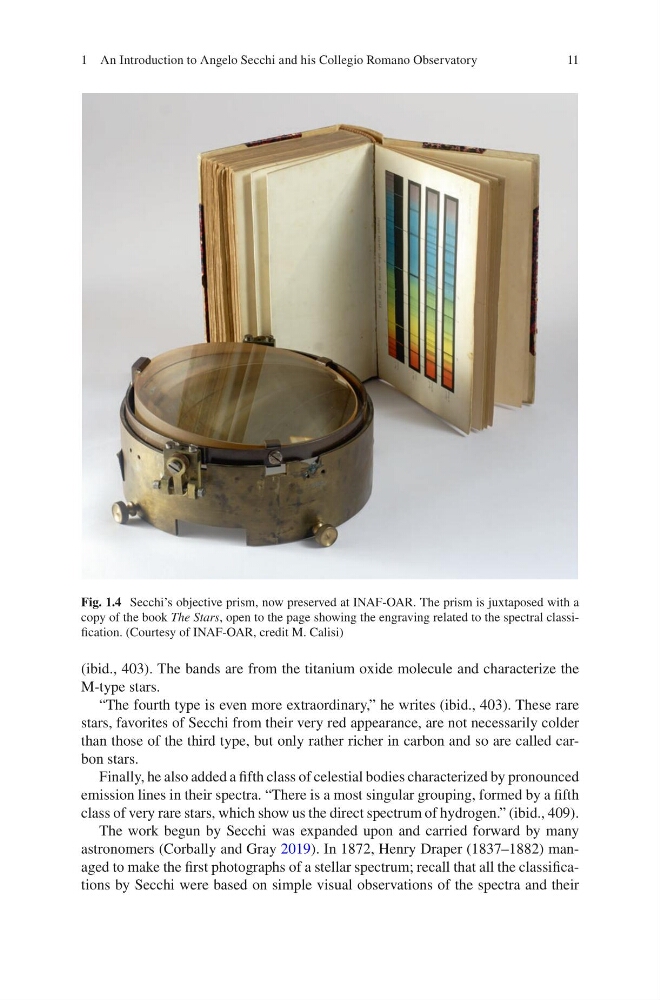
Fig. 1.4 Secchi’s objective prism, now preserved at INAF-OAR. The prism is juxtaposed with a
copy of the book The Stars, open to the page showing the engraving related to the spectral classification. (Courtesy of INAF-OAR, credit M. Calisi)
1 An Introduction to Angelo Secchi and his Collegio Romano Observatory
(ibid., 403). The bands are from the titanium oxide molecule and characterize the
M-type stars.
“The fourth type is even more extraordinary,” he writes (ibid., 403). These rare
stars, favorites of Secchi from their very red appearance, are not necessarily colder
than those of the third type, but only rather richer in carbon and so are called carbon stars.
Finally, he also added a fifth class of celestial bodies characterized by pronounced
emission lines in their spectra. “There is a most singular grouping, formed by a fifth
class of very rare stars, which show us the direct spectrum of hydrogen.” (ibid., 409).
The work begun by Secchi was expanded upon and carried forward by many
astronomers (Corbally and Gray 2019). In 1872, Henry Draper (1837–1882) managed to make the first photographs of a stellar spectrum; recall that all the classifications by Secchi were based on simple visual observations of the spectra and their
Fig. 1.4 Secchi’s objective prism, now preserved at INAF-OAR. The prism is juxtaposed with a
copy of the book The Stars, open to the page showing the engraving related to the spectral classification. (Courtesy of INAF-OAR, credit M. Calisi)
1 An Introduction to Angelo Secchi and his Collegio Romano Observatory