

337
hence OAR lost the opportunity to use Campo Imperatore for both science and educational purposes.
In 2018 INAF appointed Lucio Angelo Antonelli (astronomer at OAR since
1998) as the new director. He returned to OAR after a previous experience at
ASI (Italian Space Agency), where he was first director of the new Space Science
Data Center in 2017. In 2018, thanks to a specific law dedicated to solving the longlasting problem of the lack of recruitment in public research, more than 20 new
researchers joined OAR. The celebration of the 80th anniversary of Astronomical
Observatory of Rome, organized by the new director at Monte Porzio on November
2018, counted 60 researchers on the staff team.
Younger scientists are of fundamental importance for engaging new and challenging projects and research in the coming years. Nevertheless, we cannot not
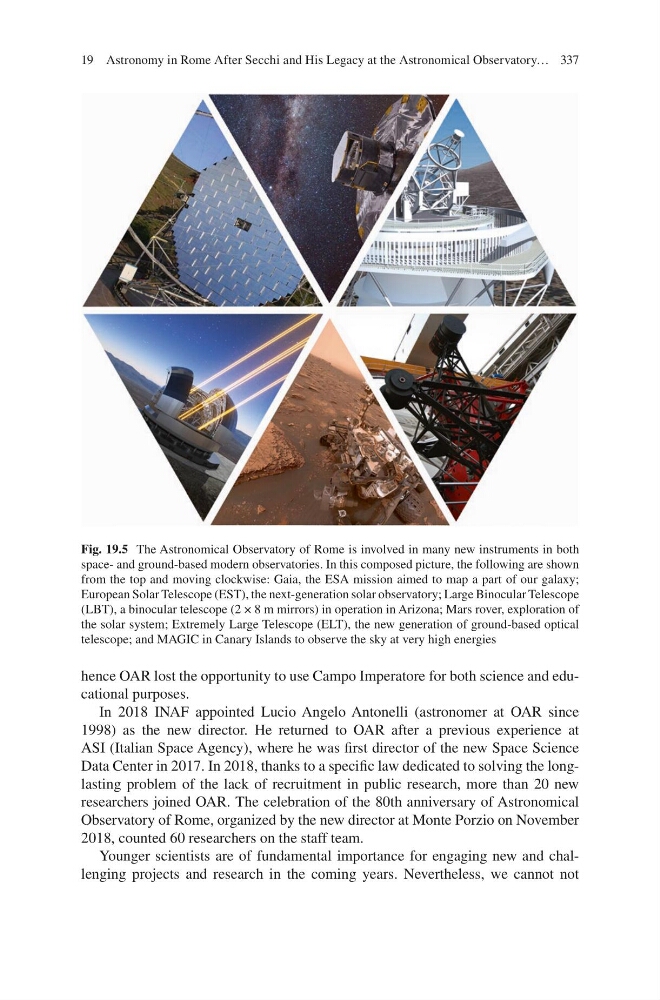
Fig. 19.5 The Astronomical Observatory of Rome is involved in many new instruments in both
space- and ground-based modern observatories. In this composed picture, the following are shown
from the top and moving clockwise: Gaia, the ESA mission aimed to map a part of our galaxy;
European Solar Telescope (EST), the next-generation solar observatory; Large Binocular Telescope
(LBT), a binocular telescope (2 × 8 m mirrors) in operation in Arizona; Mars rover, exploration of
the solar system; Extremely Large Telescope (ELT), the new generation of ground-based optical
telescope; and MAGIC in Canary Islands to observe the sky at very high energies
19 Astronomy in Rome After Secchi and His Legacy at the Astronomical Observatory…
hence OAR lost the opportunity to use Campo Imperatore for both science and educational purposes.
In 2018 INAF appointed Lucio Angelo Antonelli (astronomer at OAR since
1998) as the new director. He returned to OAR after a previous experience at
ASI (Italian Space Agency), where he was first director of the new Space Science
Data Center in 2017. In 2018, thanks to a specific law dedicated to solving the longlasting problem of the lack of recruitment in public research, more than 20 new
researchers joined OAR. The celebration of the 80th anniversary of Astronomical
Observatory of Rome, organized by the new director at Monte Porzio on November
2018, counted 60 researchers on the staff team.
Younger scientists are of fundamental importance for engaging new and challenging projects and research in the coming years. Nevertheless, we cannot not
Fig. 19.5 The Astronomical Observatory of Rome is involved in many new instruments in both
space- and ground-based modern observatories. In this composed picture, the following are shown
from the top and moving clockwise: Gaia, the ESA mission aimed to map a part of our galaxy;
European Solar Telescope (EST), the next-generation solar observatory; Large Binocular Telescope
(LBT), a binocular telescope (2 × 8 m mirrors) in operation in Arizona; Mars rover, exploration of
the solar system; Extremely Large Telescope (ELT), the new generation of ground-based optical
telescope; and MAGIC in Canary Islands to observe the sky at very high energies
19 Astronomy in Rome After Secchi and His Legacy at the Astronomical Observatory…