

318
merged into the current National Institute of Astrophysics, INAF (for a more
extended account of the developments from the 1960s up to recent times, see
Setti 2005).
In the 1960s, a couple of choices hampered the participation of Italian astronomers in projects of the international community, and might have retarded the full
development of astrophysics. The first was the proposal of a large reflector for a
National Astronomical Observatory to be installed in Italy, which was never completed (Fig. 18.6; see also Chap. 17). Because of this project, Italy did not join the
European Southern Observatory at its foundation in 1962, but only later, in 1983. A
second snag might have been the refusal to merge the Memorie into the new
European journal Astronomy & Astrophysics (A&A), which started its publication in
1969. Nevertheless, thanks in part to A&A, Italian astronomers grew confident in
their research, and the 1970s saw a rapid increase of their international publications
both there and also in the American Astrophysical Journal (ApJ). As astrophysicist
Vittorio Castellani (1937–2006) recalled, “in the mid-1960s, American astronomy,
as attested by ApJ, looked to us far and unreachable [but later] almost to our surprise, this feeling slowly transformed into the consciousness that even we, Italians,
had something new to say and, not unfrequently, something important” (Castellani
2005: 402, a.t.).
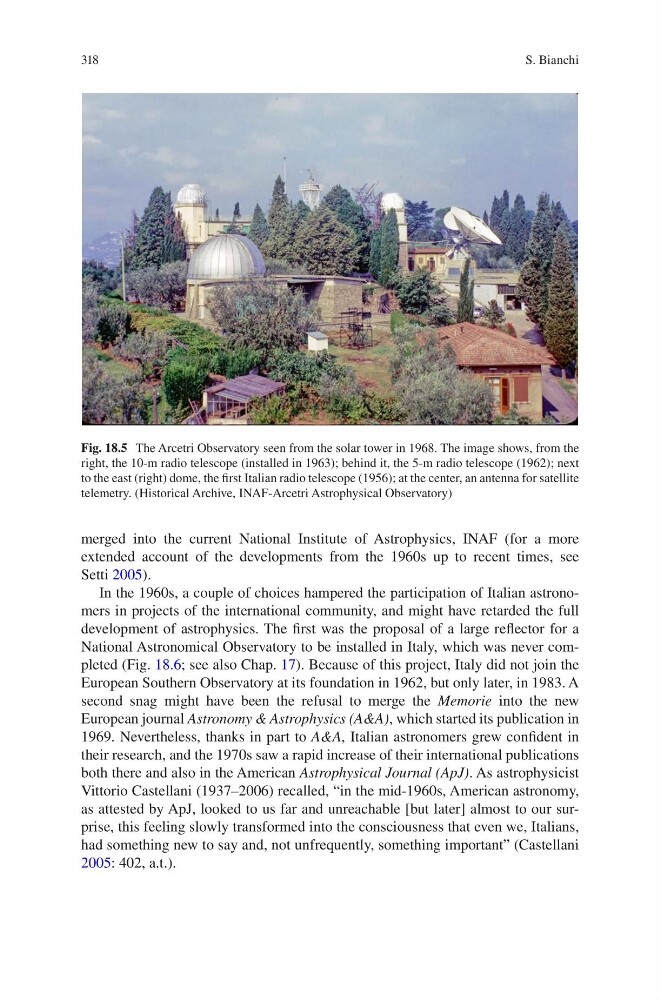
Fig. 18.5 The Arcetri Observatory seen from the solar tower in 1968. The image shows, from the
right, the 10-m radio telescope (installed in 1963); behind it, the 5-m radio telescope (1962); next
to the east (right) dome, the first Italian radio telescope (1956); at the center, an antenna for satellite
telemetry. (Historical Archive, INAF-Arcetri Astrophysical Observatory)
S. Bianchi
merged into the current National Institute of Astrophysics, INAF (for a more
extended account of the developments from the 1960s up to recent times, see
Setti 2005).
In the 1960s, a couple of choices hampered the participation of Italian astronomers in projects of the international community, and might have retarded the full
development of astrophysics. The first was the proposal of a large reflector for a
National Astronomical Observatory to be installed in Italy, which was never completed (Fig. 18.6; see also Chap. 17). Because of this project, Italy did not join the
European Southern Observatory at its foundation in 1962, but only later, in 1983. A
second snag might have been the refusal to merge the Memorie into the new
European journal Astronomy & Astrophysics (A&A), which started its publication in
1969. Nevertheless, thanks in part to A&A, Italian astronomers grew confident in
their research, and the 1970s saw a rapid increase of their international publications
both there and also in the American Astrophysical Journal (ApJ). As astrophysicist
Vittorio Castellani (1937–2006) recalled, “in the mid-1960s, American astronomy,
as attested by ApJ, looked to us far and unreachable [but later] almost to our surprise, this feeling slowly transformed into the consciousness that even we, Italians,
had something new to say and, not unfrequently, something important” (Castellani
2005: 402, a.t.).
Fig. 18.5 The Arcetri Observatory seen from the solar tower in 1968. The image shows, from the
right, the 10-m radio telescope (installed in 1963); behind it, the 5-m radio telescope (1962); next
to the east (right) dome, the first Italian radio telescope (1956); at the center, an antenna for satellite
telemetry. (Historical Archive, INAF-Arcetri Astrophysical Observatory)
S. Bianchi