

231
change, while the Eternal Motor is all that remains motionless in this whirlwind of
variability.”
5
In the third lesson, Secchi describes water circulation in the atmosphere as a
continuous process of transformation: like a thermal machine powered by solar
energy, air works both mechanical and chemical changes on geology.
The fourth chapter is dedicated to ocean water circulation and its influence on
global climate. It is worth noting how Secchi stressed the practical service that scientific knowledge can accomplish: how weather forecasts, based on probability
analysis, can be disseminated worldwide by means of the modern “electric
telegraph.”
The fifth lesson concerns water circulation inside the Earth. Recalling the principle of uniformitarianism, he concludes, “The forces of nature that are in operation
are the same that acted in ages past ...” (Le forze della natura che sono in opera sono
le stesse che agirono nelle epoche scorse …).
5 ”Questo ci dà un’imponente idea delle azioni della natura: lente, ma costanti, ma continue (...)
che, come la precessione degli equinozi muta coi secoli la faccia dei cieli, così muta la faccia della
terra, solo immobile in questo turbine di variabilità restando l’Eterno Motore”.
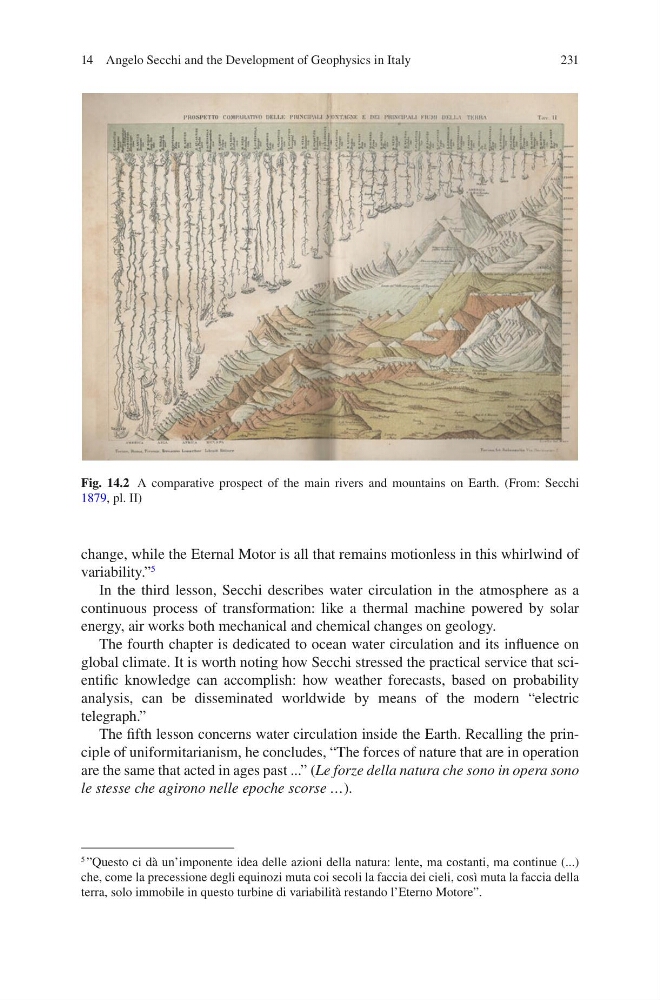
Fig. 14.2 A comparative prospect of the main rivers and mountains on Earth. (From: Secchi
1879, pl. II)
14 Angelo Secchi and the Development of Geophysics in Italy
change, while the Eternal Motor is all that remains motionless in this whirlwind of
variability.”
5
In the third lesson, Secchi describes water circulation in the atmosphere as a
continuous process of transformation: like a thermal machine powered by solar
energy, air works both mechanical and chemical changes on geology.
The fourth chapter is dedicated to ocean water circulation and its influence on
global climate. It is worth noting how Secchi stressed the practical service that scientific knowledge can accomplish: how weather forecasts, based on probability
analysis, can be disseminated worldwide by means of the modern “electric
telegraph.”
The fifth lesson concerns water circulation inside the Earth. Recalling the principle of uniformitarianism, he concludes, “The forces of nature that are in operation
are the same that acted in ages past ...” (Le forze della natura che sono in opera sono
le stesse che agirono nelle epoche scorse …).
5 ”Questo ci dà un’imponente idea delle azioni della natura: lente, ma costanti, ma continue (...)
che, come la precessione degli equinozi muta coi secoli la faccia dei cieli, così muta la faccia della
terra, solo immobile in questo turbine di variabilità restando l’Eterno Motore”.
Fig. 14.2 A comparative prospect of the main rivers and mountains on Earth. (From: Secchi
1879, pl. II)
14 Angelo Secchi and the Development of Geophysics in Italy