

108
in the intervening century and a half. Nonetheless, the unaffected ones (of which
Fig. 6.2 gives some examples) remain as illustrations of fine early examples of the
great European tradition in planetary drawing.
The observing times quoted by Secchi for his observations (in the days before the
adoption of Greenwich Mean Time) are usefully explained by Camille
Flammarion (1842–1925) (Flammarion 1892c).
At the time of these observations only one chart of Mars existed, that of Beer and
Mädler at the perihelic approach of 1830. Continuing developments in glass technology (and hence the diameter of achromatic object glasses) meant that the 1850s
would see a marked improvement in the amount of detail recorded. The work by
Secchi and Cappelletti in 1858 marks something of a turning point and would be
followed by a great deal of valuable work in the 1860s, leading to excellent results
by Frederik Kaiser (1808–1872), J. Norman Lockyer (1836–1920), John Phillips
and William Rutter Dawes (1799–1868), as well as the production of new maps and
a first attempt at Martian nomenclature (by Richard A. Proctor [1837–1888] in 1867).
The prevailing opinion, based upon comparison with the topography of the Earth,
was that the dark areas were seas and the light orange regions were continents.
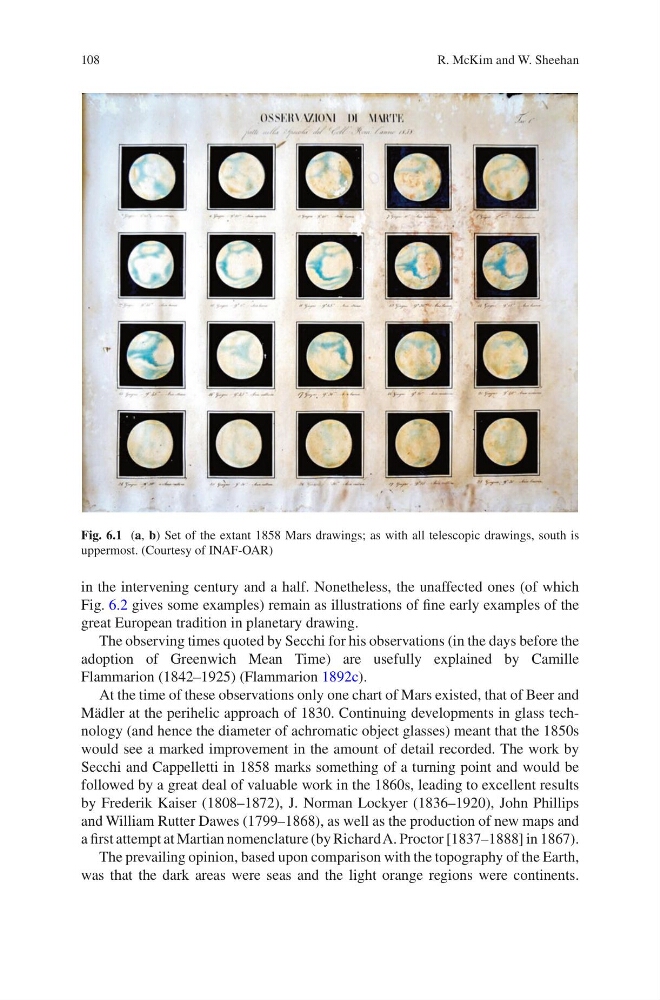
Fig. 6.1 (a, b) Set of the extant 1858 Mars drawings; as with all telescopic drawings, south is
uppermost. (Courtesy of INAF-OAR)
R. McKim and W. Sheehan
in the intervening century and a half. Nonetheless, the unaffected ones (of which
Fig. 6.2 gives some examples) remain as illustrations of fine early examples of the
great European tradition in planetary drawing.
The observing times quoted by Secchi for his observations (in the days before the
adoption of Greenwich Mean Time) are usefully explained by Camille
Flammarion (1842–1925) (Flammarion 1892c).
At the time of these observations only one chart of Mars existed, that of Beer and
Mädler at the perihelic approach of 1830. Continuing developments in glass technology (and hence the diameter of achromatic object glasses) meant that the 1850s
would see a marked improvement in the amount of detail recorded. The work by
Secchi and Cappelletti in 1858 marks something of a turning point and would be
followed by a great deal of valuable work in the 1860s, leading to excellent results
by Frederik Kaiser (1808–1872), J. Norman Lockyer (1836–1920), John Phillips
and William Rutter Dawes (1799–1868), as well as the production of new maps and
a first attempt at Martian nomenclature (by Richard A. Proctor [1837–1888] in 1867).
The prevailing opinion, based upon comparison with the topography of the Earth,
was that the dark areas were seas and the light orange regions were continents.
Fig. 6.1 (a, b) Set of the extant 1858 Mars drawings; as with all telescopic drawings, south is
uppermost. (Courtesy of INAF-OAR)
R. McKim and W. Sheehan