

Experimental Investigation of the Evolution of Permeability and Porosity
179
down. Under the condition of volume stress σ v = 39 MPa and pore pressure
p m = 9 MPa, the permeability of the specimen increased from 104.07 × 10 −8 µm 2
to 180.62 × 10 −8 µm 2 when the pyrolysis temperature increased from 400 °C to
600 °C, the increase rate is only 73.56%. Under three different stress conditions,
the permeability increased by only 1.69 to 2.49 times.
The permeability of oil shale with the volumetric stress.
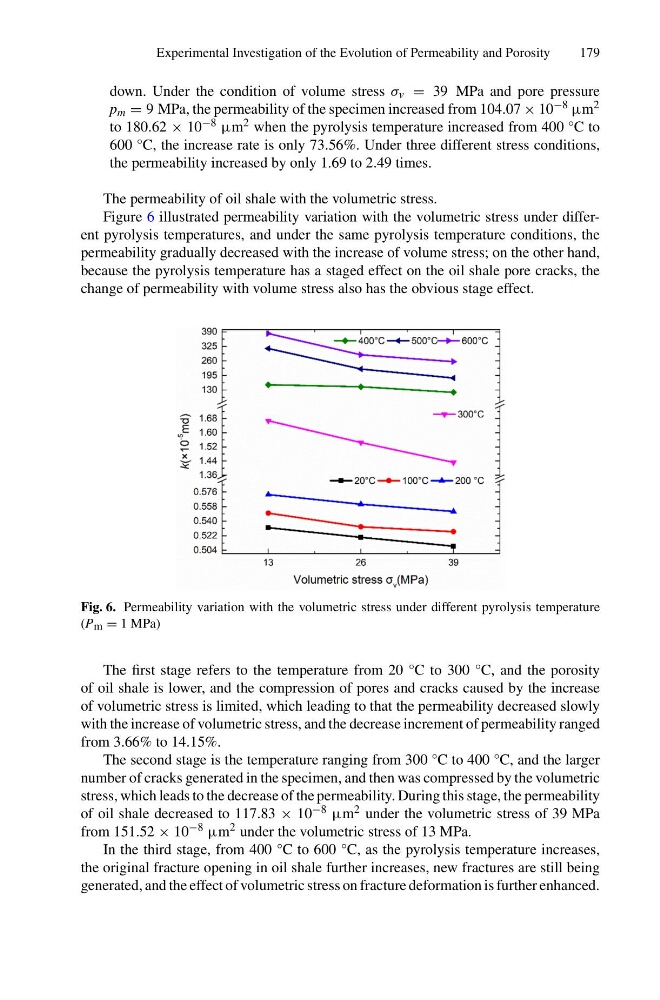
Figure 6 illustrated permeability variation with the volumetric stress under different pyrolysis temperatures, and under the same pyrolysis temperature conditions, the
permeability gradually decreased with the increase of volume stress; on the other hand,
because the pyrolysis temperature has a staged effect on the oil shale pore cracks, the
change of permeability with volume stress also has the obvious stage effect.
Fig. 6. Permeability variation with the volumetric stress under different pyrolysis temperature
(P m = 1 MPa)
The first stage refers to the temperature from 20 °C to 300 °C, and the porosity
of oil shale is lower, and the compression of pores and cracks caused by the increase
of volumetric stress is limited, which leading to that the permeability decreased slowly
with the increase of volumetric stress, and the decrease increment of permeability ranged
from 3.66% to 14.15%.
The second stage is the temperature ranging from 300 °C to 400 °C, and the larger
number of cracks generated in the specimen, and then was compressed by the volumetric
stress, which leads to the decrease of the permeability. During this stage, the permeability
of oil shale decreased to 117.83 × 10 −8 µm 2 under the volumetric stress of 39 MPa
from 151.52 × 10 −8 µm 2 under the volumetric stress of 13 MPa.
In the third stage, from 400 °C to 600 °C, as the pyrolysis temperature increases,
the original fracture opening in oil shale further increases, new fractures are still being
generated, and the effect of volumetric stress on fracture deformation is further enhanced.
179
down. Under the condition of volume stress σ v = 39 MPa and pore pressure
p m = 9 MPa, the permeability of the specimen increased from 104.07 × 10 −8 µm 2
to 180.62 × 10 −8 µm 2 when the pyrolysis temperature increased from 400 °C to
600 °C, the increase rate is only 73.56%. Under three different stress conditions,
the permeability increased by only 1.69 to 2.49 times.
The permeability of oil shale with the volumetric stress.
Figure 6 illustrated permeability variation with the volumetric stress under different pyrolysis temperatures, and under the same pyrolysis temperature conditions, the
permeability gradually decreased with the increase of volume stress; on the other hand,
because the pyrolysis temperature has a staged effect on the oil shale pore cracks, the
change of permeability with volume stress also has the obvious stage effect.
Fig. 6. Permeability variation with the volumetric stress under different pyrolysis temperature
(P m = 1 MPa)
The first stage refers to the temperature from 20 °C to 300 °C, and the porosity
of oil shale is lower, and the compression of pores and cracks caused by the increase
of volumetric stress is limited, which leading to that the permeability decreased slowly
with the increase of volumetric stress, and the decrease increment of permeability ranged
from 3.66% to 14.15%.
The second stage is the temperature ranging from 300 °C to 400 °C, and the larger
number of cracks generated in the specimen, and then was compressed by the volumetric
stress, which leads to the decrease of the permeability. During this stage, the permeability
of oil shale decreased to 117.83 × 10 −8 µm 2 under the volumetric stress of 39 MPa
from 151.52 × 10 −8 µm 2 under the volumetric stress of 13 MPa.
In the third stage, from 400 °C to 600 °C, as the pyrolysis temperature increases,
the original fracture opening in oil shale further increases, new fractures are still being
generated, and the effect of volumetric stress on fracture deformation is further enhanced.