

promote active and functional synapse formations when neural cells were plated on
the surface of preformed peptide hydrogel matrices. In this research, neural stem
cells from the subventricular zone of an adult mouse were used. To stimulate
extensive self-renewal of the neural stem cell population, human FGF-2, human
EGF, and insulin in the stem cell propagating medium were also added. The authors
found that continuous provision of both FGF-2 and EGF was necessary to sustain
nonadherent neurosphere formation of neural stem cells. Tissue cultures in collagen I
hydrogel were characterized by low cell migration, cell clustering, and limited neural
stem cell differentiation. This may be due to the biological incompatibility between
neural cells and collagen I, a substance not found in mammalian brain tissue. It is
known that neural cells (especially differentiated neurons and immortalized neural
cells) survive in collagen I in the presence of a cocktail of growth factors. Nevertheless, such studies are performed for short periods of times (i.e., up to 2 weeks),
and they are characterized by low cell migration and differentiation. When neural
tissue cultures were investigated for longer periods of time, the authors found
enhanced cell survival rates in peptide nanofiber hydrogels compared to Matrigel™
and collagen I, suggesting that the beneficial effect of Matrigel™ on tissue cultures is
mainly due to non-quantified growth factors and cytokines that are present in the
material (Fig. 13). It is clear that when these chemical stimuli are removed, the
material itself is not suitable to support a viable neural tissue culture. This is yet
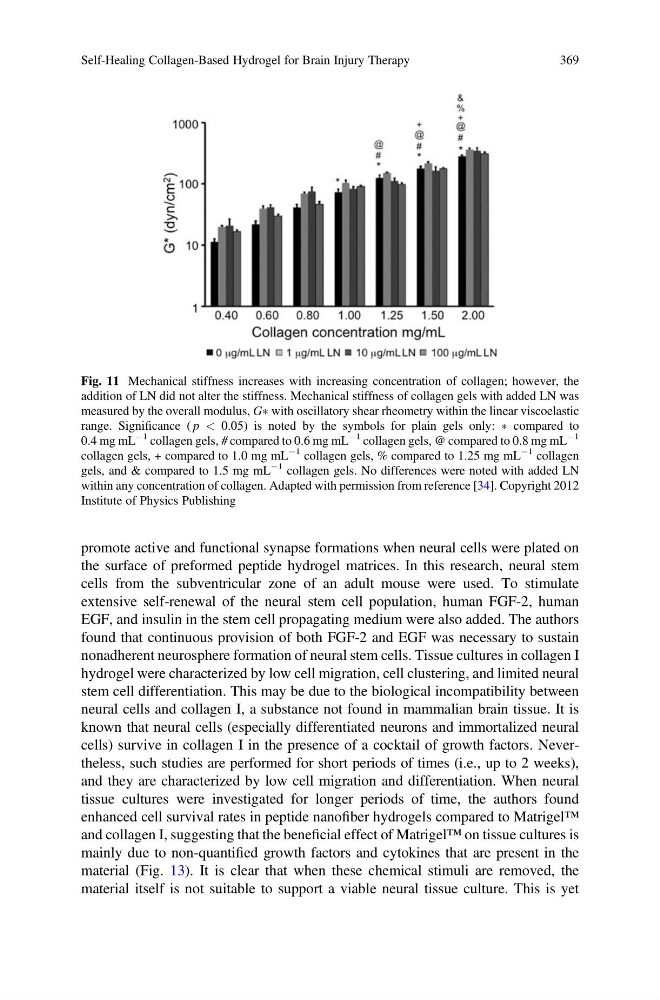
Fig. 11 Mechanical stiffness increases with increasing concentration of collagen; however, the
addition of LN did not alter the stiffness. Mechanical stiffness of collagen gels with added LN was
measured by the overall modulus, GÃ with oscillatory shear rheometry within the linear viscoelastic
range. Significance ( p < 0.05) is noted by the symbols for plain gels only: Ã compared to
0.4 mg mL
À1 collagen gels, # compared to 0.6 mg mL
À1 collagen gels, @ compared to 0.8 mg mL
À1
collagen gels, + compared to 1.0 mg mL
À1 collagen gels, % compared to 1.25 mg mL
À1 collagen
gels, and & compared to 1.5 mg mL
À1 collagen gels. No differences were noted with added LN
within any concentration of collagen. Adapted with permission from reference [34]. Copyright 2012
Institute of Physics Publishing
Self-Healing Collagen-Based Hydrogel for Brain Injury Therapy
369
the surface of preformed peptide hydrogel matrices. In this research, neural stem
cells from the subventricular zone of an adult mouse were used. To stimulate
extensive self-renewal of the neural stem cell population, human FGF-2, human
EGF, and insulin in the stem cell propagating medium were also added. The authors
found that continuous provision of both FGF-2 and EGF was necessary to sustain
nonadherent neurosphere formation of neural stem cells. Tissue cultures in collagen I
hydrogel were characterized by low cell migration, cell clustering, and limited neural
stem cell differentiation. This may be due to the biological incompatibility between
neural cells and collagen I, a substance not found in mammalian brain tissue. It is
known that neural cells (especially differentiated neurons and immortalized neural
cells) survive in collagen I in the presence of a cocktail of growth factors. Nevertheless, such studies are performed for short periods of times (i.e., up to 2 weeks),
and they are characterized by low cell migration and differentiation. When neural
tissue cultures were investigated for longer periods of time, the authors found
enhanced cell survival rates in peptide nanofiber hydrogels compared to Matrigel™
and collagen I, suggesting that the beneficial effect of Matrigel™ on tissue cultures is
mainly due to non-quantified growth factors and cytokines that are present in the
material (Fig. 13). It is clear that when these chemical stimuli are removed, the
material itself is not suitable to support a viable neural tissue culture. This is yet
Fig. 11 Mechanical stiffness increases with increasing concentration of collagen; however, the
addition of LN did not alter the stiffness. Mechanical stiffness of collagen gels with added LN was
measured by the overall modulus, GÃ with oscillatory shear rheometry within the linear viscoelastic
range. Significance ( p < 0.05) is noted by the symbols for plain gels only: Ã compared to
0.4 mg mL
À1 collagen gels, # compared to 0.6 mg mL
À1 collagen gels, @ compared to 0.8 mg mL
À1
collagen gels, + compared to 1.0 mg mL
À1 collagen gels, % compared to 1.25 mg mL
À1 collagen
gels, and & compared to 1.5 mg mL
À1 collagen gels. No differences were noted with added LN
within any concentration of collagen. Adapted with permission from reference [34]. Copyright 2012
Institute of Physics Publishing
Self-Healing Collagen-Based Hydrogel for Brain Injury Therapy
369