

ammonium persulfate (APS) as initiator, leading to the double network structure.
These hydrogels exhibited high mechanical strength and adjustable thermosensitivity, which depended strongly on the weight ratio of the two networks.
2.3.3 Cellulose-Inorganic Hybrid Hydrogels
In recent years, cellulose-inorganic hybrid hydrogels have attracted increasing
attention due to their promising applications in electric, optical, magnetic, and
biological fields [104]. To introduce inorganics into the cellulose hydrogel network,
several approaches have been proposed: (1) simply mixing the target inorganics with
the cellulose solution and shaping them into a hybrid gel [105]; (2) converting
inorganic precursor to target inorganics in the cellulose solution during gelation
[106]; (3) in situ transition of the precursor in the hydrated gel or dry scaffold [107–
109]; (4) and using BC as a template for the ordered deposition of target inorganics
during fermentation [110]. Incorporation of inorganic into cellulose hydrogel
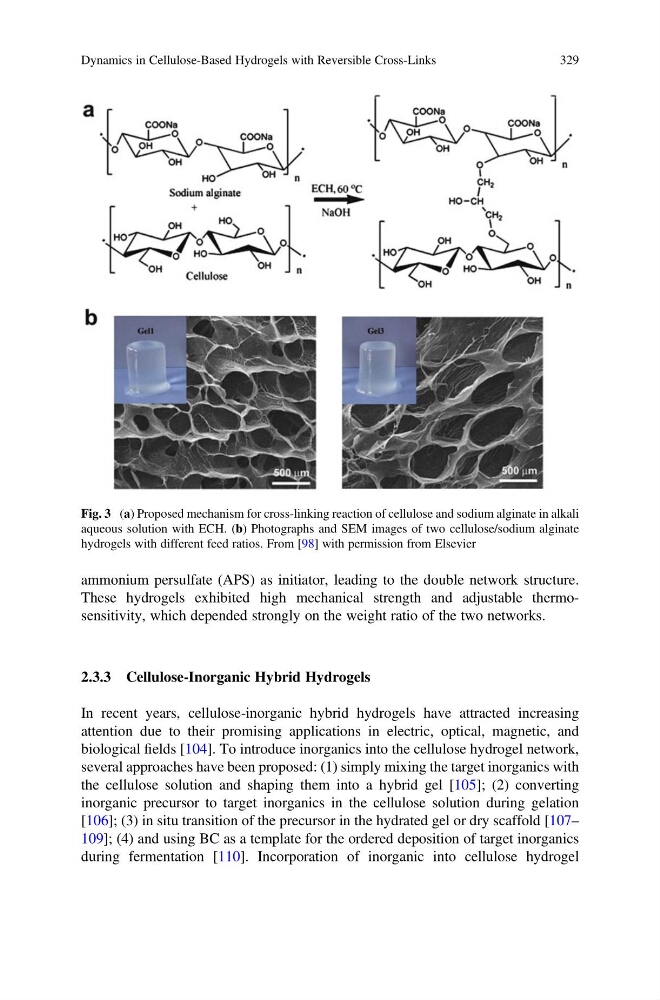
Fig. 3 (a) Proposed mechanism for cross-linking reaction of cellulose and sodium alginate in alkali
aqueous solution with ECH. (b) Photographs and SEM images of two cellulose/sodium alginate
hydrogels with different feed ratios. From [98] with permission from Elsevier
Dynamics in Cellulose-Based Hydrogels with Reversible Cross-Links
329
These hydrogels exhibited high mechanical strength and adjustable thermosensitivity, which depended strongly on the weight ratio of the two networks.
2.3.3 Cellulose-Inorganic Hybrid Hydrogels
In recent years, cellulose-inorganic hybrid hydrogels have attracted increasing
attention due to their promising applications in electric, optical, magnetic, and
biological fields [104]. To introduce inorganics into the cellulose hydrogel network,
several approaches have been proposed: (1) simply mixing the target inorganics with
the cellulose solution and shaping them into a hybrid gel [105]; (2) converting
inorganic precursor to target inorganics in the cellulose solution during gelation
[106]; (3) in situ transition of the precursor in the hydrated gel or dry scaffold [107–
109]; (4) and using BC as a template for the ordered deposition of target inorganics
during fermentation [110]. Incorporation of inorganic into cellulose hydrogel
Fig. 3 (a) Proposed mechanism for cross-linking reaction of cellulose and sodium alginate in alkali
aqueous solution with ECH. (b) Photographs and SEM images of two cellulose/sodium alginate
hydrogels with different feed ratios. From [98] with permission from Elsevier
Dynamics in Cellulose-Based Hydrogels with Reversible Cross-Links
329