

temperature. The switching temperature is usually coincident or close to a characteristic transition temperature, e.g., a glass transition, melting point, or some other
thermodynamic transition temperature. When reheated above the switching temperature, the material reverts back to the permanent shape. SMPs are used commercially
as heat-shrinkable tubing and films, but they also have potential biomedical applications as smart medical devices, implants in minimally invasive surgery, sutures,
and drug delivery and vascular and orthopedic devices [110, 111]. Shape memory
behavior hydrogels have been considered for sensors, actuators, and artificial
muscles [112].
The development of shape memory behavior requires two separate crosslinked
networks: (1) a permanent network formed from covalent crosslinks or supramolecular bonds with relaxation times much longer than the characteristic time of the
shape memory behavior and (2) a temporary network formed from supramolecular
bonds that can reversibly disappear or reform upon application of a suitable external
stimulus, such as temperature. Those criteria are satisfied by the hybrid DFmx-Cy
hydrogels, which have a covalently bonded network and a physical multifunctional
network formed by the microphase separation of FOSM nanodomains. The FOSM
nanodomains undergo a reversible glass-to-liquid-like transition at ~45
C, above
which the hydrophobic bonds are sufficiently weakened so that the network deforms
upon application of an applied stress [14].
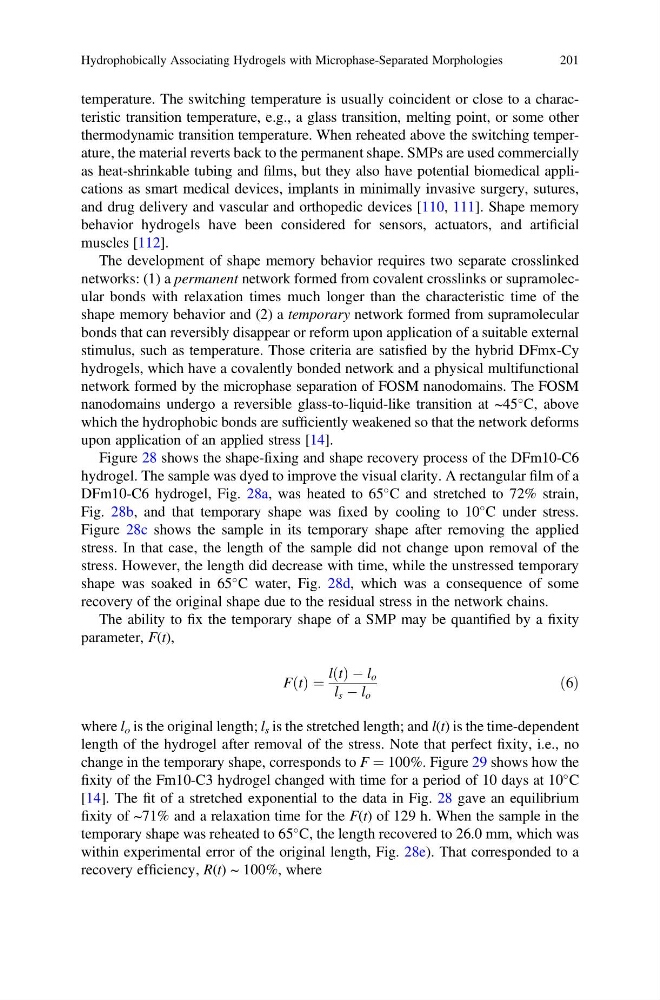
Figure 28 shows the shape-fixing and shape recovery process of the DFm10-C6
hydrogel. The sample was dyed to improve the visual clarity. A rectangular film of a
DFm10-C6 hydrogel, Fig. 28a, was heated to 65
C and stretched to 72% strain,
Fig. 28b, and that temporary shape was fixed by cooling to 10
C under stress.
Figure 28c shows the sample in its temporary shape after removing the applied
stress. In that case, the length of the sample did not change upon removal of the
stress. However, the length did decrease with time, while the unstressed temporary
shape was soaked in 65
C water, Fig. 28d, which was a consequence of some
recovery of the original shape due to the residual stress in the network chains.
The ability to fix the temporary shape of a SMP may be quantified by a fixity
parameter, F(t),
F t
ð Þ ¼
l t
ð Þ À l o
l s À l o
ð6Þ
where l o is the original length; l s is the stretched length; and l(t) is the time-dependent
length of the hydrogel after removal of the stress. Note that perfect fixity, i.e., no
change in the temporary shape, corresponds to F ¼ 100%. Figure 29 shows how the
fixity of the Fm10-C3 hydrogel changed with time for a period of 10 days at 10
C
[14]. The fit of a stretched exponential to the data in Fig. 28 gave an equilibrium
fixity of ~71% and a relaxation time for the F(t) of 129 h. When the sample in the
temporary shape was reheated to 65
C, the length recovered to 26.0 mm, which was
within experimental error of the original length, Fig. 28e). That corresponded to a
recovery efficiency, R(t) ~ 100%, where
Hydrophobically Associating Hydrogels with Microphase-Separated Morphologies
201
thermodynamic transition temperature. When reheated above the switching temperature, the material reverts back to the permanent shape. SMPs are used commercially
as heat-shrinkable tubing and films, but they also have potential biomedical applications as smart medical devices, implants in minimally invasive surgery, sutures,
and drug delivery and vascular and orthopedic devices [110, 111]. Shape memory
behavior hydrogels have been considered for sensors, actuators, and artificial
muscles [112].
The development of shape memory behavior requires two separate crosslinked
networks: (1) a permanent network formed from covalent crosslinks or supramolecular bonds with relaxation times much longer than the characteristic time of the
shape memory behavior and (2) a temporary network formed from supramolecular
bonds that can reversibly disappear or reform upon application of a suitable external
stimulus, such as temperature. Those criteria are satisfied by the hybrid DFmx-Cy
hydrogels, which have a covalently bonded network and a physical multifunctional
network formed by the microphase separation of FOSM nanodomains. The FOSM
nanodomains undergo a reversible glass-to-liquid-like transition at ~45
C, above
which the hydrophobic bonds are sufficiently weakened so that the network deforms
upon application of an applied stress [14].
Figure 28 shows the shape-fixing and shape recovery process of the DFm10-C6
hydrogel. The sample was dyed to improve the visual clarity. A rectangular film of a
DFm10-C6 hydrogel, Fig. 28a, was heated to 65
C and stretched to 72% strain,
Fig. 28b, and that temporary shape was fixed by cooling to 10
C under stress.
Figure 28c shows the sample in its temporary shape after removing the applied
stress. In that case, the length of the sample did not change upon removal of the
stress. However, the length did decrease with time, while the unstressed temporary
shape was soaked in 65
C water, Fig. 28d, which was a consequence of some
recovery of the original shape due to the residual stress in the network chains.
The ability to fix the temporary shape of a SMP may be quantified by a fixity
parameter, F(t),
F t
ð Þ ¼
l t
ð Þ À l o
l s À l o
ð6Þ
where l o is the original length; l s is the stretched length; and l(t) is the time-dependent
length of the hydrogel after removal of the stress. Note that perfect fixity, i.e., no
change in the temporary shape, corresponds to F ¼ 100%. Figure 29 shows how the
fixity of the Fm10-C3 hydrogel changed with time for a period of 10 days at 10
C
[14]. The fit of a stretched exponential to the data in Fig. 28 gave an equilibrium
fixity of ~71% and a relaxation time for the F(t) of 129 h. When the sample in the
temporary shape was reheated to 65
C, the length recovered to 26.0 mm, which was
within experimental error of the original length, Fig. 28e). That corresponded to a
recovery efficiency, R(t) ~ 100%, where
Hydrophobically Associating Hydrogels with Microphase-Separated Morphologies
201