

Water contact-angle data for the dry and water-swollen microfiber mat and a
dense DFm10 film are also shown in Table 4. The remarkable aspect of those data is
the large contact angle for the dry electrospun microfiber mat, 142
, compared with
the dense film, 94
. The hydrophobic surface represented by the latter contact angle
is a consequence of the amphiphilic nature of the DFm10 copolymer. Since the
contact angle was measured in air, one might expect that the hydrophobic FOSM
part of the copolymer would preferentially populate the air surface of the polymer
film. The near-superhydrophobic value of the contact angle for the electrospun fiber
mat is most likely a consequence of significant surface segregation of the
perfluorinated chains of the FOSM species and probably the surface morphology
that traps air between the microfibers.
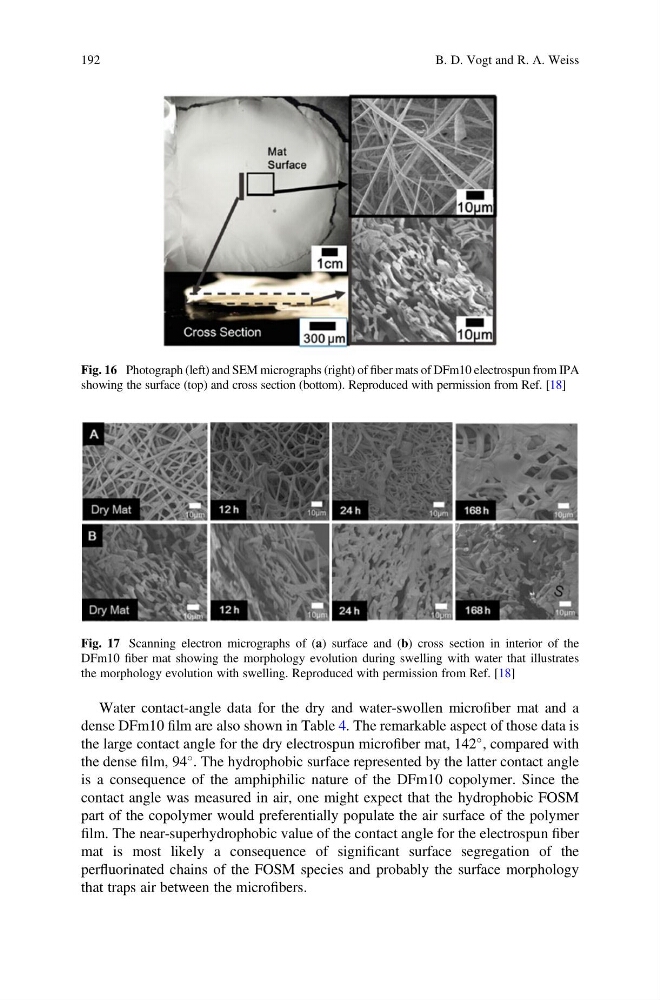
Fig. 16 Photograph (left) and SEM micrographs (right) of fiber mats of DFm10 electrospun from IPA
showing the surface (top) and cross section (bottom). Reproduced with permission from Ref. [18]
Fig. 17 Scanning electron micrographs of (a) surface and (b) cross section in interior of the
DFm10 fiber mat showing the morphology evolution during swelling with water that illustrates
the morphology evolution with swelling. Reproduced with permission from Ref. [18]
192
B. D. Vogt and R. A. Weiss
dense DFm10 film are also shown in Table 4. The remarkable aspect of those data is
the large contact angle for the dry electrospun microfiber mat, 142
, compared with
the dense film, 94
. The hydrophobic surface represented by the latter contact angle
is a consequence of the amphiphilic nature of the DFm10 copolymer. Since the
contact angle was measured in air, one might expect that the hydrophobic FOSM
part of the copolymer would preferentially populate the air surface of the polymer
film. The near-superhydrophobic value of the contact angle for the electrospun fiber
mat is most likely a consequence of significant surface segregation of the
perfluorinated chains of the FOSM species and probably the surface morphology
that traps air between the microfibers.
Fig. 16 Photograph (left) and SEM micrographs (right) of fiber mats of DFm10 electrospun from IPA
showing the surface (top) and cross section (bottom). Reproduced with permission from Ref. [18]
Fig. 17 Scanning electron micrographs of (a) surface and (b) cross section in interior of the
DFm10 fiber mat showing the morphology evolution during swelling with water that illustrates
the morphology evolution with swelling. Reproduced with permission from Ref. [18]
192
B. D. Vogt and R. A. Weiss