

toughening mechanism proposed for other supramolecular hydrogels [28, 32, 33, 48,
54–61], there is an important distinction between the mechanism of energy dissipation for the NFx hydrogels (and the graft copolymer hydrogels described in Refs.
[51–53]) and all other reported tough supramolecular hydrogels, which is the
microphase separation that occurs in the NFx and DFx hydrogels and the hydrogels
in Refs. [51–53].
The microphase-separated nanodomains represent a separate phase that acts as a
multifunctional crosslink with many hydrophobic bonds. For tough supramolecular
hydrogels for which a microphase-separated microstructure has not been reported,
the energy dissipation mechanism has been described as a disengagement [28] or
unzipping [48] of a physical bond, the key point being that the crosslink disappears
during deformation, though it may reform once the stress is removed. That description is an oversimplification when the bond that breaks is one of the many within a
multifunctional nanophase, such as with the NFx hydrogels. In that case, breaking a
single supramolecular bond does not eliminate the nanodomain crosslink, though
one or both of the hydrophobic groups involved with the broken bond may be
removed from the nanodomain, i.e., pulled out by the retractive forces of the network
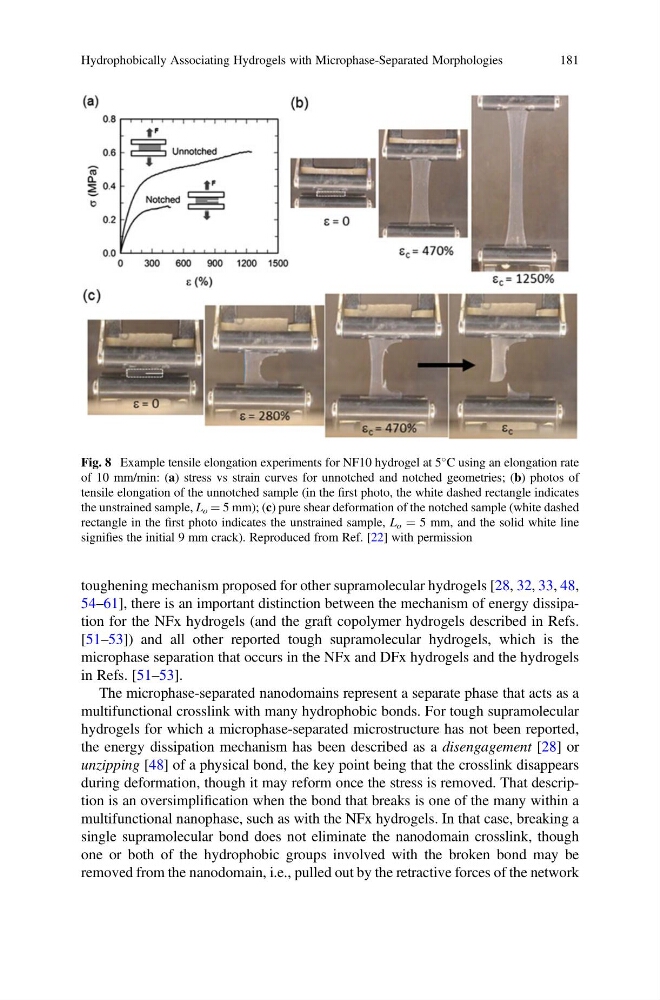
Fig. 8 Example tensile elongation experiments for NF10 hydrogel at 5
C using an elongation rate
of 10 mm/min: (a) stress vs strain curves for unnotched and notched geometries; (b) photos of
tensile elongation of the unnotched sample (in the first photo, the white dashed rectangle indicates
the unstrained sample, L o ¼ 5 mm); (c) pure shear deformation of the notched sample (white dashed
rectangle in the first photo indicates the unstrained sample, L o ¼ 5 mm, and the solid white line
signifies the initial 9 mm crack). Reproduced from Ref. [22] with permission
Hydrophobically Associating Hydrogels with Microphase-Separated Morphologies
181
54–61], there is an important distinction between the mechanism of energy dissipation for the NFx hydrogels (and the graft copolymer hydrogels described in Refs.
[51–53]) and all other reported tough supramolecular hydrogels, which is the
microphase separation that occurs in the NFx and DFx hydrogels and the hydrogels
in Refs. [51–53].
The microphase-separated nanodomains represent a separate phase that acts as a
multifunctional crosslink with many hydrophobic bonds. For tough supramolecular
hydrogels for which a microphase-separated microstructure has not been reported,
the energy dissipation mechanism has been described as a disengagement [28] or
unzipping [48] of a physical bond, the key point being that the crosslink disappears
during deformation, though it may reform once the stress is removed. That description is an oversimplification when the bond that breaks is one of the many within a
multifunctional nanophase, such as with the NFx hydrogels. In that case, breaking a
single supramolecular bond does not eliminate the nanodomain crosslink, though
one or both of the hydrophobic groups involved with the broken bond may be
removed from the nanodomain, i.e., pulled out by the retractive forces of the network
Fig. 8 Example tensile elongation experiments for NF10 hydrogel at 5
C using an elongation rate
of 10 mm/min: (a) stress vs strain curves for unnotched and notched geometries; (b) photos of
tensile elongation of the unnotched sample (in the first photo, the white dashed rectangle indicates
the unstrained sample, L o ¼ 5 mm); (c) pure shear deformation of the notched sample (white dashed
rectangle in the first photo indicates the unstrained sample, L o ¼ 5 mm, and the solid white line
signifies the initial 9 mm crack). Reproduced from Ref. [22] with permission
Hydrophobically Associating Hydrogels with Microphase-Separated Morphologies
181