

developed for rubber by Rivlin and Thomas [47] or a recent modification of that test
described by Sun et al. [48], though other experimental geometries have also been
used [46].
Typical stress–strain curves for tensile deformation of an unnotched specimen
and a pre-notched specimen of a NF10 hydrogel at 5
C are shown in Fig. 8a. Those
experimental data were used to determine the fracture toughness of a NF10 hydrogel,
following the pure shear deformation method described by Sun et al. [48]. The
reason for measuring the fracture energy of the NFx hydrogels at 5
C is that those
gels undergo a volume-change transition, where the water phase-separates and the
gel de-swells between 11
C and 18
C, depending on the value of x [22]. The fracture
energies measured at 5
C for four different NFx hydrogels at 5
C are summarized in
Table 1. The photos in Fig. 8b show that an unnotched NF10 hydrogel was stretched
to over 1,200% strain without failing, and Fig. 8c shows how the crack progressed at
various strains during stretching of the notched NF10 sample.
Conventional covalently crosslinked hydrogels are brittle and cannot sustain
much elongation without catastrophic failure in a pure shear fracture experiment.
In contrast, the notch (crack) in the NF10 hydrogel shown in Fig. 8 did not propagate
in the direction of the crack (i.e., normal to the stretching direction) prior to failure,
which occurred at 476% strain. Instead the crack was blunted, which was a consequence of the energy dissipation from the reversible nature of the supramolecular
network. A similar crack blunting phenomenon has been reported for filled elastomers [49] and other tough hydrogels, such as nanocomposite hydrogels [50],
supramolecular hydrogels [48], and other microphase-separated hydrogels [51–
53]. The mechanism of toughening and the crack blunting for the NFx hydrogels
involves the reversibility of the hydrophobic bonds between the fluoroacrylate
groups, which provide the fundamental crosslink in those gels. Stresses in the
network chains at the crack tip can pull fluoroacrylate groups out of a nanodomain,
which breaks hydrophobic bonds and dissipates energy. While this is similar to the
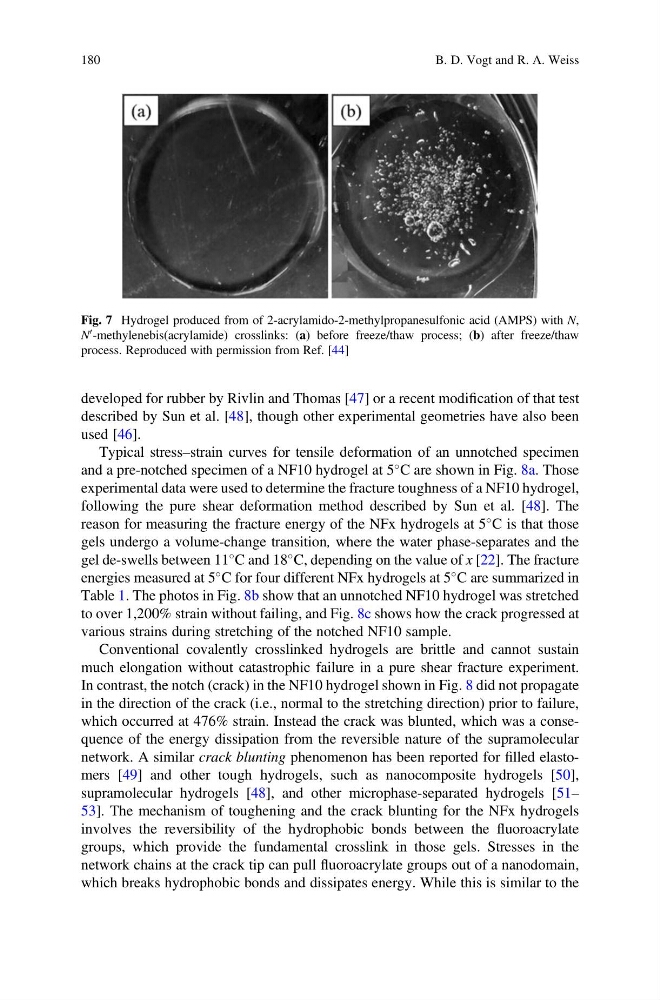
Fig. 7 Hydrogel produced from of 2-acrylamido-2-methylpropanesulfonic acid (AMPS) with N,
N
0 -methylenebis(acrylamide) crosslinks: (a) before freeze/thaw process; (b) after freeze/thaw
process. Reproduced with permission from Ref. [44]
180
B. D. Vogt and R. A. Weiss
described by Sun et al. [48], though other experimental geometries have also been
used [46].
Typical stress–strain curves for tensile deformation of an unnotched specimen
and a pre-notched specimen of a NF10 hydrogel at 5
C are shown in Fig. 8a. Those
experimental data were used to determine the fracture toughness of a NF10 hydrogel,
following the pure shear deformation method described by Sun et al. [48]. The
reason for measuring the fracture energy of the NFx hydrogels at 5
C is that those
gels undergo a volume-change transition, where the water phase-separates and the
gel de-swells between 11
C and 18
C, depending on the value of x [22]. The fracture
energies measured at 5
C for four different NFx hydrogels at 5
C are summarized in
Table 1. The photos in Fig. 8b show that an unnotched NF10 hydrogel was stretched
to over 1,200% strain without failing, and Fig. 8c shows how the crack progressed at
various strains during stretching of the notched NF10 sample.
Conventional covalently crosslinked hydrogels are brittle and cannot sustain
much elongation without catastrophic failure in a pure shear fracture experiment.
In contrast, the notch (crack) in the NF10 hydrogel shown in Fig. 8 did not propagate
in the direction of the crack (i.e., normal to the stretching direction) prior to failure,
which occurred at 476% strain. Instead the crack was blunted, which was a consequence of the energy dissipation from the reversible nature of the supramolecular
network. A similar crack blunting phenomenon has been reported for filled elastomers [49] and other tough hydrogels, such as nanocomposite hydrogels [50],
supramolecular hydrogels [48], and other microphase-separated hydrogels [51–
53]. The mechanism of toughening and the crack blunting for the NFx hydrogels
involves the reversibility of the hydrophobic bonds between the fluoroacrylate
groups, which provide the fundamental crosslink in those gels. Stresses in the
network chains at the crack tip can pull fluoroacrylate groups out of a nanodomain,
which breaks hydrophobic bonds and dissipates energy. While this is similar to the
Fig. 7 Hydrogel produced from of 2-acrylamido-2-methylpropanesulfonic acid (AMPS) with N,
N
0 -methylenebis(acrylamide) crosslinks: (a) before freeze/thaw process; (b) after freeze/thaw
process. Reproduced with permission from Ref. [44]
180
B. D. Vogt and R. A. Weiss