

crosslink gels [18]. For gels with low Ni
2+ concentration (5 and 10 mM), the stressstrain curve is similar to that of the chemical gel, but with much higher extensibility,
with λ b > 6. It should be pointed out however that the modulus of the dual crosslink
gel with [Ni
2+ ] ¼ 5 mM is lower than that of the chemical gel. We assume that this
comes from the modification of radical polymerization due to the presence of nickel
ions which reduces the chemical crosslinking density in the dual crosslink gel. For
the rest of this paper, we investigated the dual crosslink gel with [Ni
2+ ] ¼ 100 mM,
corresponding to the stoichiometric amount needed to complex the ion with two
imidazole ligands ([VIm] ¼ 200 mM).
3.2 Tunable Dynamics: Linear Rheology
By changing the nature of the metal ions, the dynamics of the transient crosslinks
and the relaxation time of the dual crosslink gel can be tuned. Here, we chose Ni
2+
and Zn
2+ as two relatively fast-exchanging transient metal ions to study the tunable
mechanics of dual crosslink hydrogels with metal-ligand coordination.
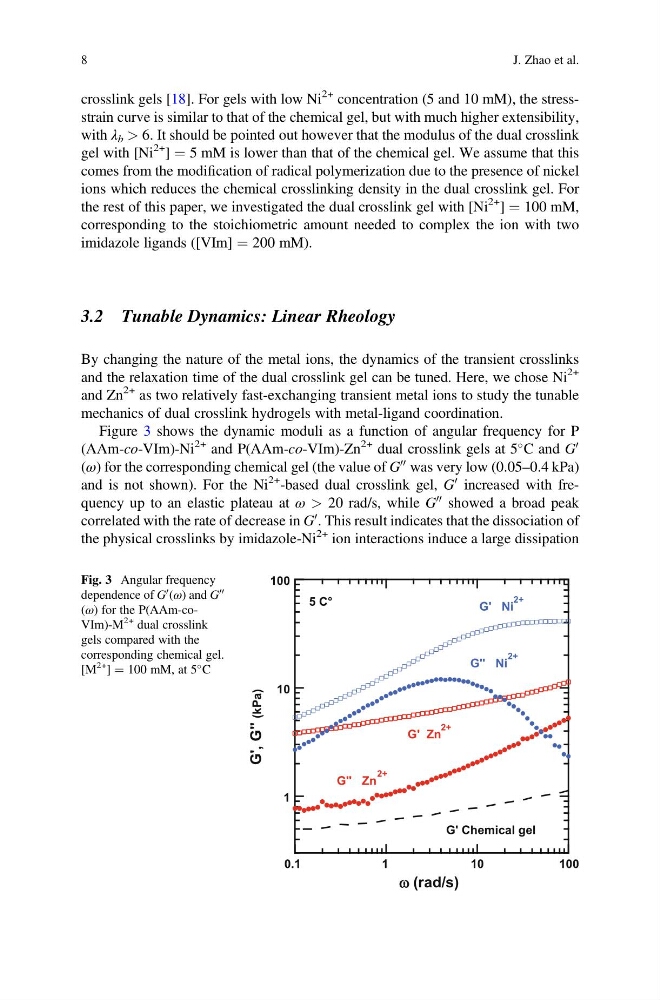
Figure 3 shows the dynamic moduli as a function of angular frequency for P
(AAm-co-VIm)-Ni
2+ and P(AAm-co-VIm)-Zn
2+ dual crosslink gels at 5
C and G
0
(ω) for the corresponding chemical gel (the value of G
00 was very low (0.05–0.4 kPa)
and is not shown). For the Ni
2+ -based dual crosslink gel, G
0 increased with frequency up to an elastic plateau at ω > 20 rad/s, while G
00 showed a broad peak
correlated with the rate of decrease in G
0 . This result indicates that the dissociation of
the physical crosslinks by imidazole-Ni
2+ ion interactions induce a large dissipation
1
10
100
G', G'' (kPa)
0.1
1
10
100
ω ω (rad/s)
5 C°
G' Ni
2+
G'' Ni
2+
G' Zn
2+
G'' Zn
2+
G' Chemical gel
Fig. 3 Angular frequency
dependence of G
0 (ω) and G
00
(ω) for the P(AAm-coVIm)-M
2+ dual crosslink
gels compared with the
corresponding chemical gel.
[M
2+ ] ¼ 100 mM, at 5
C
8
J. Zhao et al.
2+ concentration (5 and 10 mM), the stressstrain curve is similar to that of the chemical gel, but with much higher extensibility,
with λ b > 6. It should be pointed out however that the modulus of the dual crosslink
gel with [Ni
2+ ] ¼ 5 mM is lower than that of the chemical gel. We assume that this
comes from the modification of radical polymerization due to the presence of nickel
ions which reduces the chemical crosslinking density in the dual crosslink gel. For
the rest of this paper, we investigated the dual crosslink gel with [Ni
2+ ] ¼ 100 mM,
corresponding to the stoichiometric amount needed to complex the ion with two
imidazole ligands ([VIm] ¼ 200 mM).
3.2 Tunable Dynamics: Linear Rheology
By changing the nature of the metal ions, the dynamics of the transient crosslinks
and the relaxation time of the dual crosslink gel can be tuned. Here, we chose Ni
2+
and Zn
2+ as two relatively fast-exchanging transient metal ions to study the tunable
mechanics of dual crosslink hydrogels with metal-ligand coordination.
Figure 3 shows the dynamic moduli as a function of angular frequency for P
(AAm-co-VIm)-Ni
2+ and P(AAm-co-VIm)-Zn
2+ dual crosslink gels at 5
C and G
0
(ω) for the corresponding chemical gel (the value of G
00 was very low (0.05–0.4 kPa)
and is not shown). For the Ni
2+ -based dual crosslink gel, G
0 increased with frequency up to an elastic plateau at ω > 20 rad/s, while G
00 showed a broad peak
correlated with the rate of decrease in G
0 . This result indicates that the dissociation of
the physical crosslinks by imidazole-Ni
2+ ion interactions induce a large dissipation
1
10
100
G', G'' (kPa)
0.1
1
10
100
ω ω (rad/s)
5 C°
G' Ni
2+
G'' Ni
2+
G' Zn
2+
G'' Zn
2+
G' Chemical gel
Fig. 3 Angular frequency
dependence of G
0 (ω) and G
00
(ω) for the P(AAm-coVIm)-M
2+ dual crosslink
gels compared with the
corresponding chemical gel.
[M
2+ ] ¼ 100 mM, at 5
C
8
J. Zhao et al.