

5 Conclusions and Outlook
Composite and reversibly linked soft materials provide exciting new opportunities
for mechanical functionality. Recent experiments in hydrogels and elastomers have
demonstrated enhanced toughness, resilience and self-healing qualities that appear to
require little fine-tuning, but rather are intrinsic to these material designs. How
precisely these enhanced properties come about is far less clear. Composites are
more than the sum of their parts, and polymer networks with reversible or exchanging bonds are more than entangled or cross-linked materials with an additional
relaxation time. As more and more systems are developed that take advantage of
these newly available properties, the questions surrounding the molecular origins
also become increasingly pressing. Polymer science has a long tradition of theory,
simulation and experiment advancing hand in hand. Experimental discoveries
inspire fundamental insights that, in turn, allow for rational design – microscopic
and molecular understanding allow targeted design and optimization.
To achieve this level of understanding for reversibly linked materials and various
composites, novel computational approaches are required. In this paper, we have
attempted to introduce a few such approaches which have been instrumental in our
efforts to cast light on the multiscale mechanics of modern polymer matter. These
techniques have allowed us to better understand the distribution and redistribution of
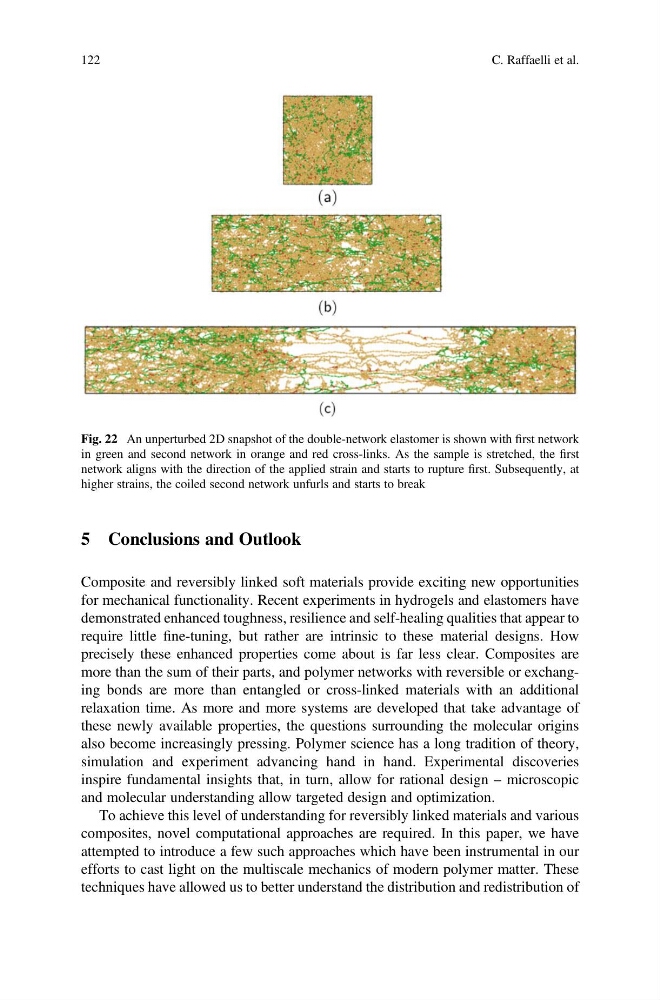
Fig. 22 An unperturbed 2D snapshot of the double-network elastomer is shown with first network
in green and second network in orange and red cross-links. As the sample is stretched, the first
network aligns with the direction of the applied strain and starts to rupture first. Subsequently, at
higher strains, the coiled second network unfurls and starts to break
122
C. Raffaelli et al.
Composite and reversibly linked soft materials provide exciting new opportunities
for mechanical functionality. Recent experiments in hydrogels and elastomers have
demonstrated enhanced toughness, resilience and self-healing qualities that appear to
require little fine-tuning, but rather are intrinsic to these material designs. How
precisely these enhanced properties come about is far less clear. Composites are
more than the sum of their parts, and polymer networks with reversible or exchanging bonds are more than entangled or cross-linked materials with an additional
relaxation time. As more and more systems are developed that take advantage of
these newly available properties, the questions surrounding the molecular origins
also become increasingly pressing. Polymer science has a long tradition of theory,
simulation and experiment advancing hand in hand. Experimental discoveries
inspire fundamental insights that, in turn, allow for rational design – microscopic
and molecular understanding allow targeted design and optimization.
To achieve this level of understanding for reversibly linked materials and various
composites, novel computational approaches are required. In this paper, we have
attempted to introduce a few such approaches which have been instrumental in our
efforts to cast light on the multiscale mechanics of modern polymer matter. These
techniques have allowed us to better understand the distribution and redistribution of
Fig. 22 An unperturbed 2D snapshot of the double-network elastomer is shown with first network
in green and second network in orange and red cross-links. As the sample is stretched, the first
network aligns with the direction of the applied strain and starts to rupture first. Subsequently, at
higher strains, the coiled second network unfurls and starts to break
122
C. Raffaelli et al.