

Random Spacing Model
149
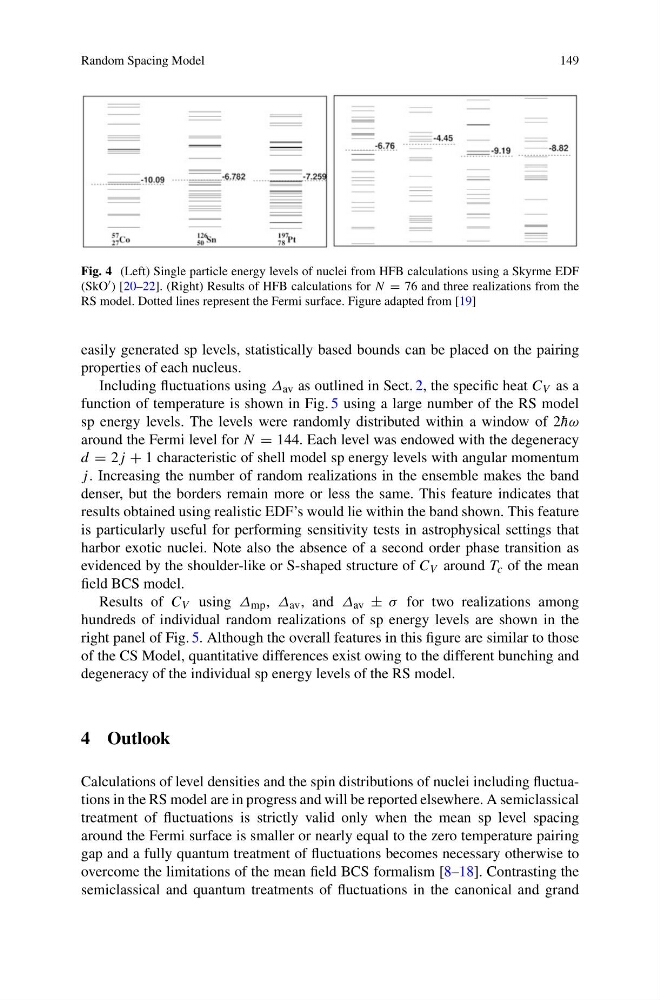
Fig. 4 (Left) Single particle energy levels of nuclei from HFB calculations using a Skyrme EDF
(SkO ) [20–22]. (Right) Results of HFB calculations for N = 76 and three realizations from the
RS model. Dotted lines represent the Fermi surface. Figure adapted from [19]
easily generated sp levels, statistically based bounds can be placed on the pairing
properties of each nucleus.
Including fluctuations using Δ av as outlined in Sect. 2, the specific heat C V as a
function of temperature is shown in Fig. 5 using a large number of the RS model
sp energy levels. The levels were randomly distributed within a window of 2 ¯
hω
around the Fermi level for N = 144. Each level was endowed with the degeneracy
d = 2j + 1 characteristic of shell model sp energy levels with angular momentum
j . Increasing the number of random realizations in the ensemble makes the band
denser, but the borders remain more or less the same. This feature indicates that
results obtained using realistic EDF’s would lie within the band shown. This feature
is particularly useful for performing sensitivity tests in astrophysical settings that
harbor exotic nuclei. Note also the absence of a second order phase transition as
evidenced by the shoulder-like or S-shaped structure of C V around T c of the mean
field BCS model.
Results of C V using Δ mp , Δ av , and Δ av ± σ for two realizations among
hundreds of individual random realizations of sp energy levels are shown in the
right panel of Fig. 5. Although the overall features in this figure are similar to those
of the CS Model, quantitative differences exist owing to the different bunching and
degeneracy of the individual sp energy levels of the RS model.
4 Outlook
Calculations of level densities and the spin distributions of nuclei including fluctuations in the RS model are in progress and will be reported elsewhere. A semiclassical
treatment of fluctuations is strictly valid only when the mean sp level spacing
around the Fermi surface is smaller or nearly equal to the zero temperature pairing
gap and a fully quantum treatment of fluctuations becomes necessary otherwise to
overcome the limitations of the mean field BCS formalism [8–18]. Contrasting the
semiclassical and quantum treatments of fluctuations in the canonical and grand
149
Fig. 4 (Left) Single particle energy levels of nuclei from HFB calculations using a Skyrme EDF
(SkO ) [20–22]. (Right) Results of HFB calculations for N = 76 and three realizations from the
RS model. Dotted lines represent the Fermi surface. Figure adapted from [19]
easily generated sp levels, statistically based bounds can be placed on the pairing
properties of each nucleus.
Including fluctuations using Δ av as outlined in Sect. 2, the specific heat C V as a
function of temperature is shown in Fig. 5 using a large number of the RS model
sp energy levels. The levels were randomly distributed within a window of 2 ¯
hω
around the Fermi level for N = 144. Each level was endowed with the degeneracy
d = 2j + 1 characteristic of shell model sp energy levels with angular momentum
j . Increasing the number of random realizations in the ensemble makes the band
denser, but the borders remain more or less the same. This feature indicates that
results obtained using realistic EDF’s would lie within the band shown. This feature
is particularly useful for performing sensitivity tests in astrophysical settings that
harbor exotic nuclei. Note also the absence of a second order phase transition as
evidenced by the shoulder-like or S-shaped structure of C V around T c of the mean
field BCS model.
Results of C V using Δ mp , Δ av , and Δ av ± σ for two realizations among
hundreds of individual random realizations of sp energy levels are shown in the
right panel of Fig. 5. Although the overall features in this figure are similar to those
of the CS Model, quantitative differences exist owing to the different bunching and
degeneracy of the individual sp energy levels of the RS model.
4 Outlook
Calculations of level densities and the spin distributions of nuclei including fluctuations in the RS model are in progress and will be reported elsewhere. A semiclassical
treatment of fluctuations is strictly valid only when the mean sp level spacing
around the Fermi surface is smaller or nearly equal to the zero temperature pairing
gap and a fully quantum treatment of fluctuations becomes necessary otherwise to
overcome the limitations of the mean field BCS formalism [8–18]. Contrasting the
semiclassical and quantum treatments of fluctuations in the canonical and grand