

17 A Framework for Dynamic Simulation of Interconnected …
625
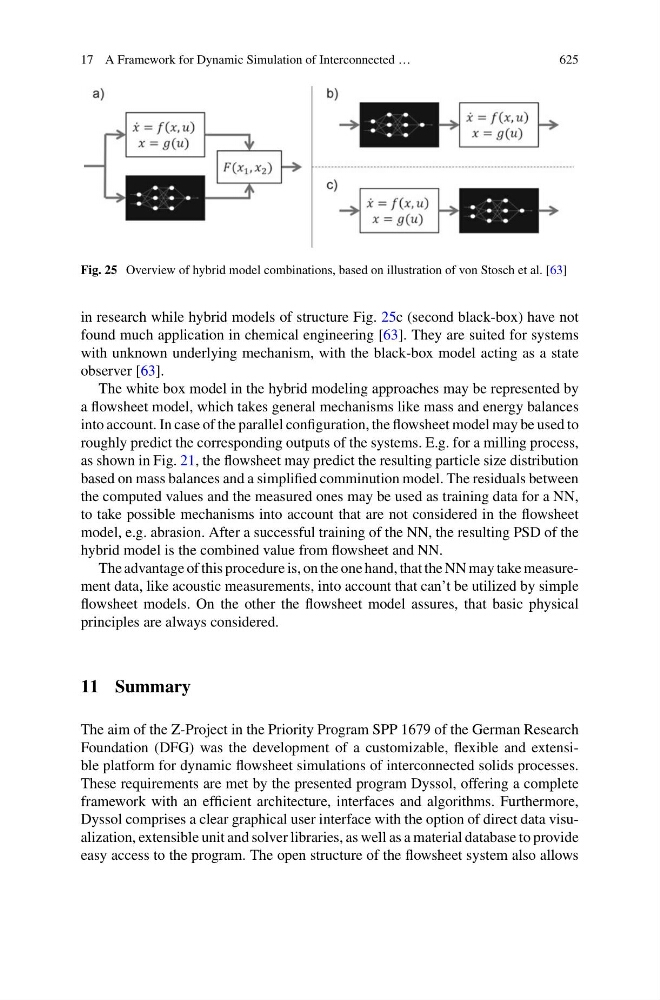
Fig. 25 Overview of hybrid model combinations, based on illustration of von Stosch et al. [63]
in research while hybrid models of structure Fig. 25c (second black-box) have not
found much application in chemical engineering [63]. They are suited for systems
with unknown underlying mechanism, with the black-box model acting as a state
observer [63].
The white box model in the hybrid modeling approaches may be represented by
a flowsheet model, which takes general mechanisms like mass and energy balances
into account. In case of the parallel configuration, the flowsheet model may be used to
roughly predict the corresponding outputs of the systems. E.g. for a milling process,
as shown in Fig. 21, the flowsheet may predict the resulting particle size distribution
based on mass balances and a simplified comminution model. The residuals between
the computed values and the measured ones may be used as training data for a NN,
to take possible mechanisms into account that are not considered in the flowsheet
model, e.g. abrasion. After a successful training of the NN, the resulting PSD of the
hybrid model is the combined value from flowsheet and NN.
The advantage of this procedure is, on the one hand, that the NN may take measurement data, like acoustic measurements, into account that can’t be utilized by simple
flowsheet models. On the other the flowsheet model assures, that basic physical
principles are always considered.
11 Summary
The aim of the Z-Project in the Priority Program SPP 1679 of the German Research
Foundation (DFG) was the development of a customizable, flexible and extensible platform for dynamic flowsheet simulations of interconnected solids processes.
These requirements are met by the presented program Dyssol, offering a complete
framework with an efficient architecture, interfaces and algorithms. Furthermore,
Dyssol comprises a clear graphical user interface with the option of direct data visualization, extensible unit and solver libraries, as well as a material database to provide
easy access to the program. The open structure of the flowsheet system also allows