

16 Modeling, Simulation and Optimization of Process Chains
565
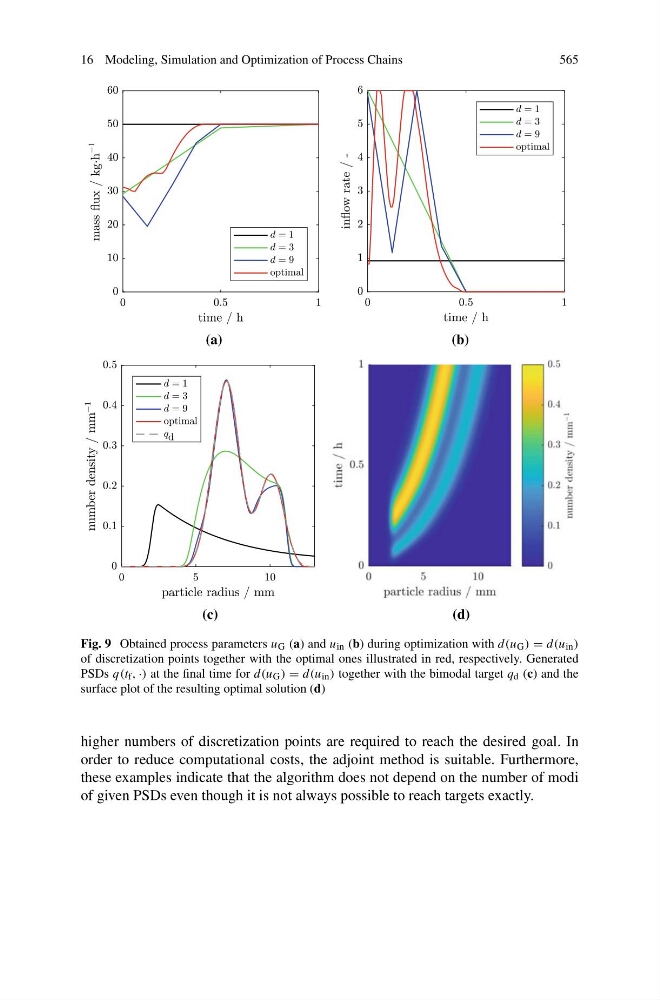
Fig. 9 Obtained process parameters u G (a) and u in (b) during optimization with d(u G ) = d(u in )
of discretization points together with the optimal ones illustrated in red, respectively. Generated
PSDs q(t f , ·) at the final time for d(u G ) = d(u in ) together with the bimodal target q d (c) and the
surface plot of the resulting optimal solution (d)
higher numbers of discretization points are required to reach the desired goal. In
order to reduce computational costs, the adjoint method is suitable. Furthermore,
these examples indicate that the algorithm does not depend on the number of modi
of given PSDs even though it is not always possible to reach targets exactly.
565
Fig. 9 Obtained process parameters u G (a) and u in (b) during optimization with d(u G ) = d(u in )
of discretization points together with the optimal ones illustrated in red, respectively. Generated
PSDs q(t f , ·) at the final time for d(u G ) = d(u in ) together with the bimodal target q d (c) and the
surface plot of the resulting optimal solution (d)
higher numbers of discretization points are required to reach the desired goal. In
order to reduce computational costs, the adjoint method is suitable. Furthermore,
these examples indicate that the algorithm does not depend on the number of modi
of given PSDs even though it is not always possible to reach targets exactly.