

13 Morphological Modelling and Simulation …
449
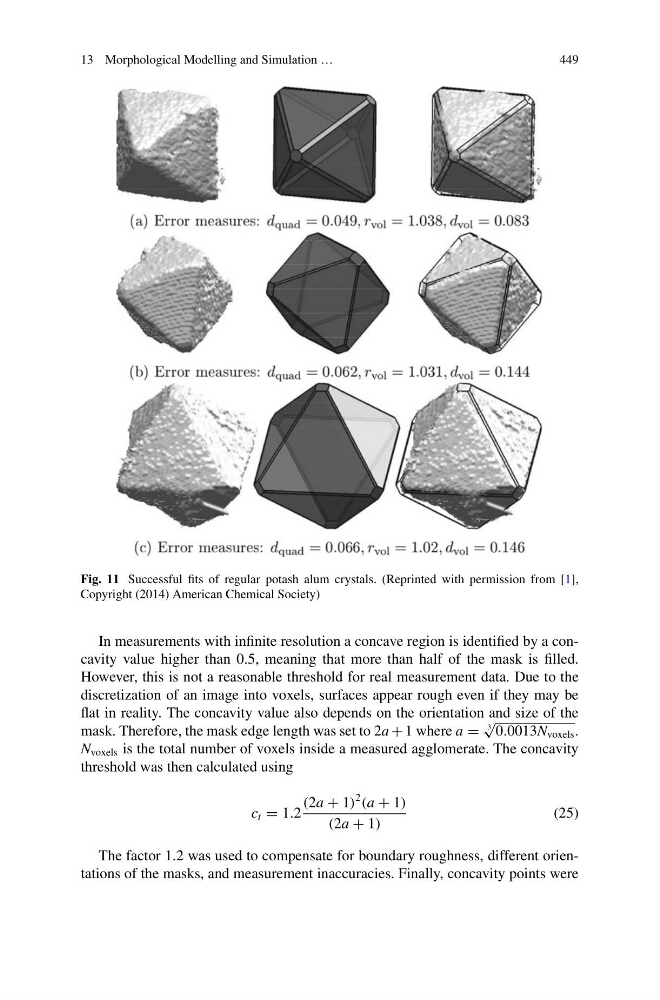
Fig. 11 Successful fits of regular potash alum crystals. (Reprinted with permission from [1],
Copyright (2014) American Chemical Society)
In measurements with infinite resolution a concave region is identified by a concavity value higher than 0.5, meaning that more than half of the mask is filled.
However, this is not a reasonable threshold for real measurement data. Due to the
discretization of an image into voxels, surfaces appear rough even if they may be
flat in reality. The concavity value also depends on the orientation and size of the
mask. Therefore, the mask edge length was set to 2a + 1 where a =
3
√
0.0013N voxels .
N voxels is the total number of voxels inside a measured agglomerate. The concavity
threshold was then calculated using
c t = 1.2
(2a + 1)
2
(a + 1)
(2a + 1)
(25)
The factor 1.2 was used to compensate for boundary roughness, different orientations of the masks, and measurement inaccuracies. Finally, concavity points were
449
Fig. 11 Successful fits of regular potash alum crystals. (Reprinted with permission from [1],
Copyright (2014) American Chemical Society)
In measurements with infinite resolution a concave region is identified by a concavity value higher than 0.5, meaning that more than half of the mask is filled.
However, this is not a reasonable threshold for real measurement data. Due to the
discretization of an image into voxels, surfaces appear rough even if they may be
flat in reality. The concavity value also depends on the orientation and size of the
mask. Therefore, the mask edge length was set to 2a + 1 where a =
3
√
0.0013N voxels .
N voxels is the total number of voxels inside a measured agglomerate. The concavity
threshold was then calculated using
c t = 1.2
(2a + 1)
2
(a + 1)
(2a + 1)
(25)
The factor 1.2 was used to compensate for boundary roughness, different orientations of the masks, and measurement inaccuracies. Finally, concavity points were