

418
K. Vaupel et al.
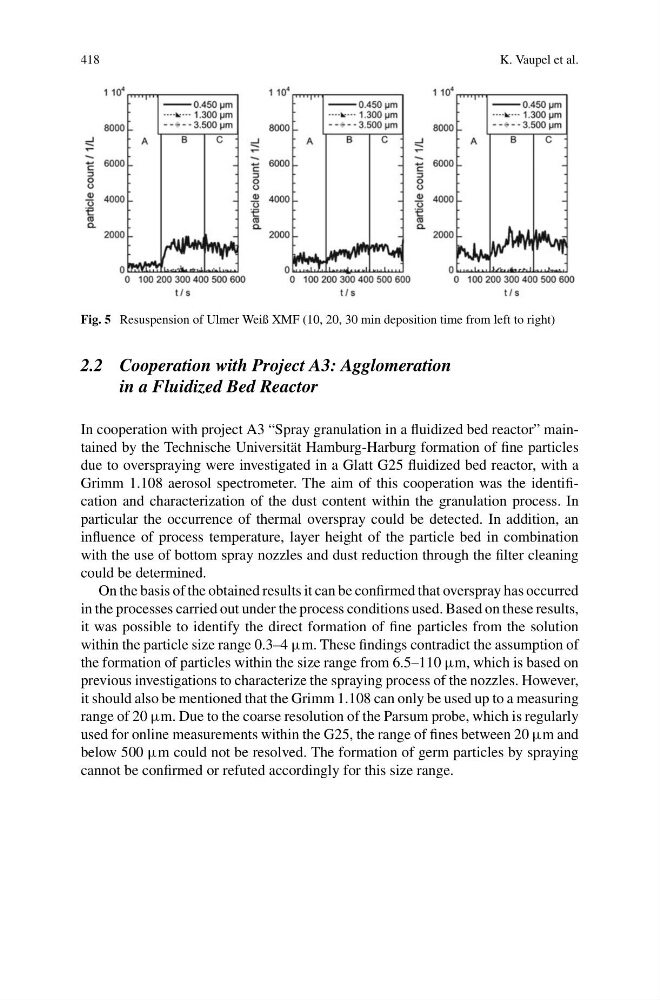
Fig. 5 Resuspension of Ulmer Weiß XMF (10, 20, 30 min deposition time from left to right)
2.2 Cooperation with Project A3: Agglomeration
in a Fluidized Bed Reactor
In cooperation with project A3 “Spray granulation in a fluidized bed reactor” maintained by the Technische Universität Hamburg-Harburg formation of fine particles
due to overspraying were investigated in a Glatt G25 fluidized bed reactor, with a
Grimm 1.108 aerosol spectrometer. The aim of this cooperation was the identification and characterization of the dust content within the granulation process. In
particular the occurrence of thermal overspray could be detected. In addition, an
influence of process temperature, layer height of the particle bed in combination
with the use of bottom spray nozzles and dust reduction through the filter cleaning
could be determined.
On the basis of the obtained results it can be confirmed that overspray has occurred
in the processes carried out under the process conditions used. Based on these results,
it was possible to identify the direct formation of fine particles from the solution
within the particle size range 0.3–4 µm. These findings contradict the assumption of
the formation of particles within the size range from 6.5–110 µm, which is based on
previous investigations to characterize the spraying process of the nozzles. However,
it should also be mentioned that the Grimm 1.108 can only be used up to a measuring
range of 20 µm. Due to the coarse resolution of the Parsum probe, which is regularly
used for online measurements within the G25, the range of fines between 20 µm and
below 500 µm could not be resolved. The formation of germ particles by spraying
cannot be confirmed or refuted accordingly for this size range.
K. Vaupel et al.
Fig. 5 Resuspension of Ulmer Weiß XMF (10, 20, 30 min deposition time from left to right)
2.2 Cooperation with Project A3: Agglomeration
in a Fluidized Bed Reactor
In cooperation with project A3 “Spray granulation in a fluidized bed reactor” maintained by the Technische Universität Hamburg-Harburg formation of fine particles
due to overspraying were investigated in a Glatt G25 fluidized bed reactor, with a
Grimm 1.108 aerosol spectrometer. The aim of this cooperation was the identification and characterization of the dust content within the granulation process. In
particular the occurrence of thermal overspray could be detected. In addition, an
influence of process temperature, layer height of the particle bed in combination
with the use of bottom spray nozzles and dust reduction through the filter cleaning
could be determined.
On the basis of the obtained results it can be confirmed that overspray has occurred
in the processes carried out under the process conditions used. Based on these results,
it was possible to identify the direct formation of fine particles from the solution
within the particle size range 0.3–4 µm. These findings contradict the assumption of
the formation of particles within the size range from 6.5–110 µm, which is based on
previous investigations to characterize the spraying process of the nozzles. However,
it should also be mentioned that the Grimm 1.108 can only be used up to a measuring
range of 20 µm. Due to the coarse resolution of the Parsum probe, which is regularly
used for online measurements within the G25, the range of fines between 20 µm and
below 500 µm could not be resolved. The formation of germ particles by spraying
cannot be confirmed or refuted accordingly for this size range.