

11 Experimental Study and Modelling of Particle …
405
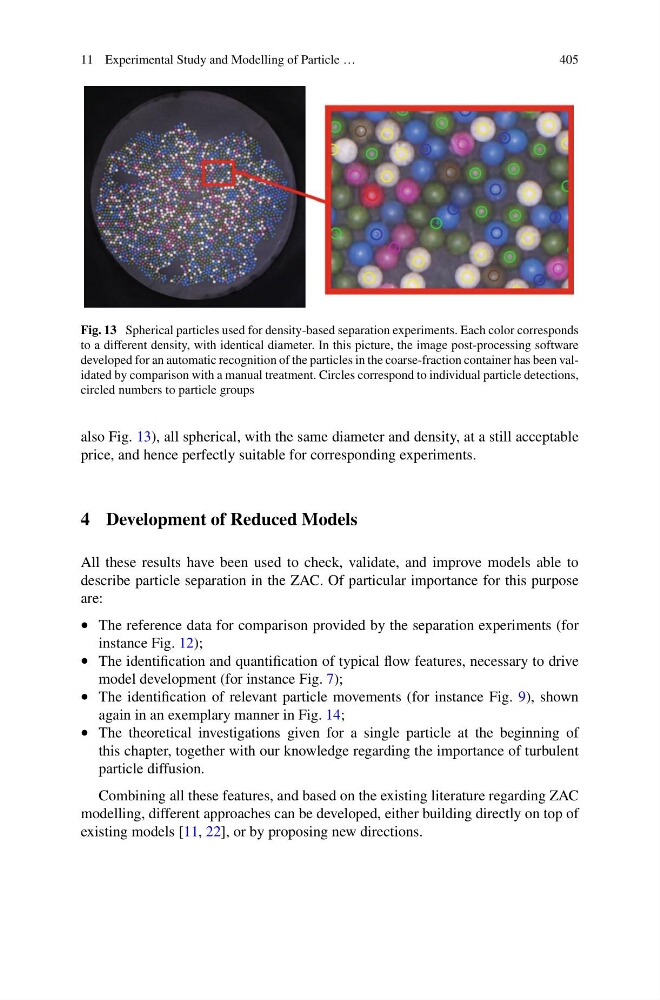
Fig. 13 Spherical particles used for density-based separation experiments. Each color corresponds
to a different density, with identical diameter. In this picture, the image post-processing software
developed for an automatic recognition of the particles in the coarse-fraction container has been validated by comparison with a manual treatment. Circles correspond to individual particle detections,
circled numbers to particle groups
also Fig. 13), all spherical, with the same diameter and density, at a still acceptable
price, and hence perfectly suitable for corresponding experiments.
4 Development of Reduced Models
All these results have been used to check, validate, and improve models able to
describe particle separation in the ZAC. Of particular importance for this purpose
are:
• The reference data for comparison provided by the separation experiments (for
instance Fig. 12);
• The identification and quantification of typical flow features, necessary to drive
model development (for instance Fig. 7);
• The identification of relevant particle movements (for instance Fig. 9), shown
again in an exemplary manner in Fig. 14;
• The theoretical investigations given for a single particle at the beginning of
this chapter, together with our knowledge regarding the importance of turbulent
particle diffusion.
Combining all these features, and based on the existing literature regarding ZAC
modelling, different approaches can be developed, either building directly on top of
existing models [11, 22], or by proposing new directions.
405
Fig. 13 Spherical particles used for density-based separation experiments. Each color corresponds
to a different density, with identical diameter. In this picture, the image post-processing software
developed for an automatic recognition of the particles in the coarse-fraction container has been validated by comparison with a manual treatment. Circles correspond to individual particle detections,
circled numbers to particle groups
also Fig. 13), all spherical, with the same diameter and density, at a still acceptable
price, and hence perfectly suitable for corresponding experiments.
4 Development of Reduced Models
All these results have been used to check, validate, and improve models able to
describe particle separation in the ZAC. Of particular importance for this purpose
are:
• The reference data for comparison provided by the separation experiments (for
instance Fig. 12);
• The identification and quantification of typical flow features, necessary to drive
model development (for instance Fig. 7);
• The identification of relevant particle movements (for instance Fig. 9), shown
again in an exemplary manner in Fig. 14;
• The theoretical investigations given for a single particle at the beginning of
this chapter, together with our knowledge regarding the importance of turbulent
particle diffusion.
Combining all these features, and based on the existing literature regarding ZAC
modelling, different approaches can be developed, either building directly on top of
existing models [11, 22], or by proposing new directions.