

382
M. Weers et al.
Fig. 29 Single particle
movement, f = 45 Hz, A =
2.1 mm
0.0
0.5
1.0
1.5
0
5
10
15
20
25
30
35
Ɵme / s
height / mm
ParƟcle
Plate
were carried out with quartz particle fills with a mean diameter of x 50,3 = 1 mm and
a quantity of m = 250 g. The dimensionless acceleration number was determined
for each experiment:
=
A ω
2
g
=
4 A π
2 f
2
g
(18)
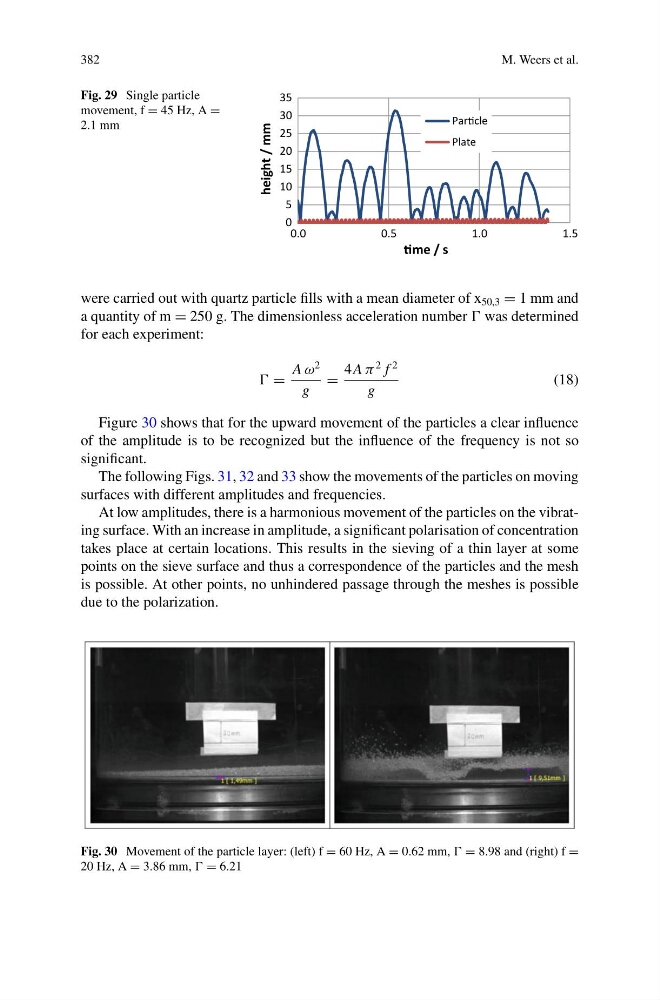
Figure 30 shows that for the upward movement of the particles a clear influence
of the amplitude is to be recognized but the influence of the frequency is not so
significant.
The following Figs. 31, 32 and 33 show the movements of the particles on moving
surfaces with different amplitudes and frequencies.
At low amplitudes, there is a harmonious movement of the particles on the vibrating surface. With an increase in amplitude, a significant polarisation of concentration
takes place at certain locations. This results in the sieving of a thin layer at some
points on the sieve surface and thus a correspondence of the particles and the mesh
is possible. At other points, no unhindered passage through the meshes is possible
due to the polarization.
Fig. 30 Movement of the particle layer: (left) f = 60 Hz, A = 0.62 mm, = 8.98 and (right) f =
20 Hz, A = 3.86 mm, = 6.21
M. Weers et al.
Fig. 29 Single particle
movement, f = 45 Hz, A =
2.1 mm
0.0
0.5
1.0
1.5
0
5
10
15
20
25
30
35
Ɵme / s
height / mm
ParƟcle
Plate
were carried out with quartz particle fills with a mean diameter of x 50,3 = 1 mm and
a quantity of m = 250 g. The dimensionless acceleration number was determined
for each experiment:
=
A ω
2
g
=
4 A π
2 f
2
g
(18)
Figure 30 shows that for the upward movement of the particles a clear influence
of the amplitude is to be recognized but the influence of the frequency is not so
significant.
The following Figs. 31, 32 and 33 show the movements of the particles on moving
surfaces with different amplitudes and frequencies.
At low amplitudes, there is a harmonious movement of the particles on the vibrating surface. With an increase in amplitude, a significant polarisation of concentration
takes place at certain locations. This results in the sieving of a thin layer at some
points on the sieve surface and thus a correspondence of the particles and the mesh
is possible. At other points, no unhindered passage through the meshes is possible
due to the polarization.
Fig. 30 Movement of the particle layer: (left) f = 60 Hz, A = 0.62 mm, = 8.98 and (right) f =
20 Hz, A = 3.86 mm, = 6.21