

336
A. Strobel et al.
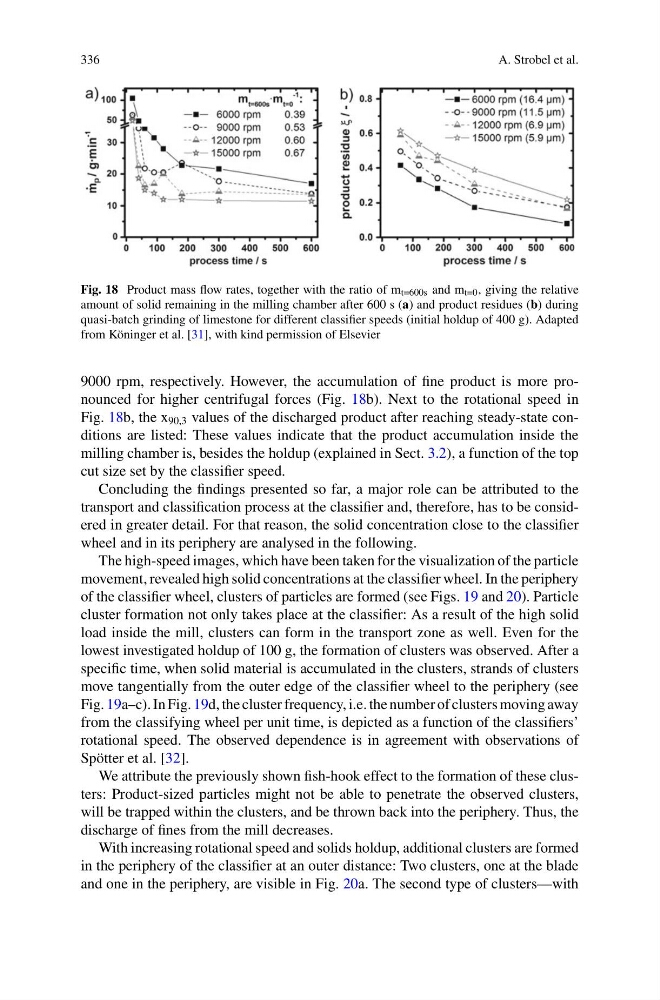
Fig. 18 Product mass flow rates, together with the ratio of m t=600s and m t=0 , giving the relative
amount of solid remaining in the milling chamber after 600 s (a) and product residues (b) during
quasi-batch grinding of limestone for different classifier speeds (initial holdup of 400 g). Adapted
from Köninger et al. [31], with kind permission of Elsevier
9000 rpm, respectively. However, the accumulation of fine product is more pronounced for higher centrifugal forces (Fig. 18b). Next to the rotational speed in
Fig. 18b, the x 90,3 values of the discharged product after reaching steady-state conditions are listed: These values indicate that the product accumulation inside the
milling chamber is, besides the holdup (explained in Sect. 3.2), a function of the top
cut size set by the classifier speed.
Concluding the findings presented so far, a major role can be attributed to the
transport and classification process at the classifier and, therefore, has to be considered in greater detail. For that reason, the solid concentration close to the classifier
wheel and in its periphery are analysed in the following.
The high-speed images, which have been taken for the visualization of the particle
movement, revealed high solid concentrations at the classifier wheel. In the periphery
of the classifier wheel, clusters of particles are formed (see Figs. 19 and 20). Particle
cluster formation not only takes place at the classifier: As a result of the high solid
load inside the mill, clusters can form in the transport zone as well. Even for the
lowest investigated holdup of 100 g, the formation of clusters was observed. After a
specific time, when solid material is accumulated in the clusters, strands of clusters
move tangentially from the outer edge of the classifier wheel to the periphery (see
Fig. 19a–c). In Fig. 19d, the cluster frequency, i.e. the number of clusters moving away
from the classifying wheel per unit time, is depicted as a function of the classifiers’
rotational speed. The observed dependence is in agreement with observations of
Spötter et al. [32].
We attribute the previously shown fish-hook effect to the formation of these clusters: Product-sized particles might not be able to penetrate the observed clusters,
will be trapped within the clusters, and be thrown back into the periphery. Thus, the
discharge of fines from the mill decreases.
With increasing rotational speed and solids holdup, additional clusters are formed
in the periphery of the classifier at an outer distance: Two clusters, one at the blade
and one in the periphery, are visible in Fig. 20a. The second type of clusters—with
A. Strobel et al.
Fig. 18 Product mass flow rates, together with the ratio of m t=600s and m t=0 , giving the relative
amount of solid remaining in the milling chamber after 600 s (a) and product residues (b) during
quasi-batch grinding of limestone for different classifier speeds (initial holdup of 400 g). Adapted
from Köninger et al. [31], with kind permission of Elsevier
9000 rpm, respectively. However, the accumulation of fine product is more pronounced for higher centrifugal forces (Fig. 18b). Next to the rotational speed in
Fig. 18b, the x 90,3 values of the discharged product after reaching steady-state conditions are listed: These values indicate that the product accumulation inside the
milling chamber is, besides the holdup (explained in Sect. 3.2), a function of the top
cut size set by the classifier speed.
Concluding the findings presented so far, a major role can be attributed to the
transport and classification process at the classifier and, therefore, has to be considered in greater detail. For that reason, the solid concentration close to the classifier
wheel and in its periphery are analysed in the following.
The high-speed images, which have been taken for the visualization of the particle
movement, revealed high solid concentrations at the classifier wheel. In the periphery
of the classifier wheel, clusters of particles are formed (see Figs. 19 and 20). Particle
cluster formation not only takes place at the classifier: As a result of the high solid
load inside the mill, clusters can form in the transport zone as well. Even for the
lowest investigated holdup of 100 g, the formation of clusters was observed. After a
specific time, when solid material is accumulated in the clusters, strands of clusters
move tangentially from the outer edge of the classifier wheel to the periphery (see
Fig. 19a–c). In Fig. 19d, the cluster frequency, i.e. the number of clusters moving away
from the classifying wheel per unit time, is depicted as a function of the classifiers’
rotational speed. The observed dependence is in agreement with observations of
Spötter et al. [32].
We attribute the previously shown fish-hook effect to the formation of these clusters: Product-sized particles might not be able to penetrate the observed clusters,
will be trapped within the clusters, and be thrown back into the periphery. Thus, the
discharge of fines from the mill decreases.
With increasing rotational speed and solids holdup, additional clusters are formed
in the periphery of the classifier at an outer distance: Two clusters, one at the blade
and one in the periphery, are visible in Fig. 20a. The second type of clusters—with