

328
A. Strobel et al.
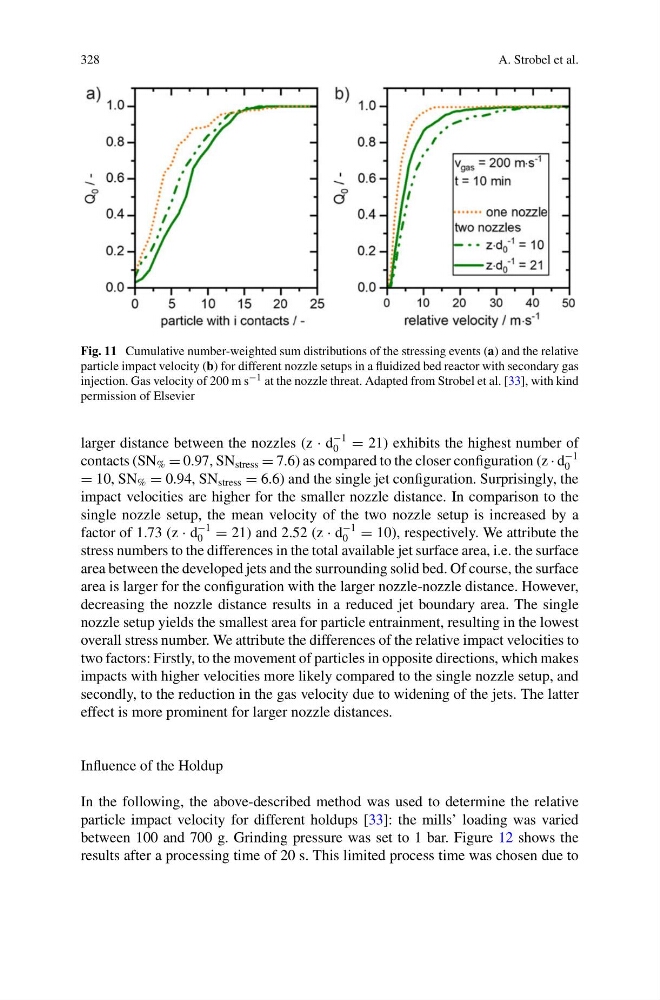
Fig. 11 Cumulative number-weighted sum distributions of the stressing events (a) and the relative
particle impact velocity (b) for different nozzle setups in a fluidized bed reactor with secondary gas
injection. Gas velocity of 200 m s −1 at the nozzle threat. Adapted from Strobel et al. [33], with kind
permission of Elsevier
larger distance between the nozzles (z · d
−1
0 = 21) exhibits the highest number of
contacts (SN % = 0.97, SN stress = 7.6) as compared to the closer configuration (z · d
−1
0
= 10, SN % = 0.94, SN stress = 6.6) and the single jet configuration. Surprisingly, the
impact velocities are higher for the smaller nozzle distance. In comparison to the
single nozzle setup, the mean velocity of the two nozzle setup is increased by a
factor of 1.73 (z · d
−1
0 = 21) and 2.52 (z · d
−1
0 = 10), respectively. We attribute the
stress numbers to the differences in the total available jet surface area, i.e. the surface
area between the developed jets and the surrounding solid bed. Of course, the surface
area is larger for the configuration with the larger nozzle-nozzle distance. However,
decreasing the nozzle distance results in a reduced jet boundary area. The single
nozzle setup yields the smallest area for particle entrainment, resulting in the lowest
overall stress number. We attribute the differences of the relative impact velocities to
two factors: Firstly, to the movement of particles in opposite directions, which makes
impacts with higher velocities more likely compared to the single nozzle setup, and
secondly, to the reduction in the gas velocity due to widening of the jets. The latter
effect is more prominent for larger nozzle distances.
Influence of the Holdup
In the following, the above-described method was used to determine the relative
particle impact velocity for different holdups [33]: the mills’ loading was varied
between 100 and 700 g. Grinding pressure was set to 1 bar. Figure 12 shows the
results after a processing time of 20 s. This limited process time was chosen due to
A. Strobel et al.
Fig. 11 Cumulative number-weighted sum distributions of the stressing events (a) and the relative
particle impact velocity (b) for different nozzle setups in a fluidized bed reactor with secondary gas
injection. Gas velocity of 200 m s −1 at the nozzle threat. Adapted from Strobel et al. [33], with kind
permission of Elsevier
larger distance between the nozzles (z · d
−1
0 = 21) exhibits the highest number of
contacts (SN % = 0.97, SN stress = 7.6) as compared to the closer configuration (z · d
−1
0
= 10, SN % = 0.94, SN stress = 6.6) and the single jet configuration. Surprisingly, the
impact velocities are higher for the smaller nozzle distance. In comparison to the
single nozzle setup, the mean velocity of the two nozzle setup is increased by a
factor of 1.73 (z · d
−1
0 = 21) and 2.52 (z · d
−1
0 = 10), respectively. We attribute the
stress numbers to the differences in the total available jet surface area, i.e. the surface
area between the developed jets and the surrounding solid bed. Of course, the surface
area is larger for the configuration with the larger nozzle-nozzle distance. However,
decreasing the nozzle distance results in a reduced jet boundary area. The single
nozzle setup yields the smallest area for particle entrainment, resulting in the lowest
overall stress number. We attribute the differences of the relative impact velocities to
two factors: Firstly, to the movement of particles in opposite directions, which makes
impacts with higher velocities more likely compared to the single nozzle setup, and
secondly, to the reduction in the gas velocity due to widening of the jets. The latter
effect is more prominent for larger nozzle distances.
Influence of the Holdup
In the following, the above-described method was used to determine the relative
particle impact velocity for different holdups [33]: the mills’ loading was varied
between 100 and 700 g. Grinding pressure was set to 1 bar. Figure 12 shows the
results after a processing time of 20 s. This limited process time was chosen due to