

1 Process Modeling for Dynamic Disperse Particle Separation …
11
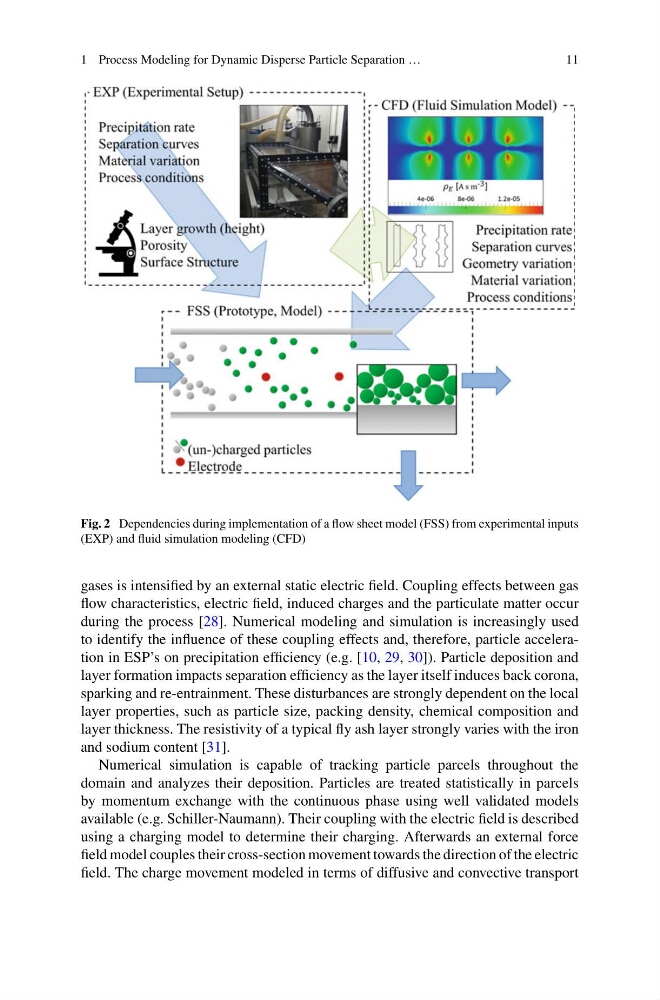
Fig. 2 Dependencies during implementation of a flow sheet model (FSS) from experimental inputs
(EXP) and fluid simulation modeling (CFD)
gases is intensified by an external static electric field. Coupling effects between gas
flow characteristics, electric field, induced charges and the particulate matter occur
during the process [28]. Numerical modeling and simulation is increasingly used
to identify the influence of these coupling effects and, therefore, particle acceleration in ESP’s on precipitation efficiency (e.g. [10, 29, 30]). Particle deposition and
layer formation impacts separation efficiency as the layer itself induces back corona,
sparking and re-entrainment. These disturbances are strongly dependent on the local
layer properties, such as particle size, packing density, chemical composition and
layer thickness. The resistivity of a typical fly ash layer strongly varies with the iron
and sodium content [31].
Numerical simulation is capable of tracking particle parcels throughout the
domain and analyzes their deposition. Particles are treated statistically in parcels
by momentum exchange with the continuous phase using well validated models
available (e.g. Schiller-Naumann). Their coupling with the electric field is described
using a charging model to determine their charging. Afterwards an external force
field model couples their cross-section movement towards the direction of the electric
field. The charge movement modeled in terms of diffusive and convective transport
11
Fig. 2 Dependencies during implementation of a flow sheet model (FSS) from experimental inputs
(EXP) and fluid simulation modeling (CFD)
gases is intensified by an external static electric field. Coupling effects between gas
flow characteristics, electric field, induced charges and the particulate matter occur
during the process [28]. Numerical modeling and simulation is increasingly used
to identify the influence of these coupling effects and, therefore, particle acceleration in ESP’s on precipitation efficiency (e.g. [10, 29, 30]). Particle deposition and
layer formation impacts separation efficiency as the layer itself induces back corona,
sparking and re-entrainment. These disturbances are strongly dependent on the local
layer properties, such as particle size, packing density, chemical composition and
layer thickness. The resistivity of a typical fly ash layer strongly varies with the iron
and sodium content [31].
Numerical simulation is capable of tracking particle parcels throughout the
domain and analyzes their deposition. Particles are treated statistically in parcels
by momentum exchange with the continuous phase using well validated models
available (e.g. Schiller-Naumann). Their coupling with the electric field is described
using a charging model to determine their charging. Afterwards an external force
field model couples their cross-section movement towards the direction of the electric
field. The charge movement modeled in terms of diffusive and convective transport