

5 Development of a Dynamic-Physical Process Model for Sieving
143
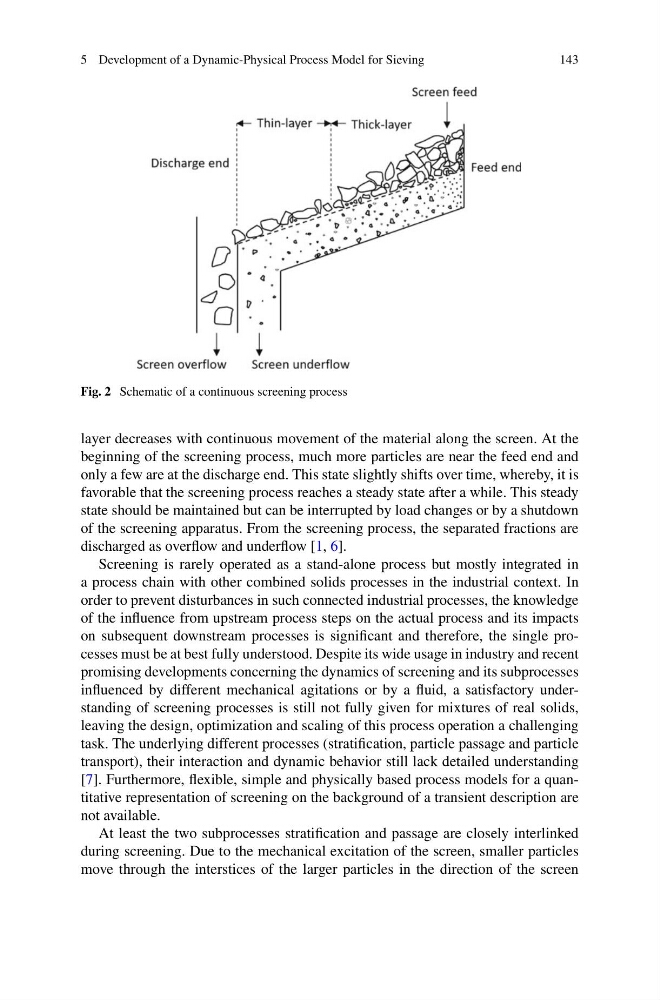
Fig. 2 Schematic of a continuous screening process
layer decreases with continuous movement of the material along the screen. At the
beginning of the screening process, much more particles are near the feed end and
only a few are at the discharge end. This state slightly shifts over time, whereby, it is
favorable that the screening process reaches a steady state after a while. This steady
state should be maintained but can be interrupted by load changes or by a shutdown
of the screening apparatus. From the screening process, the separated fractions are
discharged as overflow and underflow [1, 6].
Screening is rarely operated as a stand-alone process but mostly integrated in
a process chain with other combined solids processes in the industrial context. In
order to prevent disturbances in such connected industrial processes, the knowledge
of the influence from upstream process steps on the actual process and its impacts
on subsequent downstream processes is significant and therefore, the single processes must be at best fully understood. Despite its wide usage in industry and recent
promising developments concerning the dynamics of screening and its subprocesses
influenced by different mechanical agitations or by a fluid, a satisfactory understanding of screening processes is still not fully given for mixtures of real solids,
leaving the design, optimization and scaling of this process operation a challenging
task. The underlying different processes (stratification, particle passage and particle
transport), their interaction and dynamic behavior still lack detailed understanding
[7]. Furthermore, flexible, simple and physically based process models for a quantitative representation of screening on the background of a transient description are
not available.
At least the two subprocesses stratification and passage are closely interlinked
during screening. Due to the mechanical excitation of the screen, smaller particles
move through the interstices of the larger particles in the direction of the screen
143
Fig. 2 Schematic of a continuous screening process
layer decreases with continuous movement of the material along the screen. At the
beginning of the screening process, much more particles are near the feed end and
only a few are at the discharge end. This state slightly shifts over time, whereby, it is
favorable that the screening process reaches a steady state after a while. This steady
state should be maintained but can be interrupted by load changes or by a shutdown
of the screening apparatus. From the screening process, the separated fractions are
discharged as overflow and underflow [1, 6].
Screening is rarely operated as a stand-alone process but mostly integrated in
a process chain with other combined solids processes in the industrial context. In
order to prevent disturbances in such connected industrial processes, the knowledge
of the influence from upstream process steps on the actual process and its impacts
on subsequent downstream processes is significant and therefore, the single processes must be at best fully understood. Despite its wide usage in industry and recent
promising developments concerning the dynamics of screening and its subprocesses
influenced by different mechanical agitations or by a fluid, a satisfactory understanding of screening processes is still not fully given for mixtures of real solids,
leaving the design, optimization and scaling of this process operation a challenging
task. The underlying different processes (stratification, particle passage and particle
transport), their interaction and dynamic behavior still lack detailed understanding
[7]. Furthermore, flexible, simple and physically based process models for a quantitative representation of screening on the background of a transient description are
not available.
At least the two subprocesses stratification and passage are closely interlinked
during screening. Due to the mechanical excitation of the screen, smaller particles
move through the interstices of the larger particles in the direction of the screen