

4
S. Sander et al.
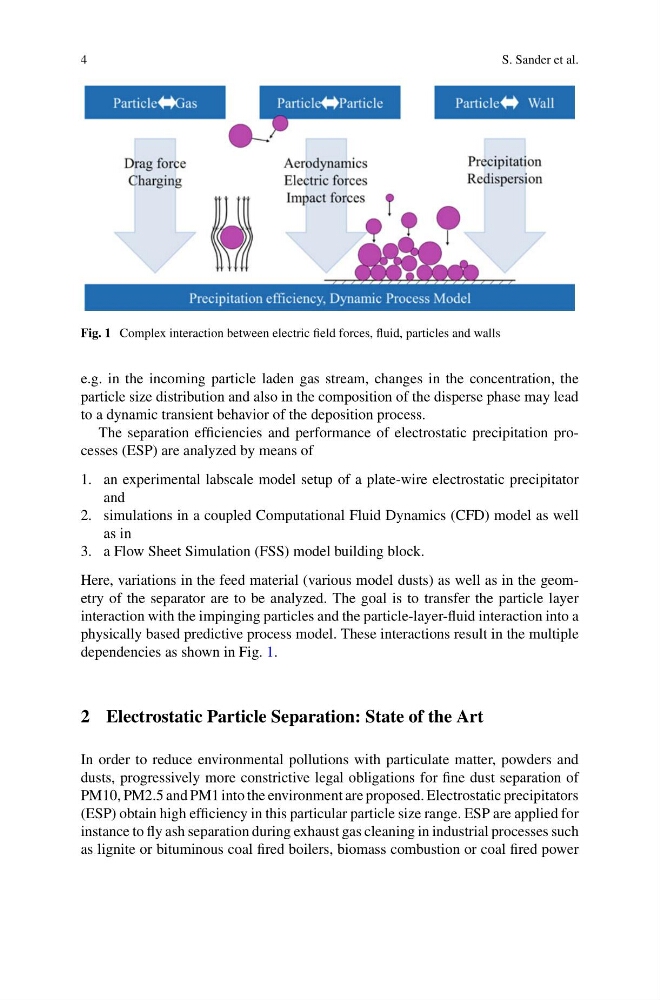
Fig. 1 Complex interaction between electric field forces, fluid, particles and walls
e.g. in the incoming particle laden gas stream, changes in the concentration, the
particle size distribution and also in the composition of the disperse phase may lead
to a dynamic transient behavior of the deposition process.
The separation efficiencies and performance of electrostatic precipitation processes (ESP) are analyzed by means of
1. an experimental labscale model setup of a plate-wire electrostatic precipitator
and
2. simulations in a coupled Computational Fluid Dynamics (CFD) model as well
as in
3. a Flow Sheet Simulation (FSS) model building block.
Here, variations in the feed material (various model dusts) as well as in the geometry of the separator are to be analyzed. The goal is to transfer the particle layer
interaction with the impinging particles and the particle-layer-fluid interaction into a
physically based predictive process model. These interactions result in the multiple
dependencies as shown in Fig. 1.
2 Electrostatic Particle Separation: State of the Art
In order to reduce environmental pollutions with particulate matter, powders and
dusts, progressively more constrictive legal obligations for fine dust separation of
PM10, PM2.5 and PM1 into the environment are proposed. Electrostatic precipitators
(ESP) obtain high efficiency in this particular particle size range. ESP are applied for
instance to fly ash separation during exhaust gas cleaning in industrial processes such
as lignite or bituminous coal fired boilers, biomass combustion or coal fired power
S. Sander et al.
Fig. 1 Complex interaction between electric field forces, fluid, particles and walls
e.g. in the incoming particle laden gas stream, changes in the concentration, the
particle size distribution and also in the composition of the disperse phase may lead
to a dynamic transient behavior of the deposition process.
The separation efficiencies and performance of electrostatic precipitation processes (ESP) are analyzed by means of
1. an experimental labscale model setup of a plate-wire electrostatic precipitator
and
2. simulations in a coupled Computational Fluid Dynamics (CFD) model as well
as in
3. a Flow Sheet Simulation (FSS) model building block.
Here, variations in the feed material (various model dusts) as well as in the geometry of the separator are to be analyzed. The goal is to transfer the particle layer
interaction with the impinging particles and the particle-layer-fluid interaction into a
physically based predictive process model. These interactions result in the multiple
dependencies as shown in Fig. 1.
2 Electrostatic Particle Separation: State of the Art
In order to reduce environmental pollutions with particulate matter, powders and
dusts, progressively more constrictive legal obligations for fine dust separation of
PM10, PM2.5 and PM1 into the environment are proposed. Electrostatic precipitators
(ESP) obtain high efficiency in this particular particle size range. ESP are applied for
instance to fly ash separation during exhaust gas cleaning in industrial processes such
as lignite or bituminous coal fired boilers, biomass combustion or coal fired power