

3 Dynamics of Spray Granulation in Continuously …
95
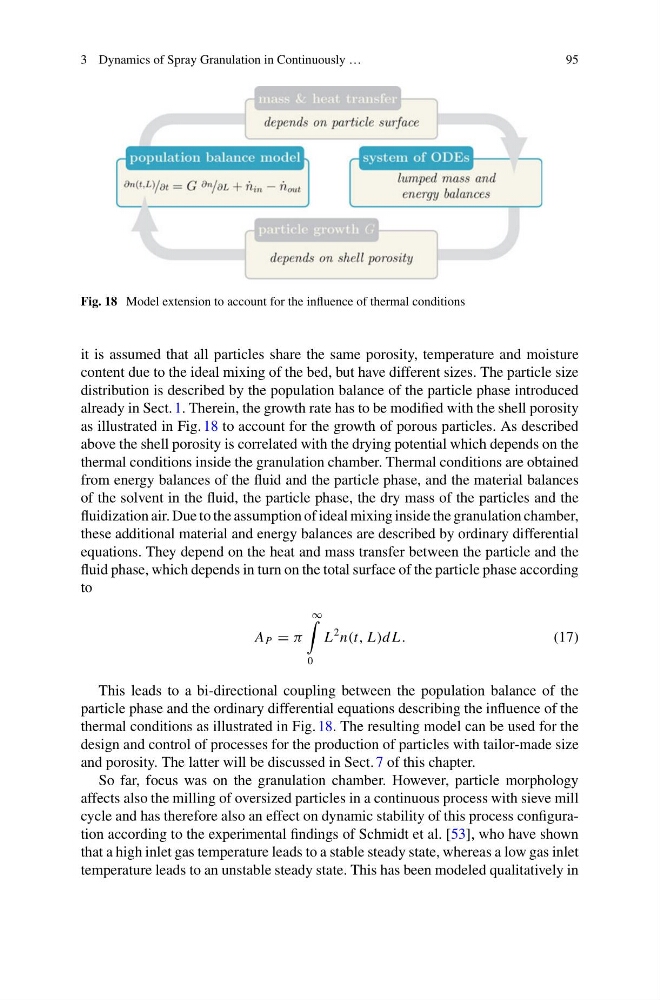
Fig. 18 Model extension to account for the influence of thermal conditions
it is assumed that all particles share the same porosity, temperature and moisture
content due to the ideal mixing of the bed, but have different sizes. The particle size
distribution is described by the population balance of the particle phase introduced
already in Sect. 1. Therein, the growth rate has to be modified with the shell porosity
as illustrated in Fig. 18 to account for the growth of porous particles. As described
above the shell porosity is correlated with the drying potential which depends on the
thermal conditions inside the granulation chamber. Thermal conditions are obtained
from energy balances of the fluid and the particle phase, and the material balances
of the solvent in the fluid, the particle phase, the dry mass of the particles and the
fluidization air. Due to the assumption of ideal mixing inside the granulation chamber,
these additional material and energy balances are described by ordinary differential
equations. They depend on the heat and mass transfer between the particle and the
fluid phase, which depends in turn on the total surface of the particle phase according
to
A P = π
∞
0
L
2 n(t, L)d L.
(17)
This leads to a bi-directional coupling between the population balance of the
particle phase and the ordinary differential equations describing the influence of the
thermal conditions as illustrated in Fig. 18. The resulting model can be used for the
design and control of processes for the production of particles with tailor-made size
and porosity. The latter will be discussed in Sect. 7 of this chapter.
So far, focus was on the granulation chamber. However, particle morphology
affects also the milling of oversized particles in a continuous process with sieve mill
cycle and has therefore also an effect on dynamic stability of this process configuration according to the experimental findings of Schmidt et al. [53], who have shown
that a high inlet gas temperature leads to a stable steady state, whereas a low gas inlet
temperature leads to an unstable steady state. This has been modeled qualitatively in
95
Fig. 18 Model extension to account for the influence of thermal conditions
it is assumed that all particles share the same porosity, temperature and moisture
content due to the ideal mixing of the bed, but have different sizes. The particle size
distribution is described by the population balance of the particle phase introduced
already in Sect. 1. Therein, the growth rate has to be modified with the shell porosity
as illustrated in Fig. 18 to account for the growth of porous particles. As described
above the shell porosity is correlated with the drying potential which depends on the
thermal conditions inside the granulation chamber. Thermal conditions are obtained
from energy balances of the fluid and the particle phase, and the material balances
of the solvent in the fluid, the particle phase, the dry mass of the particles and the
fluidization air. Due to the assumption of ideal mixing inside the granulation chamber,
these additional material and energy balances are described by ordinary differential
equations. They depend on the heat and mass transfer between the particle and the
fluid phase, which depends in turn on the total surface of the particle phase according
to
A P = π
∞
0
L
2 n(t, L)d L.
(17)
This leads to a bi-directional coupling between the population balance of the
particle phase and the ordinary differential equations describing the influence of the
thermal conditions as illustrated in Fig. 18. The resulting model can be used for the
design and control of processes for the production of particles with tailor-made size
and porosity. The latter will be discussed in Sect. 7 of this chapter.
So far, focus was on the granulation chamber. However, particle morphology
affects also the milling of oversized particles in a continuous process with sieve mill
cycle and has therefore also an effect on dynamic stability of this process configuration according to the experimental findings of Schmidt et al. [53], who have shown
that a high inlet gas temperature leads to a stable steady state, whereas a low gas inlet
temperature leads to an unstable steady state. This has been modeled qualitatively in