

4.2.2 Molecular Mechanics Approaches
The computational demands imposed by large and flexible systems may be too
excessive to apply QM calculations. As mentioned above, combined QM/MM
approaches have played a significant role in the development of computational
models for asymmetric catalysis [49]. Even so, cheaper methods may be required,
particularly in the context of screening several catalysts. While one typically expects
to suffer a loss in accuracy when using less costly approaches such as molecular
mechanics, some of the best predictive results to date have been obtained at this level
of theory. This is, in part, attributable to the fact that prior to the advent of dispersioncorrected DFT methods, force fields already described these interactions through
parametrized interatomic potentials. Additionally, the ability to parametrize a
reaction-specific force field allows one to fit to a high-level reference PES.
The transition state-specific force field approach developed by Norrby and Wiest
has been applied and tested for enantioselectivity prediction. Force field parameterization uses QM data, thus the term quantum-guided molecular mechanics (Q2MM)
[44]. The method has been successfully applied to various transition metal-catalysed
transformations such as rhodium-catalysed enamide hydrogenations to predict the
enantioselectivity of new chiral ligands and reactants (Fig. 11) [50]. In this, and other
examples, a strong correlation is obtained between predicted and experimental levels
of enantioselectivity for different substrate and ligand structures. The computational
cost of Low Mode/Monte Carlo conformational sampling of the transition structures
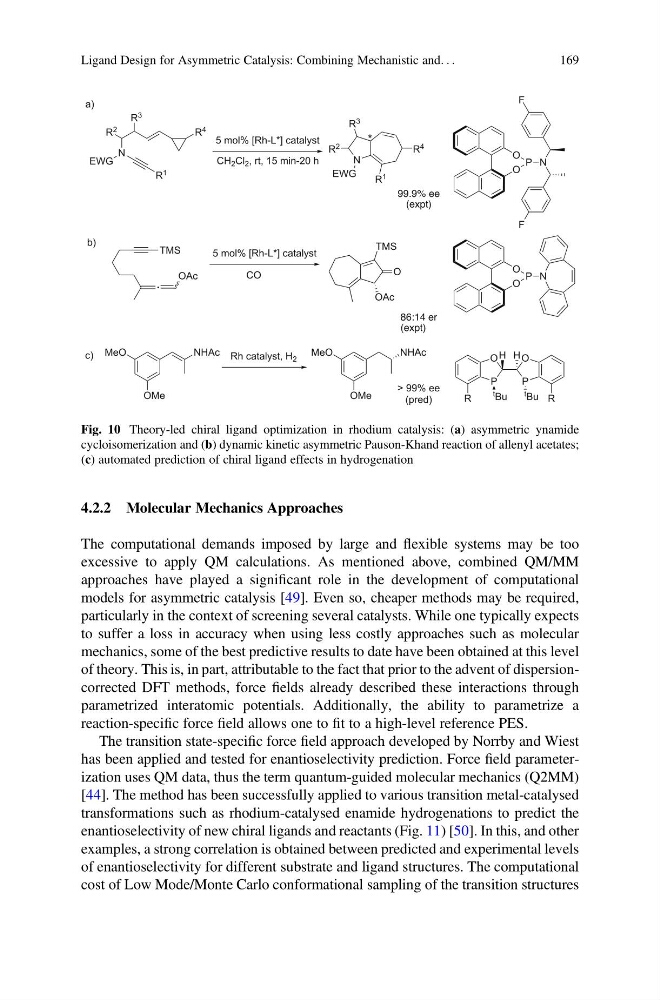
Fig. 10 Theory-led chiral ligand optimization in rhodium catalysis: (a) asymmetric ynamide
cycloisomerization and (b) dynamic kinetic asymmetric Pauson-Khand reaction of allenyl acetates;
(c) automated prediction of chiral ligand effects in hydrogenation
Ligand Design for Asymmetric Catalysis: Combining Mechanistic and. . .
169
The computational demands imposed by large and flexible systems may be too
excessive to apply QM calculations. As mentioned above, combined QM/MM
approaches have played a significant role in the development of computational
models for asymmetric catalysis [49]. Even so, cheaper methods may be required,
particularly in the context of screening several catalysts. While one typically expects
to suffer a loss in accuracy when using less costly approaches such as molecular
mechanics, some of the best predictive results to date have been obtained at this level
of theory. This is, in part, attributable to the fact that prior to the advent of dispersioncorrected DFT methods, force fields already described these interactions through
parametrized interatomic potentials. Additionally, the ability to parametrize a
reaction-specific force field allows one to fit to a high-level reference PES.
The transition state-specific force field approach developed by Norrby and Wiest
has been applied and tested for enantioselectivity prediction. Force field parameterization uses QM data, thus the term quantum-guided molecular mechanics (Q2MM)
[44]. The method has been successfully applied to various transition metal-catalysed
transformations such as rhodium-catalysed enamide hydrogenations to predict the
enantioselectivity of new chiral ligands and reactants (Fig. 11) [50]. In this, and other
examples, a strong correlation is obtained between predicted and experimental levels
of enantioselectivity for different substrate and ligand structures. The computational
cost of Low Mode/Monte Carlo conformational sampling of the transition structures
Fig. 10 Theory-led chiral ligand optimization in rhodium catalysis: (a) asymmetric ynamide
cycloisomerization and (b) dynamic kinetic asymmetric Pauson-Khand reaction of allenyl acetates;
(c) automated prediction of chiral ligand effects in hydrogenation
Ligand Design for Asymmetric Catalysis: Combining Mechanistic and. . .
169