

2.2 Linear Cooling Ramp Method
47
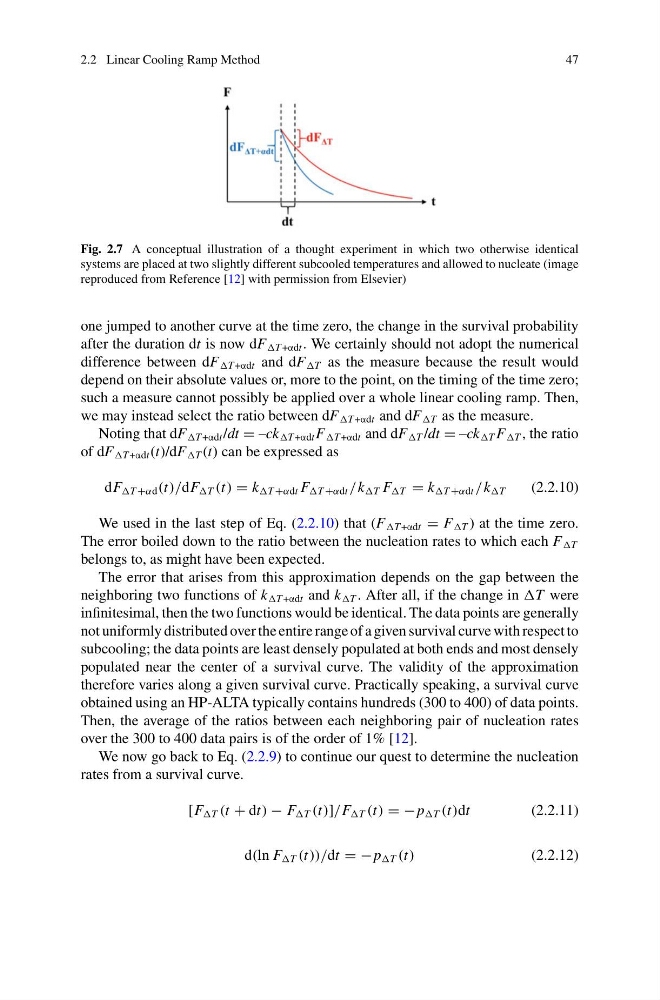
Fig. 2.7 A conceptual illustration of a thought experiment in which two otherwise identical
systems are placed at two slightly different subcooled temperatures and allowed to nucleate (image
reproduced from Reference [12] with permission from Elsevier)
one jumped to another curve at the time zero, the change in the survival probability
after the duration dt is now dF T +αdt . We certainly should not adopt the numerical
difference between dF T +αdt and dF T as the measure because the result would
depend on their absolute values or, more to the point, on the timing of the time zero;
such a measure cannot possibly be applied over a whole linear cooling ramp. Then,
we may instead select the ratio between dF T +αdt and dF T as the measure.
Noting that dF T +αdt /dt = –ck T +αdt F T +αdt and dF T /dt = –ck T F T , the ratio
of dF T +αdt (t)/dF T (t) can be expressed as
dF T +αd (t)/dF T (t) = k T +αdt F T +αdt /k T F T = k T +αdt /k T
(2.2.10)
We used in the last step of Eq. (2.2.10) that (F T +αdt = F T ) at the time zero.
The error boiled down to the ratio between the nucleation rates to which each F T
belongs to, as might have been expected.
The error that arises from this approximation depends on the gap between the
neighboring two functions of k T +αdt and k T . After all, if the change in T were
infinitesimal, then the two functions would be identical. The data points are generally
not uniformly distributed over the entire range of a given survival curve with respect to
subcooling; the data points are least densely populated at both ends and most densely
populated near the center of a survival curve. The validity of the approximation
therefore varies along a given survival curve. Practically speaking, a survival curve
obtained using an HP-ALTA typically contains hundreds (300 to 400) of data points.
Then, the average of the ratios between each neighboring pair of nucleation rates
over the 300 to 400 data pairs is of the order of 1% [12].
We now go back to Eq. (2.2.9) to continue our quest to determine the nucleation
rates from a survival curve.
[F T (t + dt) − F T (t)]/F T (t) = −p T (t)dt
(2.2.11)
d(ln F T (t))/dt = −p T (t)
(2.2.12)
47
Fig. 2.7 A conceptual illustration of a thought experiment in which two otherwise identical
systems are placed at two slightly different subcooled temperatures and allowed to nucleate (image
reproduced from Reference [12] with permission from Elsevier)
one jumped to another curve at the time zero, the change in the survival probability
after the duration dt is now dF T +αdt . We certainly should not adopt the numerical
difference between dF T +αdt and dF T as the measure because the result would
depend on their absolute values or, more to the point, on the timing of the time zero;
such a measure cannot possibly be applied over a whole linear cooling ramp. Then,
we may instead select the ratio between dF T +αdt and dF T as the measure.
Noting that dF T +αdt /dt = –ck T +αdt F T +αdt and dF T /dt = –ck T F T , the ratio
of dF T +αdt (t)/dF T (t) can be expressed as
dF T +αd (t)/dF T (t) = k T +αdt F T +αdt /k T F T = k T +αdt /k T
(2.2.10)
We used in the last step of Eq. (2.2.10) that (F T +αdt = F T ) at the time zero.
The error boiled down to the ratio between the nucleation rates to which each F T
belongs to, as might have been expected.
The error that arises from this approximation depends on the gap between the
neighboring two functions of k T +αdt and k T . After all, if the change in T were
infinitesimal, then the two functions would be identical. The data points are generally
not uniformly distributed over the entire range of a given survival curve with respect to
subcooling; the data points are least densely populated at both ends and most densely
populated near the center of a survival curve. The validity of the approximation
therefore varies along a given survival curve. Practically speaking, a survival curve
obtained using an HP-ALTA typically contains hundreds (300 to 400) of data points.
Then, the average of the ratios between each neighboring pair of nucleation rates
over the 300 to 400 data pairs is of the order of 1% [12].
We now go back to Eq. (2.2.9) to continue our quest to determine the nucleation
rates from a survival curve.
[F T (t + dt) − F T (t)]/F T (t) = −p T (t)dt
(2.2.11)
d(ln F T (t))/dt = −p T (t)
(2.2.12)