

5.2 Nucleation Rate of Gas Hydrates
119
Water
Water
Gas
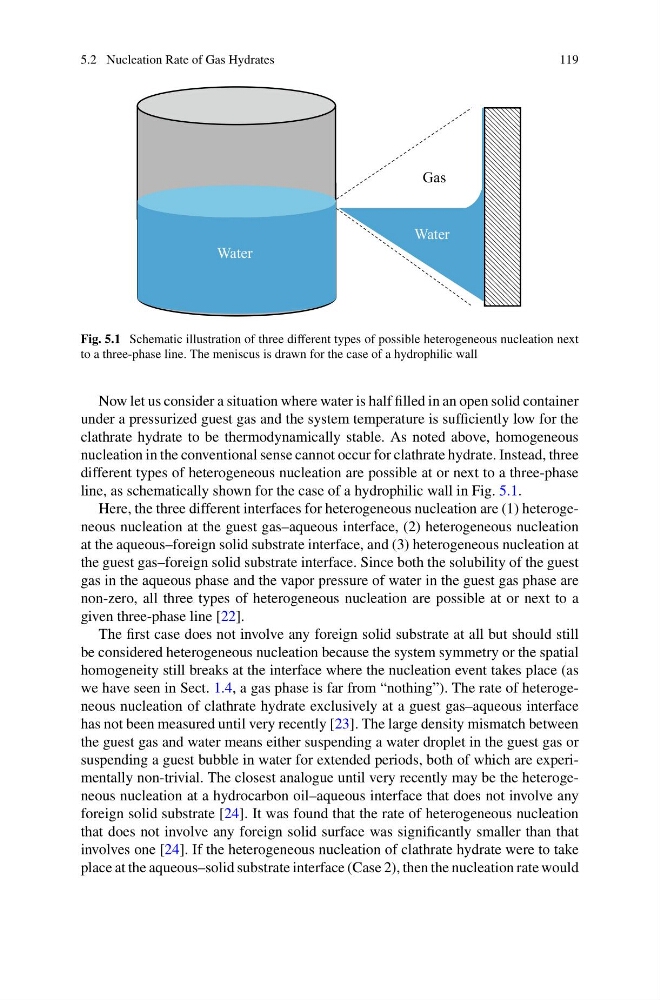
Fig. 5.1 Schematic illustration of three different types of possible heterogeneous nucleation next
to a three-phase line. The meniscus is drawn for the case of a hydrophilic wall
Now let us consider a situation where water is half filled in an open solid container
under a pressurized guest gas and the system temperature is sufficiently low for the
clathrate hydrate to be thermodynamically stable. As noted above, homogeneous
nucleation in the conventional sense cannot occur for clathrate hydrate. Instead, three
different types of heterogeneous nucleation are possible at or next to a three-phase
line, as schematically shown for the case of a hydrophilic wall in Fig. 5.1.
Here, the three different interfaces for heterogeneous nucleation are (1) heterogeneous nucleation at the guest gas–aqueous interface, (2) heterogeneous nucleation
at the aqueous–foreign solid substrate interface, and (3) heterogeneous nucleation at
the guest gas–foreign solid substrate interface. Since both the solubility of the guest
gas in the aqueous phase and the vapor pressure of water in the guest gas phase are
non-zero, all three types of heterogeneous nucleation are possible at or next to a
given three-phase line [22].
The first case does not involve any foreign solid substrate at all but should still
be considered heterogeneous nucleation because the system symmetry or the spatial
homogeneity still breaks at the interface where the nucleation event takes place (as
we have seen in Sect. 1.4, a gas phase is far from “nothing”). The rate of heterogeneous nucleation of clathrate hydrate exclusively at a guest gas–aqueous interface
has not been measured until very recently [23]. The large density mismatch between
the guest gas and water means either suspending a water droplet in the guest gas or
suspending a guest bubble in water for extended periods, both of which are experimentally non-trivial. The closest analogue until very recently may be the heterogeneous nucleation at a hydrocarbon oil–aqueous interface that does not involve any
foreign solid substrate [24]. It was found that the rate of heterogeneous nucleation
that does not involve any foreign solid surface was significantly smaller than that
involves one [24]. If the heterogeneous nucleation of clathrate hydrate were to take
place at the aqueous–solid substrate interface (Case 2), then the nucleation rate would
119
Water
Water
Gas
Fig. 5.1 Schematic illustration of three different types of possible heterogeneous nucleation next
to a three-phase line. The meniscus is drawn for the case of a hydrophilic wall
Now let us consider a situation where water is half filled in an open solid container
under a pressurized guest gas and the system temperature is sufficiently low for the
clathrate hydrate to be thermodynamically stable. As noted above, homogeneous
nucleation in the conventional sense cannot occur for clathrate hydrate. Instead, three
different types of heterogeneous nucleation are possible at or next to a three-phase
line, as schematically shown for the case of a hydrophilic wall in Fig. 5.1.
Here, the three different interfaces for heterogeneous nucleation are (1) heterogeneous nucleation at the guest gas–aqueous interface, (2) heterogeneous nucleation
at the aqueous–foreign solid substrate interface, and (3) heterogeneous nucleation at
the guest gas–foreign solid substrate interface. Since both the solubility of the guest
gas in the aqueous phase and the vapor pressure of water in the guest gas phase are
non-zero, all three types of heterogeneous nucleation are possible at or next to a
given three-phase line [22].
The first case does not involve any foreign solid substrate at all but should still
be considered heterogeneous nucleation because the system symmetry or the spatial
homogeneity still breaks at the interface where the nucleation event takes place (as
we have seen in Sect. 1.4, a gas phase is far from “nothing”). The rate of heterogeneous nucleation of clathrate hydrate exclusively at a guest gas–aqueous interface
has not been measured until very recently [23]. The large density mismatch between
the guest gas and water means either suspending a water droplet in the guest gas or
suspending a guest bubble in water for extended periods, both of which are experimentally non-trivial. The closest analogue until very recently may be the heterogeneous nucleation at a hydrocarbon oil–aqueous interface that does not involve any
foreign solid substrate [24]. It was found that the rate of heterogeneous nucleation
that does not involve any foreign solid surface was significantly smaller than that
involves one [24]. If the heterogeneous nucleation of clathrate hydrate were to take
place at the aqueous–solid substrate interface (Case 2), then the nucleation rate would