

390
S. Papaefthymiou
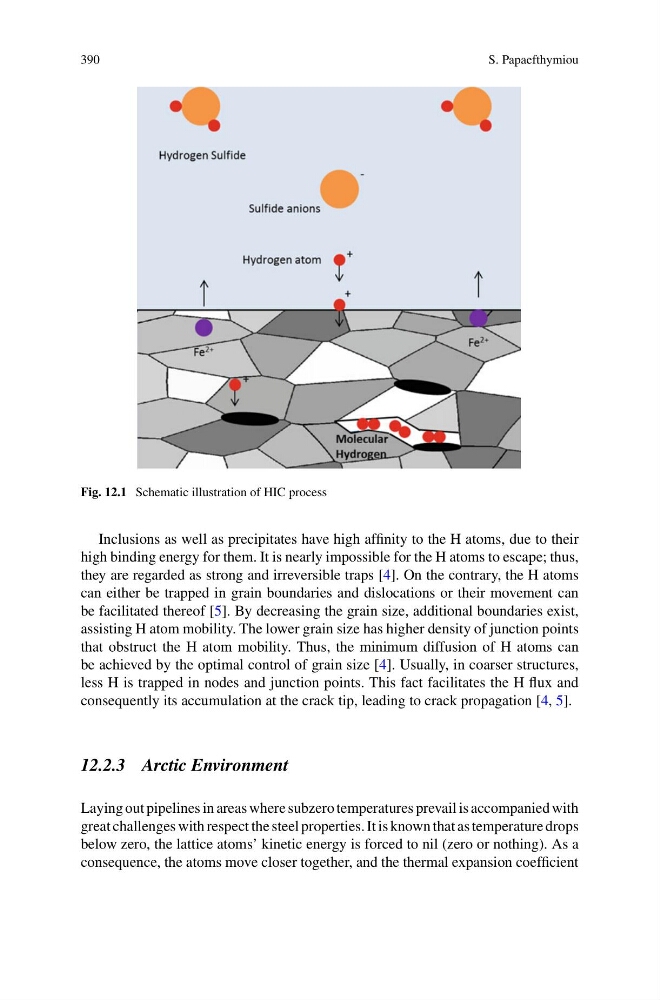
Fig. 12.1 Schematic illustration of HIC process
Inclusions as well as precipitates have high affinity to the H atoms, due to their
high binding energy for them. It is nearly impossible for the H atoms to escape; thus,
they are regarded as strong and irreversible traps [4]. On the contrary, the H atoms
can either be trapped in grain boundaries and dislocations or their movement can
be facilitated thereof [5]. By decreasing the grain size, additional boundaries exist,
assisting H atom mobility. The lower grain size has higher density of junction points
that obstruct the H atom mobility. Thus, the minimum diffusion of H atoms can
be achieved by the optimal control of grain size [4]. Usually, in coarser structures,
less H is trapped in nodes and junction points. This fact facilitates the H flux and
consequently its accumulation at the crack tip, leading to crack propagation [4, 5].
12.2.3 Arctic Environment
Laying out pipelines in areas where subzero temperatures prevail is accompanied with
great challenges with respect the steel properties. It is known that as temperature drops
below zero, the lattice atoms’ kinetic energy is forced to nil (zero or nothing). As a
consequence, the atoms move closer together, and the thermal expansion coefficient
S. Papaefthymiou
Fig. 12.1 Schematic illustration of HIC process
Inclusions as well as precipitates have high affinity to the H atoms, due to their
high binding energy for them. It is nearly impossible for the H atoms to escape; thus,
they are regarded as strong and irreversible traps [4]. On the contrary, the H atoms
can either be trapped in grain boundaries and dislocations or their movement can
be facilitated thereof [5]. By decreasing the grain size, additional boundaries exist,
assisting H atom mobility. The lower grain size has higher density of junction points
that obstruct the H atom mobility. Thus, the minimum diffusion of H atoms can
be achieved by the optimal control of grain size [4]. Usually, in coarser structures,
less H is trapped in nodes and junction points. This fact facilitates the H flux and
consequently its accumulation at the crack tip, leading to crack propagation [4, 5].
12.2.3 Arctic Environment
Laying out pipelines in areas where subzero temperatures prevail is accompanied with
great challenges with respect the steel properties. It is known that as temperature drops
below zero, the lattice atoms’ kinetic energy is forced to nil (zero or nothing). As a
consequence, the atoms move closer together, and the thermal expansion coefficient