

346
Y. Shi et al.
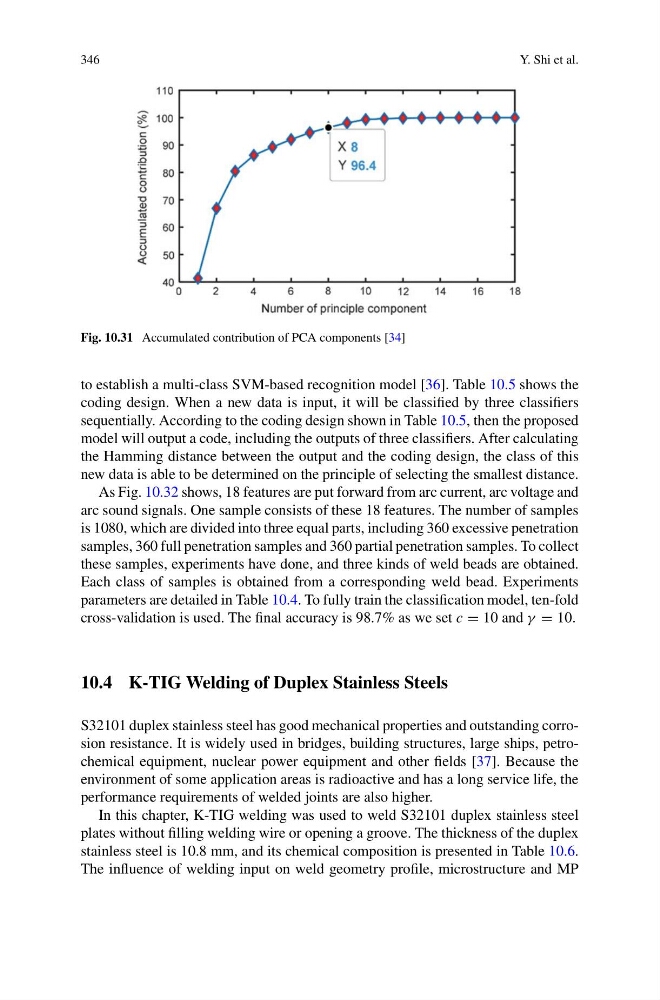
Fig. 10.31 Accumulated contribution of PCA components [34]
to establish a multi-class SVM-based recognition model [36]. Table 10.5 shows the
coding design. When a new data is input, it will be classified by three classifiers
sequentially. According to the coding design shown in Table 10.5, then the proposed
model will output a code, including the outputs of three classifiers. After calculating
the Hamming distance between the output and the coding design, the class of this
new data is able to be determined on the principle of selecting the smallest distance.
As Fig. 10.32 shows, 18 features are put forward from arc current, arc voltage and
arc sound signals. One sample consists of these 18 features. The number of samples
is 1080, which are divided into three equal parts, including 360 excessive penetration
samples, 360 full penetration samples and 360 partial penetration samples. To collect
these samples, experiments have done, and three kinds of weld beads are obtained.
Each class of samples is obtained from a corresponding weld bead. Experiments
parameters are detailed in Table 10.4. To fully train the classification model, ten-fold
cross-validation is used. The final accuracy is 98.7% as we set c = 10 and γ = 10.
10.4 K-TIG Welding of Duplex Stainless Steels
S32101 duplex stainless steel has good mechanical properties and outstanding corrosion resistance. It is widely used in bridges, building structures, large ships, petrochemical equipment, nuclear power equipment and other fields [37]. Because the
environment of some application areas is radioactive and has a long service life, the
performance requirements of welded joints are also higher.
In this chapter, K-TIG welding was used to weld S32101 duplex stainless steel
plates without filling welding wire or opening a groove. The thickness of the duplex
stainless steel is 10.8 mm, and its chemical composition is presented in Table 10.6.
The influence of welding input on weld geometry profile, microstructure and MP
Y. Shi et al.
Fig. 10.31 Accumulated contribution of PCA components [34]
to establish a multi-class SVM-based recognition model [36]. Table 10.5 shows the
coding design. When a new data is input, it will be classified by three classifiers
sequentially. According to the coding design shown in Table 10.5, then the proposed
model will output a code, including the outputs of three classifiers. After calculating
the Hamming distance between the output and the coding design, the class of this
new data is able to be determined on the principle of selecting the smallest distance.
As Fig. 10.32 shows, 18 features are put forward from arc current, arc voltage and
arc sound signals. One sample consists of these 18 features. The number of samples
is 1080, which are divided into three equal parts, including 360 excessive penetration
samples, 360 full penetration samples and 360 partial penetration samples. To collect
these samples, experiments have done, and three kinds of weld beads are obtained.
Each class of samples is obtained from a corresponding weld bead. Experiments
parameters are detailed in Table 10.4. To fully train the classification model, ten-fold
cross-validation is used. The final accuracy is 98.7% as we set c = 10 and γ = 10.
10.4 K-TIG Welding of Duplex Stainless Steels
S32101 duplex stainless steel has good mechanical properties and outstanding corrosion resistance. It is widely used in bridges, building structures, large ships, petrochemical equipment, nuclear power equipment and other fields [37]. Because the
environment of some application areas is radioactive and has a long service life, the
performance requirements of welded joints are also higher.
In this chapter, K-TIG welding was used to weld S32101 duplex stainless steel
plates without filling welding wire or opening a groove. The thickness of the duplex
stainless steel is 10.8 mm, and its chemical composition is presented in Table 10.6.
The influence of welding input on weld geometry profile, microstructure and MP