

7 Tubular Structures: Welding Difficulty and Potential …
237
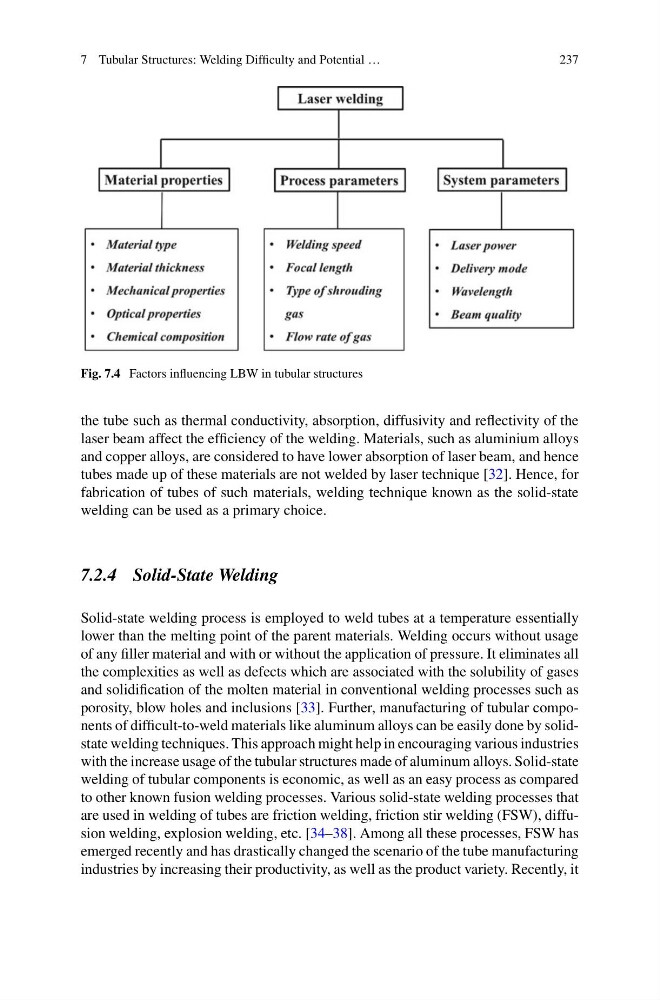
Fig. 7.4 Factors influencing LBW in tubular structures
the tube such as thermal conductivity, absorption, diffusivity and reflectivity of the
laser beam affect the efficiency of the welding. Materials, such as aluminium alloys
and copper alloys, are considered to have lower absorption of laser beam, and hence
tubes made up of these materials are not welded by laser technique [32]. Hence, for
fabrication of tubes of such materials, welding technique known as the solid-state
welding can be used as a primary choice.
7.2.4 Solid-State Welding
Solid-state welding process is employed to weld tubes at a temperature essentially
lower than the melting point of the parent materials. Welding occurs without usage
of any filler material and with or without the application of pressure. It eliminates all
the complexities as well as defects which are associated with the solubility of gases
and solidification of the molten material in conventional welding processes such as
porosity, blow holes and inclusions [33]. Further, manufacturing of tubular components of difficult-to-weld materials like aluminum alloys can be easily done by solidstate welding techniques. This approach might help in encouraging various industries
with the increase usage of the tubular structures made of aluminum alloys. Solid-state
welding of tubular components is economic, as well as an easy process as compared
to other known fusion welding processes. Various solid-state welding processes that
are used in welding of tubes are friction welding, friction stir welding (FSW), diffusion welding, explosion welding, etc. [34–38]. Among all these processes, FSW has
emerged recently and has drastically changed the scenario of the tube manufacturing
industries by increasing their productivity, as well as the product variety. Recently, it
237
Fig. 7.4 Factors influencing LBW in tubular structures
the tube such as thermal conductivity, absorption, diffusivity and reflectivity of the
laser beam affect the efficiency of the welding. Materials, such as aluminium alloys
and copper alloys, are considered to have lower absorption of laser beam, and hence
tubes made up of these materials are not welded by laser technique [32]. Hence, for
fabrication of tubes of such materials, welding technique known as the solid-state
welding can be used as a primary choice.
7.2.4 Solid-State Welding
Solid-state welding process is employed to weld tubes at a temperature essentially
lower than the melting point of the parent materials. Welding occurs without usage
of any filler material and with or without the application of pressure. It eliminates all
the complexities as well as defects which are associated with the solubility of gases
and solidification of the molten material in conventional welding processes such as
porosity, blow holes and inclusions [33]. Further, manufacturing of tubular components of difficult-to-weld materials like aluminum alloys can be easily done by solidstate welding techniques. This approach might help in encouraging various industries
with the increase usage of the tubular structures made of aluminum alloys. Solid-state
welding of tubular components is economic, as well as an easy process as compared
to other known fusion welding processes. Various solid-state welding processes that
are used in welding of tubes are friction welding, friction stir welding (FSW), diffusion welding, explosion welding, etc. [34–38]. Among all these processes, FSW has
emerged recently and has drastically changed the scenario of the tube manufacturing
industries by increasing their productivity, as well as the product variety. Recently, it