

6 Microstructure and Texture in Welding: A Case Study on Friction Stir Welding
215
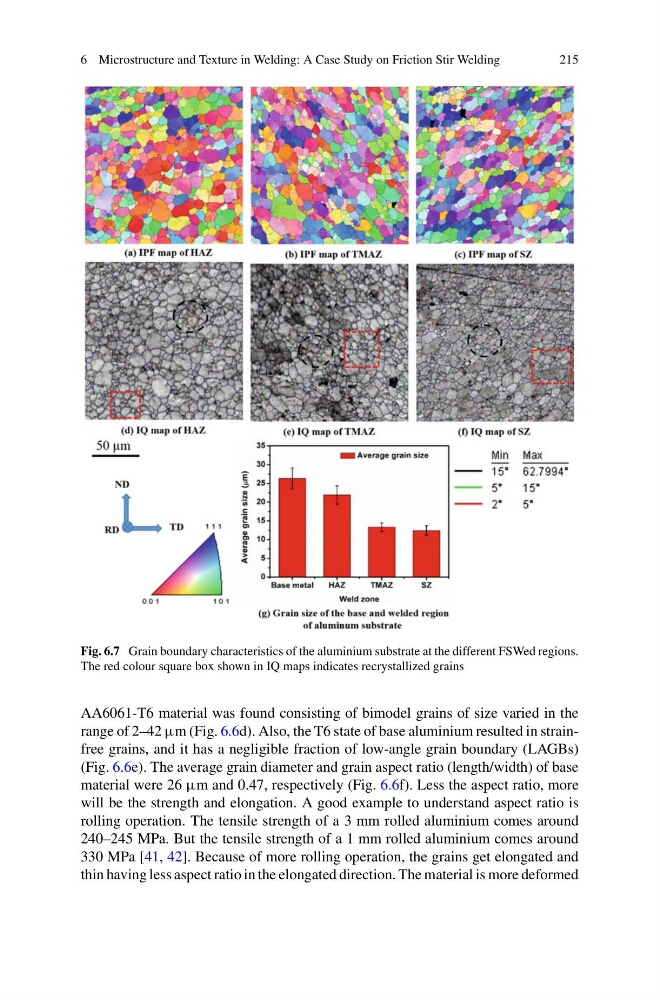
Fig. 6.7 Grain boundary characteristics of the aluminium substrate at the different FSWed regions.
The red colour square box shown in IQ maps indicates recrystallized grains
AA6061-T6 material was found consisting of bimodel grains of size varied in the
range of 2–42 µm (Fig. 6.6d). Also, the T6 state of base aluminium resulted in strainfree grains, and it has a negligible fraction of low-angle grain boundary (LAGBs)
(Fig. 6.6e). The average grain diameter and grain aspect ratio (length/width) of base
material were 26 µm and 0.47, respectively (Fig. 6.6f). Less the aspect ratio, more
will be the strength and elongation. A good example to understand aspect ratio is
rolling operation. The tensile strength of a 3 mm rolled aluminium comes around
240–245 MPa. But the tensile strength of a 1 mm rolled aluminium comes around
330 MPa [41, 42]. Because of more rolling operation, the grains get elongated and
thin having less aspect ratio in the elongated direction. The material is more deformed
215
Fig. 6.7 Grain boundary characteristics of the aluminium substrate at the different FSWed regions.
The red colour square box shown in IQ maps indicates recrystallized grains
AA6061-T6 material was found consisting of bimodel grains of size varied in the
range of 2–42 µm (Fig. 6.6d). Also, the T6 state of base aluminium resulted in strainfree grains, and it has a negligible fraction of low-angle grain boundary (LAGBs)
(Fig. 6.6e). The average grain diameter and grain aspect ratio (length/width) of base
material were 26 µm and 0.47, respectively (Fig. 6.6f). Less the aspect ratio, more
will be the strength and elongation. A good example to understand aspect ratio is
rolling operation. The tensile strength of a 3 mm rolled aluminium comes around
240–245 MPa. But the tensile strength of a 1 mm rolled aluminium comes around
330 MPa [41, 42]. Because of more rolling operation, the grains get elongated and
thin having less aspect ratio in the elongated direction. The material is more deformed