

214
S. S. Nayak et al.
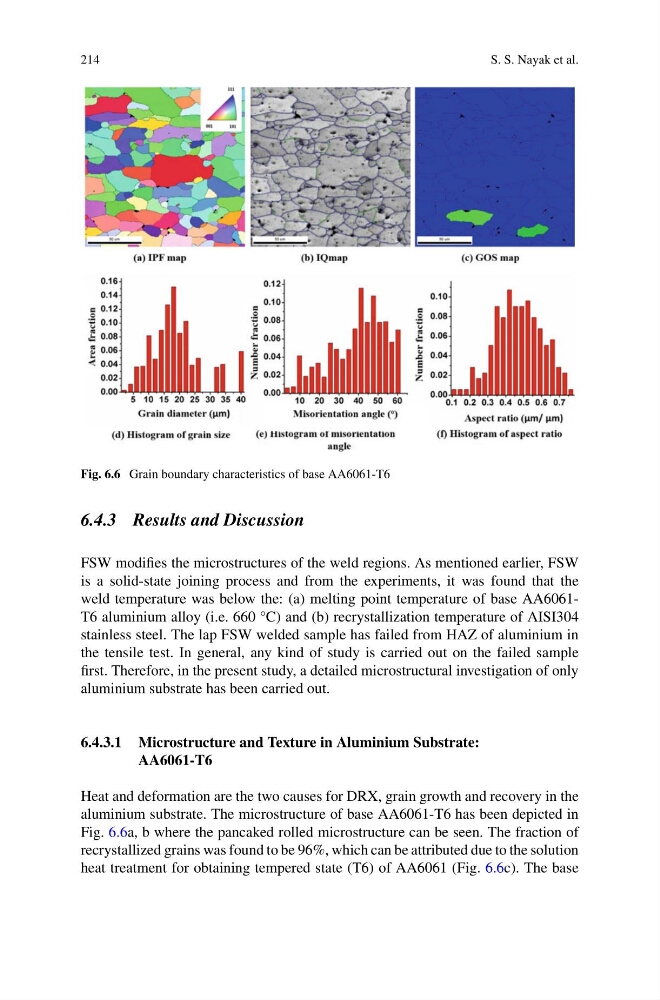
Fig. 6.6 Grain boundary characteristics of base AA6061-T6
6.4.3 Results and Discussion
FSW modifies the microstructures of the weld regions. As mentioned earlier, FSW
is a solid-state joining process and from the experiments, it was found that the
weld temperature was below the: (a) melting point temperature of base AA6061T6 aluminium alloy (i.e. 660 °C) and (b) recrystallization temperature of AISI304
stainless steel. The lap FSW welded sample has failed from HAZ of aluminium in
the tensile test. In general, any kind of study is carried out on the failed sample
first. Therefore, in the present study, a detailed microstructural investigation of only
aluminium substrate has been carried out.
6.4.3.1 Microstructure and Texture in Aluminium Substrate:
AA6061-T6
Heat and deformation are the two causes for DRX, grain growth and recovery in the
aluminium substrate. The microstructure of base AA6061-T6 has been depicted in
Fig. 6.6a, b where the pancaked rolled microstructure can be seen. The fraction of
recrystallized grains was found to be 96%, which can be attributed due to the solution
heat treatment for obtaining tempered state (T6) of AA6061 (Fig. 6.6c). The base
S. S. Nayak et al.
Fig. 6.6 Grain boundary characteristics of base AA6061-T6
6.4.3 Results and Discussion
FSW modifies the microstructures of the weld regions. As mentioned earlier, FSW
is a solid-state joining process and from the experiments, it was found that the
weld temperature was below the: (a) melting point temperature of base AA6061T6 aluminium alloy (i.e. 660 °C) and (b) recrystallization temperature of AISI304
stainless steel. The lap FSW welded sample has failed from HAZ of aluminium in
the tensile test. In general, any kind of study is carried out on the failed sample
first. Therefore, in the present study, a detailed microstructural investigation of only
aluminium substrate has been carried out.
6.4.3.1 Microstructure and Texture in Aluminium Substrate:
AA6061-T6
Heat and deformation are the two causes for DRX, grain growth and recovery in the
aluminium substrate. The microstructure of base AA6061-T6 has been depicted in
Fig. 6.6a, b where the pancaked rolled microstructure can be seen. The fraction of
recrystallized grains was found to be 96%, which can be attributed due to the solution
heat treatment for obtaining tempered state (T6) of AA6061 (Fig. 6.6c). The base