

172
S. Sahu et al.
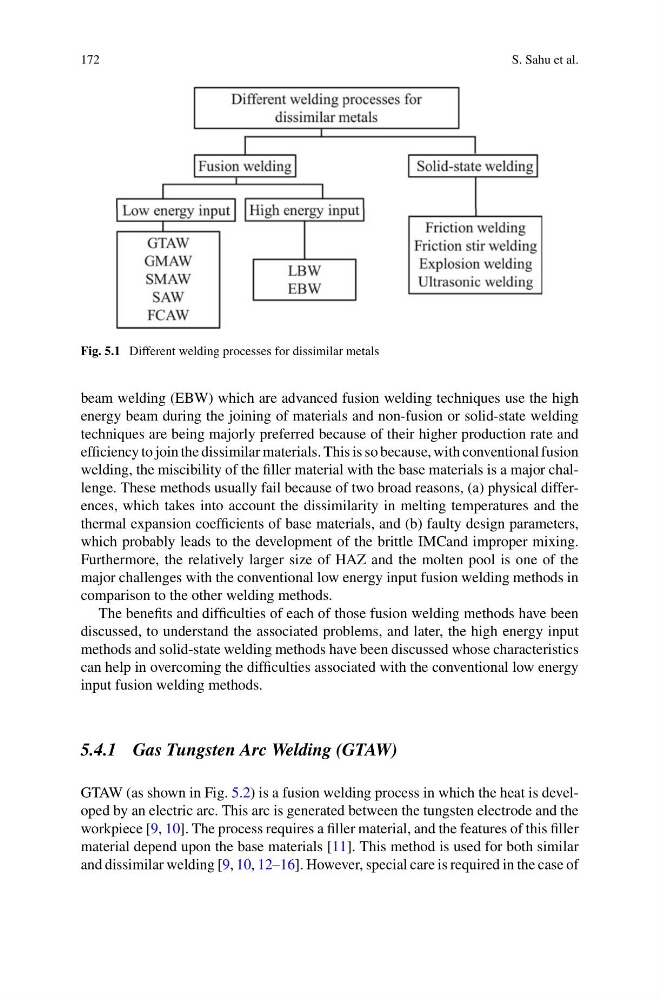
Fig. 5.1 Different welding processes for dissimilar metals
beam welding (EBW) which are advanced fusion welding techniques use the high
energy beam during the joining of materials and non-fusion or solid-state welding
techniques are being majorly preferred because of their higher production rate and
efficiency to join the dissimilar materials. This is so because, with conventional fusion
welding, the miscibility of the filler material with the base materials is a major challenge. These methods usually fail because of two broad reasons, (a) physical differences, which takes into account the dissimilarity in melting temperatures and the
thermal expansion coefficients of base materials, and (b) faulty design parameters,
which probably leads to the development of the brittle IMCand improper mixing.
Furthermore, the relatively larger size of HAZ and the molten pool is one of the
major challenges with the conventional low energy input fusion welding methods in
comparison to the other welding methods.
The benefits and difficulties of each of those fusion welding methods have been
discussed, to understand the associated problems, and later, the high energy input
methods and solid-state welding methods have been discussed whose characteristics
can help in overcoming the difficulties associated with the conventional low energy
input fusion welding methods.
5.4.1 Gas Tungsten Arc Welding (GTAW)
GTAW (as shown in Fig. 5.2) is a fusion welding process in which the heat is developed by an electric arc. This arc is generated between the tungsten electrode and the
workpiece [9, 10]. The process requires a filler material, and the features of this filler
material depend upon the base materials [11]. This method is used for both similar
and dissimilar welding [9, 10, 12–16]. However, special care is required in the case of
S. Sahu et al.
Fig. 5.1 Different welding processes for dissimilar metals
beam welding (EBW) which are advanced fusion welding techniques use the high
energy beam during the joining of materials and non-fusion or solid-state welding
techniques are being majorly preferred because of their higher production rate and
efficiency to join the dissimilar materials. This is so because, with conventional fusion
welding, the miscibility of the filler material with the base materials is a major challenge. These methods usually fail because of two broad reasons, (a) physical differences, which takes into account the dissimilarity in melting temperatures and the
thermal expansion coefficients of base materials, and (b) faulty design parameters,
which probably leads to the development of the brittle IMCand improper mixing.
Furthermore, the relatively larger size of HAZ and the molten pool is one of the
major challenges with the conventional low energy input fusion welding methods in
comparison to the other welding methods.
The benefits and difficulties of each of those fusion welding methods have been
discussed, to understand the associated problems, and later, the high energy input
methods and solid-state welding methods have been discussed whose characteristics
can help in overcoming the difficulties associated with the conventional low energy
input fusion welding methods.
5.4.1 Gas Tungsten Arc Welding (GTAW)
GTAW (as shown in Fig. 5.2) is a fusion welding process in which the heat is developed by an electric arc. This arc is generated between the tungsten electrode and the
workpiece [9, 10]. The process requires a filler material, and the features of this filler
material depend upon the base materials [11]. This method is used for both similar
and dissimilar welding [9, 10, 12–16]. However, special care is required in the case of