

interests that shape the subsequent actions of incumbents in energy markets. This
is particularly so in the energy sector because infrastructures are so long-lived, and
so give a heavily path-dependent nature to regimes and transitions. However, large
energy firms are rarely passive and usually seek to influence policy actively through
a range of means, including direct lobbying, secondments to government and sitting
on technical committees that shape markets, all backed up with the threat of invest -
ment strikes (Jessop, 1990) or divestment leading to the lights going out. In privatized
and liberalized markets, a key objective for incumbents in influencing regulation
and policy will often be to maintain high costs of and barriers to entry in markets
(e.g. Stigler, 1971), meaning that new and potentially innovative new companies
will find it harder to enter the energy sector.
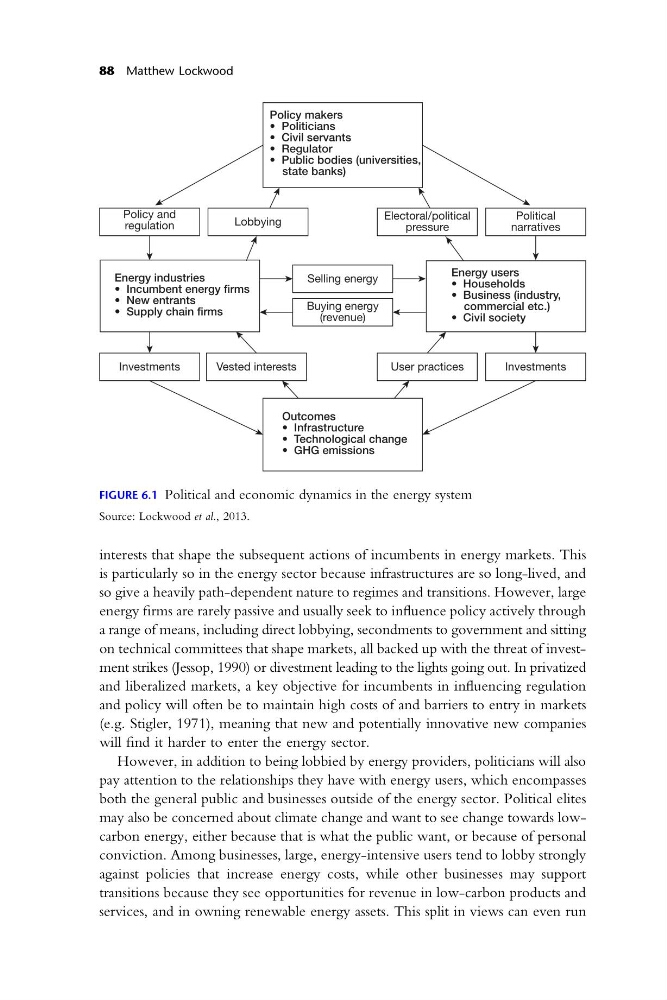
However, in addition to being lobbied by energy providers, politicians will also
pay attention to the relationships they have with energy users, which encompasses
both the general public and businesses outside of the energy sector. Political elites
may also be concerned about climate change and want to see change towards lowcarbon energy, either because that is what the public want, or because of personal
conviction. Among businesses, large, energy-intensive users tend to lobby strongly
against policies that increase energy costs, while other businesses may support
transitions because they see opportunities for revenue in low-carbon products and
services, and in owning renewable energy assets. This split in views can even run
88 Matthew Lockwood
FIGURE 6.1 Political and economic dynamics in the energy system
Source: Lockwood et al., 2013.
Selling energy
Buying energy
(revenue)
Political
narratives
Electoral/political
pressure
User practices
Investments
Investments
Vested interests
Lobbying
Policy and
regulation
Policy makers
• Politicians
• Civil servants
• Regulator
• Public bodies (universities,
state banks)
Energy industries
• Incumbent energy firms
• New entrants
• Supply chain firms
Outcomes
• Infrastructure
• Technological change
• GHG emissions
Energy users
• Households
• Business (industry,
commercial etc.)
• Civil society
is particularly so in the energy sector because infrastructures are so long-lived, and
so give a heavily path-dependent nature to regimes and transitions. However, large
energy firms are rarely passive and usually seek to influence policy actively through
a range of means, including direct lobbying, secondments to government and sitting
on technical committees that shape markets, all backed up with the threat of invest -
ment strikes (Jessop, 1990) or divestment leading to the lights going out. In privatized
and liberalized markets, a key objective for incumbents in influencing regulation
and policy will often be to maintain high costs of and barriers to entry in markets
(e.g. Stigler, 1971), meaning that new and potentially innovative new companies
will find it harder to enter the energy sector.
However, in addition to being lobbied by energy providers, politicians will also
pay attention to the relationships they have with energy users, which encompasses
both the general public and businesses outside of the energy sector. Political elites
may also be concerned about climate change and want to see change towards lowcarbon energy, either because that is what the public want, or because of personal
conviction. Among businesses, large, energy-intensive users tend to lobby strongly
against policies that increase energy costs, while other businesses may support
transitions because they see opportunities for revenue in low-carbon products and
services, and in owning renewable energy assets. This split in views can even run
88 Matthew Lockwood
FIGURE 6.1 Political and economic dynamics in the energy system
Source: Lockwood et al., 2013.
Selling energy
Buying energy
(revenue)
Political
narratives
Electoral/political
pressure
User practices
Investments
Investments
Vested interests
Lobbying
Policy and
regulation
Policy makers
• Politicians
• Civil servants
• Regulator
• Public bodies (universities,
state banks)
Energy industries
• Incumbent energy firms
• New entrants
• Supply chain firms
Outcomes
• Infrastructure
• Technological change
• GHG emissions
Energy users
• Households
• Business (industry,
commercial etc.)
• Civil society