

3.3 Eyepiece
35
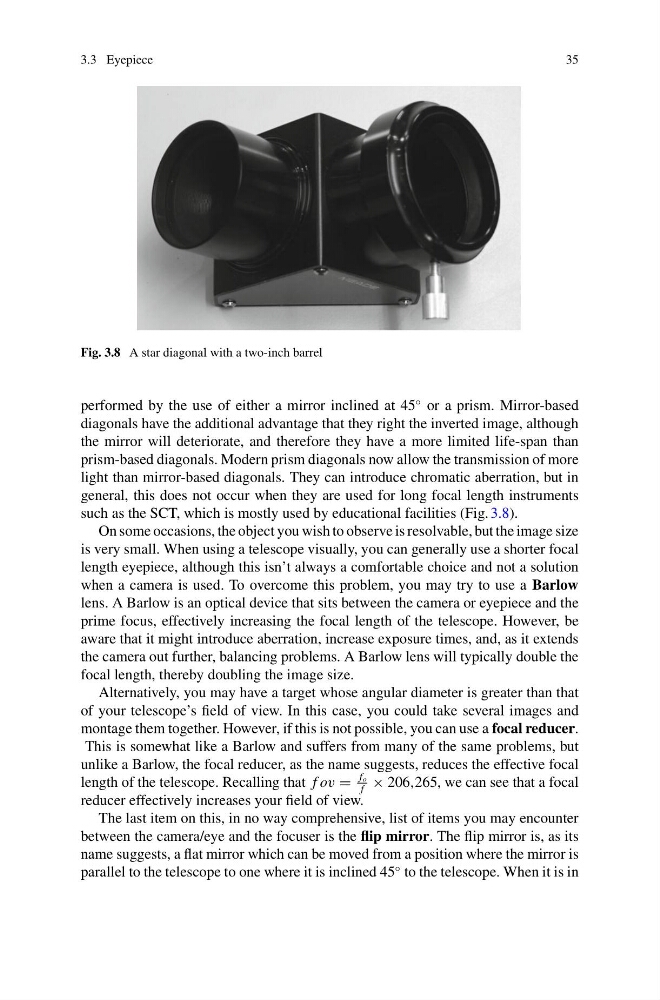
Fig. 3.8 A star diagonal with a two-inch barrel
performed by the use of either a mirror inclined at 45
◦ or a prism. Mirror-based
diagonals have the additional advantage that they right the inverted image, although
the mirror will deteriorate, and therefore they have a more limited life-span than
prism-based diagonals. Modern prism diagonals now allow the transmission of more
light than mirror-based diagonals. They can introduce chromatic aberration, but in
general, this does not occur when they are used for long focal length instruments
such as the SCT, which is mostly used by educational facilities (Fig. 3.8).
On some occasions, the object you wish to observe is resolvable, but the image size
is very small. When using a telescope visually, you can generally use a shorter focal
length eyepiece, although this isn’t always a comfortable choice and not a solution
when a camera is used. To overcome this problem, you may try to use a Barlow
lens. A Barlow is an optical device that sits between the camera or eyepiece and the
prime focus, effectively increasing the focal length of the telescope. However, be
aware that it might introduce aberration, increase exposure times, and, as it extends
the camera out further, balancing problems. A Barlow lens will typically double the
focal length, thereby doubling the image size.
Alternatively, you may have a target whose angular diameter is greater than that
of your telescope’s field of view. In this case, you could take several images and
montage them together. However, if this is not possible, you can use a focal reducer.
This is somewhat like a Barlow and suffers from many of the same problems, but
unlike a Barlow, the focal reducer, as the name suggests, reduces the effective focal
length of the telescope. Recalling that f ov =
f o
f
× 206,265, we can see that a focal
reducer effectively increases your field of view.
The last item on this, in no way comprehensive, list of items you may encounter
between the camera/eye and the focuser is the flip mirror. The flip mirror is, as its
name suggests, a flat mirror which can be moved from a position where the mirror is
parallel to the telescope to one where it is inclined 45
◦ to the telescope. When it is in
35
Fig. 3.8 A star diagonal with a two-inch barrel
performed by the use of either a mirror inclined at 45
◦ or a prism. Mirror-based
diagonals have the additional advantage that they right the inverted image, although
the mirror will deteriorate, and therefore they have a more limited life-span than
prism-based diagonals. Modern prism diagonals now allow the transmission of more
light than mirror-based diagonals. They can introduce chromatic aberration, but in
general, this does not occur when they are used for long focal length instruments
such as the SCT, which is mostly used by educational facilities (Fig. 3.8).
On some occasions, the object you wish to observe is resolvable, but the image size
is very small. When using a telescope visually, you can generally use a shorter focal
length eyepiece, although this isn’t always a comfortable choice and not a solution
when a camera is used. To overcome this problem, you may try to use a Barlow
lens. A Barlow is an optical device that sits between the camera or eyepiece and the
prime focus, effectively increasing the focal length of the telescope. However, be
aware that it might introduce aberration, increase exposure times, and, as it extends
the camera out further, balancing problems. A Barlow lens will typically double the
focal length, thereby doubling the image size.
Alternatively, you may have a target whose angular diameter is greater than that
of your telescope’s field of view. In this case, you could take several images and
montage them together. However, if this is not possible, you can use a focal reducer.
This is somewhat like a Barlow and suffers from many of the same problems, but
unlike a Barlow, the focal reducer, as the name suggests, reduces the effective focal
length of the telescope. Recalling that f ov =
f o
f
× 206,265, we can see that a focal
reducer effectively increases your field of view.
The last item on this, in no way comprehensive, list of items you may encounter
between the camera/eye and the focuser is the flip mirror. The flip mirror is, as its
name suggests, a flat mirror which can be moved from a position where the mirror is
parallel to the telescope to one where it is inclined 45
◦ to the telescope. When it is in