

34
3 The Telescope
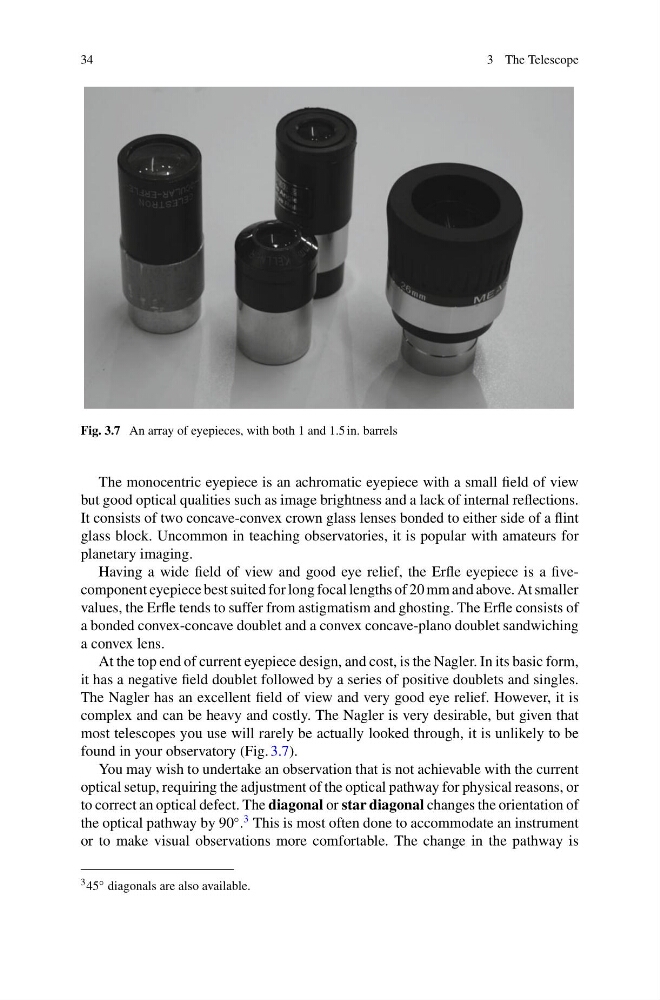
Fig. 3.7 An array of eyepieces, with both 1 and 1.5 in. barrels
The monocentric eyepiece is an achromatic eyepiece with a small field of view
but good optical qualities such as image brightness and a lack of internal reflections.
It consists of two concave-convex crown glass lenses bonded to either side of a flint
glass block. Uncommon in teaching observatories, it is popular with amateurs for
planetary imaging.
Having a wide field of view and good eye relief, the Erfle eyepiece is a fivecomponent eyepiece best suited for long focal lengths of 20 mm and above. At smaller
values, the Erfle tends to suffer from astigmatism and ghosting. The Erfle consists of
a bonded convex-concave doublet and a convex concave-plano doublet sandwiching
a convex lens.
At the top end of current eyepiece design, and cost, is the Nagler. In its basic form,
it has a negative field doublet followed by a series of positive doublets and singles.
The Nagler has an excellent field of view and very good eye relief. However, it is
complex and can be heavy and costly. The Nagler is very desirable, but given that
most telescopes you use will rarely be actually looked through, it is unlikely to be
found in your observatory (Fig. 3.7).
You may wish to undertake an observation that is not achievable with the current
optical setup, requiring the adjustment of the optical pathway for physical reasons, or
to correct an optical defect. The diagonal or star diagonal changes the orientation of
the optical pathway by 90
◦ .
3 This is most often done to accommodate an instrument
or to make visual observations more comfortable. The change in the pathway is
3 45 ◦ diagonals are also available.
3 The Telescope
Fig. 3.7 An array of eyepieces, with both 1 and 1.5 in. barrels
The monocentric eyepiece is an achromatic eyepiece with a small field of view
but good optical qualities such as image brightness and a lack of internal reflections.
It consists of two concave-convex crown glass lenses bonded to either side of a flint
glass block. Uncommon in teaching observatories, it is popular with amateurs for
planetary imaging.
Having a wide field of view and good eye relief, the Erfle eyepiece is a fivecomponent eyepiece best suited for long focal lengths of 20 mm and above. At smaller
values, the Erfle tends to suffer from astigmatism and ghosting. The Erfle consists of
a bonded convex-concave doublet and a convex concave-plano doublet sandwiching
a convex lens.
At the top end of current eyepiece design, and cost, is the Nagler. In its basic form,
it has a negative field doublet followed by a series of positive doublets and singles.
The Nagler has an excellent field of view and very good eye relief. However, it is
complex and can be heavy and costly. The Nagler is very desirable, but given that
most telescopes you use will rarely be actually looked through, it is unlikely to be
found in your observatory (Fig. 3.7).
You may wish to undertake an observation that is not achievable with the current
optical setup, requiring the adjustment of the optical pathway for physical reasons, or
to correct an optical defect. The diagonal or star diagonal changes the orientation of
the optical pathway by 90
◦ .
3 This is most often done to accommodate an instrument
or to make visual observations more comfortable. The change in the pathway is
3 45 ◦ diagonals are also available.