

210
15 Radio Astronomy
The last practical requires a RadioJove setup, or something similar that can pick
up emissions at 8–40 MHz from a pointlike source. Constructing such an instrument
is good practice in itself.
15.3.1 Mapping the Milky Way at 21 cm
The presence of dust and gas in the plane of the galaxy makes it impossible to map
our galaxy globally by optical astronomy. The 21 cm line emission from monatomic
hydrogen can, however, be used. From the Doppler shift and intensity of the line, we
can determine the kinematics and size of the hydrogen clouds.
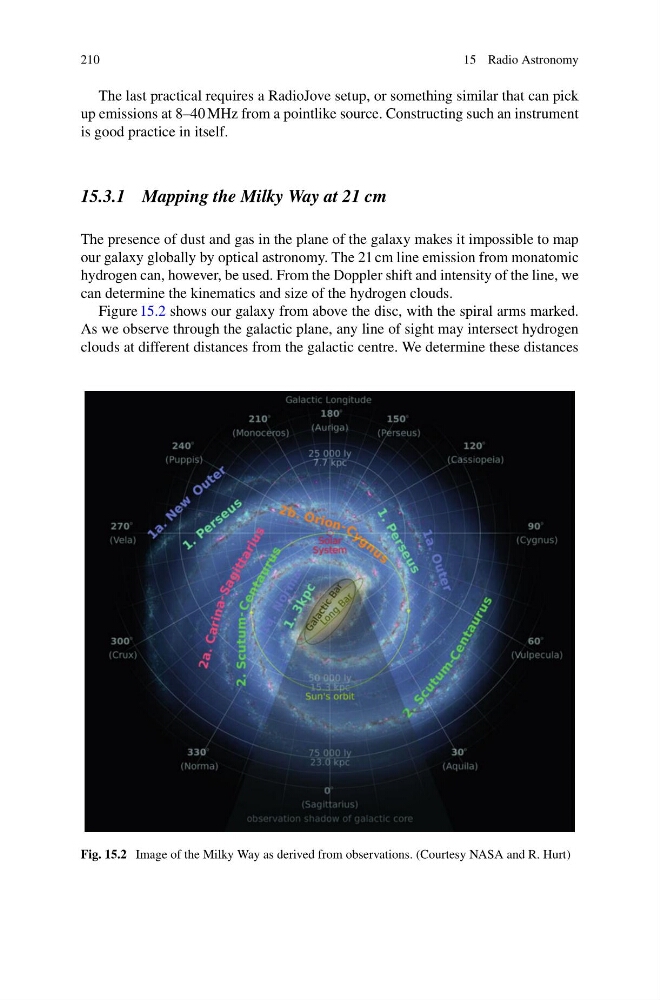
Figure 15.2 shows our galaxy from above the disc, with the spiral arms marked.
As we observe through the galactic plane, any line of sight may intersect hydrogen
clouds at different distances from the galactic centre. We determine these distances
Fig. 15.2 Image of the Milky Way as derived from observations. (Courtesy NASA and R. Hurt)
15 Radio Astronomy
The last practical requires a RadioJove setup, or something similar that can pick
up emissions at 8–40 MHz from a pointlike source. Constructing such an instrument
is good practice in itself.
15.3.1 Mapping the Milky Way at 21 cm
The presence of dust and gas in the plane of the galaxy makes it impossible to map
our galaxy globally by optical astronomy. The 21 cm line emission from monatomic
hydrogen can, however, be used. From the Doppler shift and intensity of the line, we
can determine the kinematics and size of the hydrogen clouds.
Figure 15.2 shows our galaxy from above the disc, with the spiral arms marked.
As we observe through the galactic plane, any line of sight may intersect hydrogen
clouds at different distances from the galactic centre. We determine these distances
Fig. 15.2 Image of the Milky Way as derived from observations. (Courtesy NASA and R. Hurt)