

138
9 Image Reduction and Processing
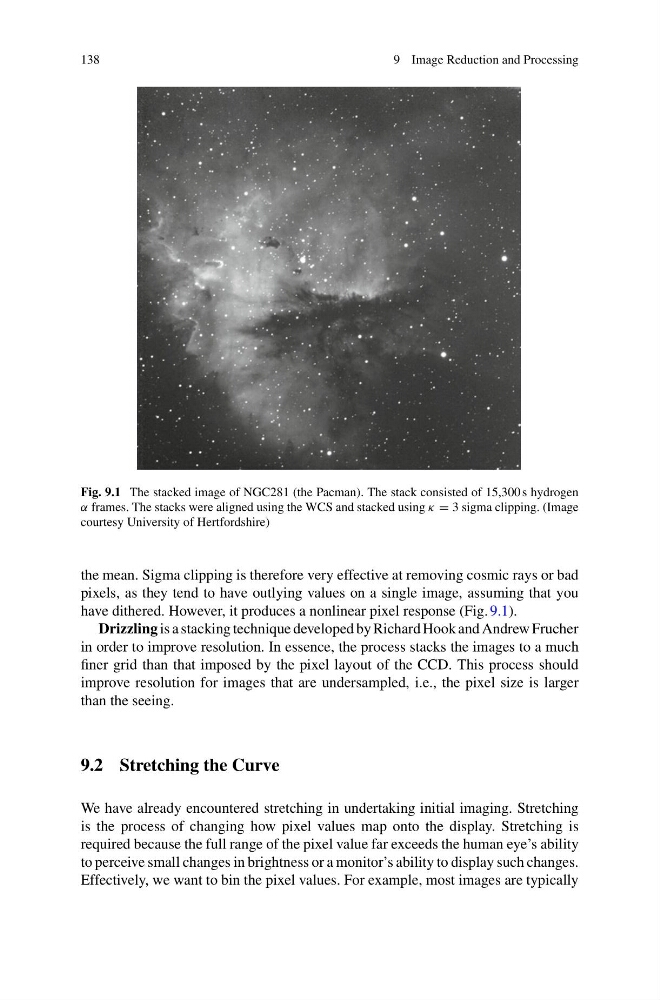
Fig. 9.1 The stacked image of NGC281 (the Pacman). The stack consisted of 15,300 s hydrogen
α frames. The stacks were aligned using the WCS and stacked using κ = 3 sigma clipping. (Image
courtesy University of Hertfordshire)
the mean. Sigma clipping is therefore very effective at removing cosmic rays or bad
pixels, as they tend to have outlying values on a single image, assuming that you
have dithered. However, it produces a nonlinear pixel response (Fig. 9.1).
Drizzling is a stacking technique developed by Richard Hook and Andrew Frucher
in order to improve resolution. In essence, the process stacks the images to a much
finer grid than that imposed by the pixel layout of the CCD. This process should
improve resolution for images that are undersampled, i.e., the pixel size is larger
than the seeing.
9.2 Stretching the Curve
We have already encountered stretching in undertaking initial imaging. Stretching
is the process of changing how pixel values map onto the display. Stretching is
required because the full range of the pixel value far exceeds the human eye’s ability
to perceive small changes in brightness or a monitor’s ability to display such changes.
Effectively, we want to bin the pixel values. For example, most images are typically
9 Image Reduction and Processing
Fig. 9.1 The stacked image of NGC281 (the Pacman). The stack consisted of 15,300 s hydrogen
α frames. The stacks were aligned using the WCS and stacked using κ = 3 sigma clipping. (Image
courtesy University of Hertfordshire)
the mean. Sigma clipping is therefore very effective at removing cosmic rays or bad
pixels, as they tend to have outlying values on a single image, assuming that you
have dithered. However, it produces a nonlinear pixel response (Fig. 9.1).
Drizzling is a stacking technique developed by Richard Hook and Andrew Frucher
in order to improve resolution. In essence, the process stacks the images to a much
finer grid than that imposed by the pixel layout of the CCD. This process should
improve resolution for images that are undersampled, i.e., the pixel size is larger
than the seeing.
9.2 Stretching the Curve
We have already encountered stretching in undertaking initial imaging. Stretching
is the process of changing how pixel values map onto the display. Stretching is
required because the full range of the pixel value far exceeds the human eye’s ability
to perceive small changes in brightness or a monitor’s ability to display such changes.
Effectively, we want to bin the pixel values. For example, most images are typically