

82
4 Application of Biocatalysts for the Production of Methanol …
C
OH
OH
OH
OH
O
P
O
O
O
O
H6P
O
O
P
O
O
O
HO
OH
OH
C
HO
F6P
OH
OH
OH
O
P
O
O
O
O
RuSP
OH
OH
OH
O
P
O
O
O
O
Xu5P
O
O
P
O
O
O
HO
OH
OH
C
O
P
O
O
O
F1,6P
O
OH
O
P
O
O
O
H
DHAP
OH
O
P
O
O
O
O
G3P
OH
O
P
O
O
O
O
G3P
OH
OH
O
P
O
O
O
O
E4P
OH
O
P
O
O
O
O
G3P
OH
OH
OH
O
P
O
O
O
O
Xu5P
OH
OH
OH
O
O
P
O
O
O
OH
S7P
OH
O
H
H
O
O
P
O
O
O
HO
OH
OH
C
HO
F6P
O
O
P
O
O
O
HO
OH
OH
R5P
ATP
ADP
O
O
P
O
O
O
HO
OH
OH
C
HO
F6P
OH
O
P
O
O
O
O
G3P
+
O
H
H
3
+ ATP
OH
O
P
O
O
O
O
G3P
+ ADP
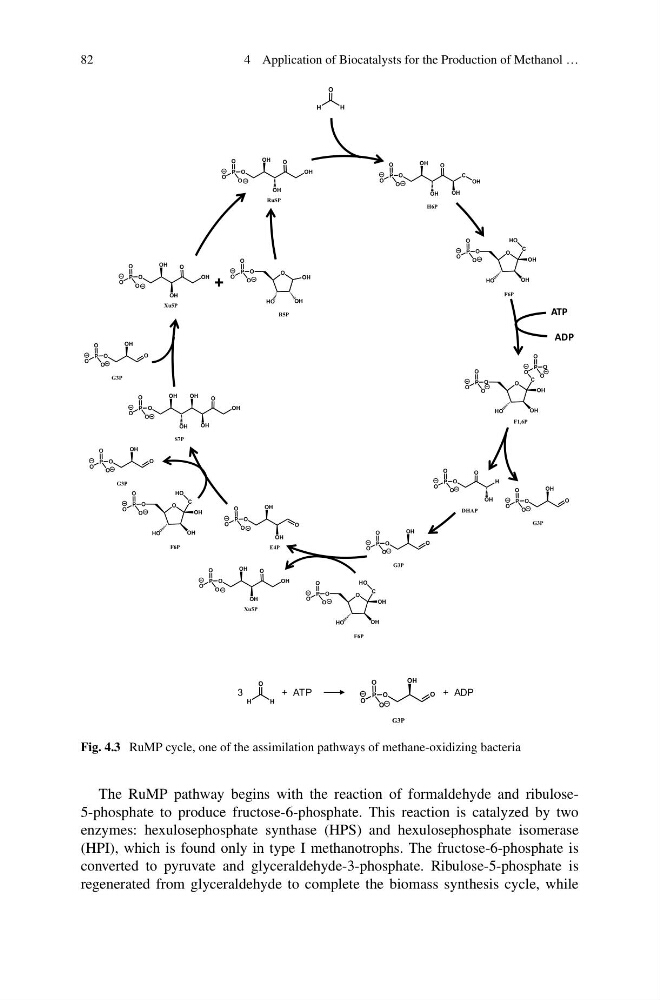
Fig. 4.3 RuMP cycle, one of the assimilation pathways of methane-oxidizing bacteria
The RuMP pathway begins with the reaction of formaldehyde and ribulose5-phosphate to produce fructose-6-phosphate. This reaction is catalyzed by two
enzymes: hexulosephosphate synthase (HPS) and hexulosephosphate isomerase
(HPI), which is found only in type I methanotrophs. The fructose-6-phosphate is
converted to pyruvate and glyceraldehyde-3-phosphate. Ribulose-5-phosphate is
regenerated from glyceraldehyde to complete the biomass synthesis cycle, while
4 Application of Biocatalysts for the Production of Methanol …
C
OH
OH
OH
OH
O
P
O
O
O
O
H6P
O
O
P
O
O
O
HO
OH
OH
C
HO
F6P
OH
OH
OH
O
P
O
O
O
O
RuSP
OH
OH
OH
O
P
O
O
O
O
Xu5P
O
O
P
O
O
O
HO
OH
OH
C
O
P
O
O
O
F1,6P
O
OH
O
P
O
O
O
H
DHAP
OH
O
P
O
O
O
O
G3P
OH
O
P
O
O
O
O
G3P
OH
OH
O
P
O
O
O
O
E4P
OH
O
P
O
O
O
O
G3P
OH
OH
OH
O
P
O
O
O
O
Xu5P
OH
OH
OH
O
O
P
O
O
O
OH
S7P
OH
O
H
H
O
O
P
O
O
O
HO
OH
OH
C
HO
F6P
O
O
P
O
O
O
HO
OH
OH
R5P
ATP
ADP
O
O
P
O
O
O
HO
OH
OH
C
HO
F6P
OH
O
P
O
O
O
O
G3P
+
O
H
H
3
+ ATP
OH
O
P
O
O
O
O
G3P
+ ADP
Fig. 4.3 RuMP cycle, one of the assimilation pathways of methane-oxidizing bacteria
The RuMP pathway begins with the reaction of formaldehyde and ribulose5-phosphate to produce fructose-6-phosphate. This reaction is catalyzed by two
enzymes: hexulosephosphate synthase (HPS) and hexulosephosphate isomerase
(HPI), which is found only in type I methanotrophs. The fructose-6-phosphate is
converted to pyruvate and glyceraldehyde-3-phosphate. Ribulose-5-phosphate is
regenerated from glyceraldehyde to complete the biomass synthesis cycle, while