

64
3 Heterogeneous and Homogeneous Catalytic Partial Oxidations …
2 H 2 O + SO 2
2 CH 4 2 H 2 SO 4
3 H 2 SO 4
3 H 2 SO 4
2 CH 3 OSO 3 H + 2 H 2 O + SO 2
2 Hg II (HSO 4 ) 2
2 (HSO 4 )Hg II (CH 3 )
Hg II
2 (HSO 4 ) 2
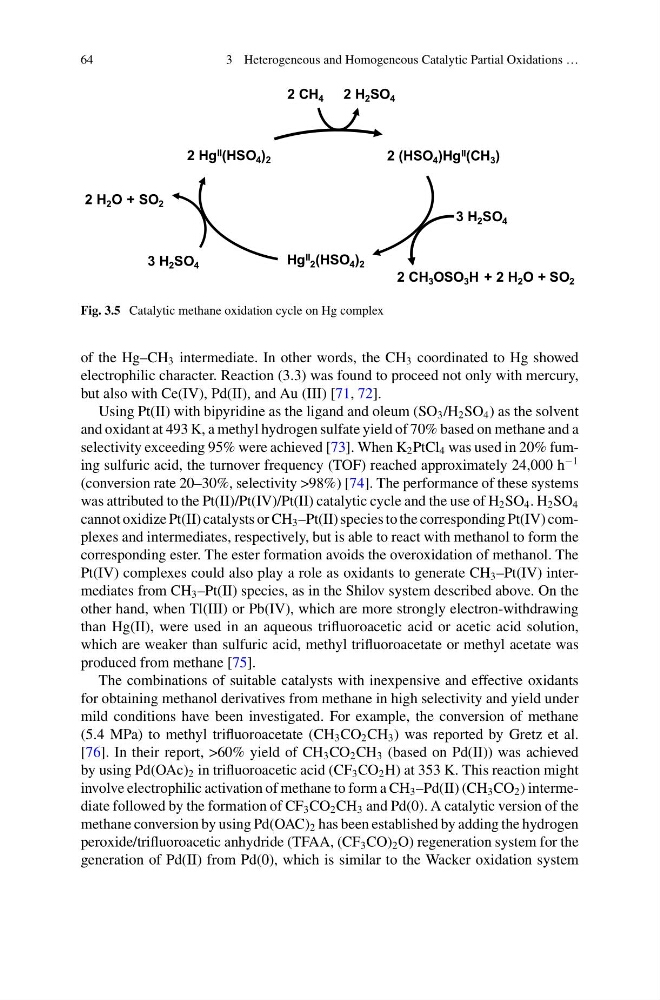
Fig. 3.5 Catalytic methane oxidation cycle on Hg complex
of the Hg–CH 3 intermediate. In other words, the CH 3 coordinated to Hg showed
electrophilic character. Reaction (3.3) was found to proceed not only with mercury,
but also with Ce(IV), Pd(II), and Au (III) [71, 72].
Using Pt(II) with bipyridine as the ligand and oleum (SO 3 /H 2 SO 4 ) as the solvent
and oxidant at 493 K, a methyl hydrogen sulfate yield of 70% based on methane and a
selectivity exceeding 95% were achieved [73]. When K 2 PtCl 4 was used in 20% fuming sulfuric acid, the turnover frequency (TOF) reached approximately 24,000 h
−1
(conversion rate 20–30%, selectivity >98%) [74]. The performance of these systems
was attributed to the Pt(II)/Pt(IV)/Pt(II) catalytic cycle and the use of H 2 SO 4 . H 2 SO 4
cannot oxidize Pt(II) catalysts or CH 3 –Pt(II) species to the corresponding Pt(IV) complexes and intermediates, respectively, but is able to react with methanol to form the
corresponding ester. The ester formation avoids the overoxidation of methanol. The
Pt(IV) complexes could also play a role as oxidants to generate CH 3 –Pt(IV) intermediates from CH 3 –Pt(II) species, as in the Shilov system described above. On the
other hand, when Tl(III) or Pb(IV), which are more strongly electron-withdrawing
than Hg(II), were used in an aqueous trifluoroacetic acid or acetic acid solution,
which are weaker than sulfuric acid, methyl trifluoroacetate or methyl acetate was
produced from methane [75].
The combinations of suitable catalysts with inexpensive and effective oxidants
for obtaining methanol derivatives from methane in high selectivity and yield under
mild conditions have been investigated. For example, the conversion of methane
(5.4 MPa) to methyl trifluoroacetate (CH 3 CO 2 CH 3 ) was reported by Gretz et al.
[76]. In their report, >60% yield of CH 3 CO 2 CH 3 (based on Pd(II)) was achieved
by using Pd(OAc) 2 in trifluoroacetic acid (CF 3 CO 2 H) at 353 K. This reaction might
involve electrophilic activation of methane to form a CH 3 –Pd(II) (CH 3 CO 2 ) intermediate followed by the formation of CF 3 CO 2 CH 3 and Pd(0). A catalytic version of the
methane conversion by using Pd(OAC) 2 has been established by adding the hydrogen
peroxide/trifluoroacetic anhydride (TFAA, (CF 3 CO) 2 O) regeneration system for the
generation of Pd(II) from Pd(0), which is similar to the Wacker oxidation system
3 Heterogeneous and Homogeneous Catalytic Partial Oxidations …
2 H 2 O + SO 2
2 CH 4 2 H 2 SO 4
3 H 2 SO 4
3 H 2 SO 4
2 CH 3 OSO 3 H + 2 H 2 O + SO 2
2 Hg II (HSO 4 ) 2
2 (HSO 4 )Hg II (CH 3 )
Hg II
2 (HSO 4 ) 2
Fig. 3.5 Catalytic methane oxidation cycle on Hg complex
of the Hg–CH 3 intermediate. In other words, the CH 3 coordinated to Hg showed
electrophilic character. Reaction (3.3) was found to proceed not only with mercury,
but also with Ce(IV), Pd(II), and Au (III) [71, 72].
Using Pt(II) with bipyridine as the ligand and oleum (SO 3 /H 2 SO 4 ) as the solvent
and oxidant at 493 K, a methyl hydrogen sulfate yield of 70% based on methane and a
selectivity exceeding 95% were achieved [73]. When K 2 PtCl 4 was used in 20% fuming sulfuric acid, the turnover frequency (TOF) reached approximately 24,000 h
−1
(conversion rate 20–30%, selectivity >98%) [74]. The performance of these systems
was attributed to the Pt(II)/Pt(IV)/Pt(II) catalytic cycle and the use of H 2 SO 4 . H 2 SO 4
cannot oxidize Pt(II) catalysts or CH 3 –Pt(II) species to the corresponding Pt(IV) complexes and intermediates, respectively, but is able to react with methanol to form the
corresponding ester. The ester formation avoids the overoxidation of methanol. The
Pt(IV) complexes could also play a role as oxidants to generate CH 3 –Pt(IV) intermediates from CH 3 –Pt(II) species, as in the Shilov system described above. On the
other hand, when Tl(III) or Pb(IV), which are more strongly electron-withdrawing
than Hg(II), were used in an aqueous trifluoroacetic acid or acetic acid solution,
which are weaker than sulfuric acid, methyl trifluoroacetate or methyl acetate was
produced from methane [75].
The combinations of suitable catalysts with inexpensive and effective oxidants
for obtaining methanol derivatives from methane in high selectivity and yield under
mild conditions have been investigated. For example, the conversion of methane
(5.4 MPa) to methyl trifluoroacetate (CH 3 CO 2 CH 3 ) was reported by Gretz et al.
[76]. In their report, >60% yield of CH 3 CO 2 CH 3 (based on Pd(II)) was achieved
by using Pd(OAc) 2 in trifluoroacetic acid (CF 3 CO 2 H) at 353 K. This reaction might
involve electrophilic activation of methane to form a CH 3 –Pd(II) (CH 3 CO 2 ) intermediate followed by the formation of CF 3 CO 2 CH 3 and Pd(0). A catalytic version of the
methane conversion by using Pd(OAC) 2 has been established by adding the hydrogen
peroxide/trifluoroacetic anhydride (TFAA, (CF 3 CO) 2 O) regeneration system for the
generation of Pd(II) from Pd(0), which is similar to the Wacker oxidation system