

1.2 Industrial Methane Conversion for the Production …
3
Dehydrogenation
Chemical Compound
Reaction
Natural Gas
Shale Gas
Oxidative
Reaction
Feedstock
Derivative
Compound
Solvent
Adhesive
Synthetic
Resin
Synthetic
Fiber
Synthetic Rubber
Fine
Chemicals
Plastics
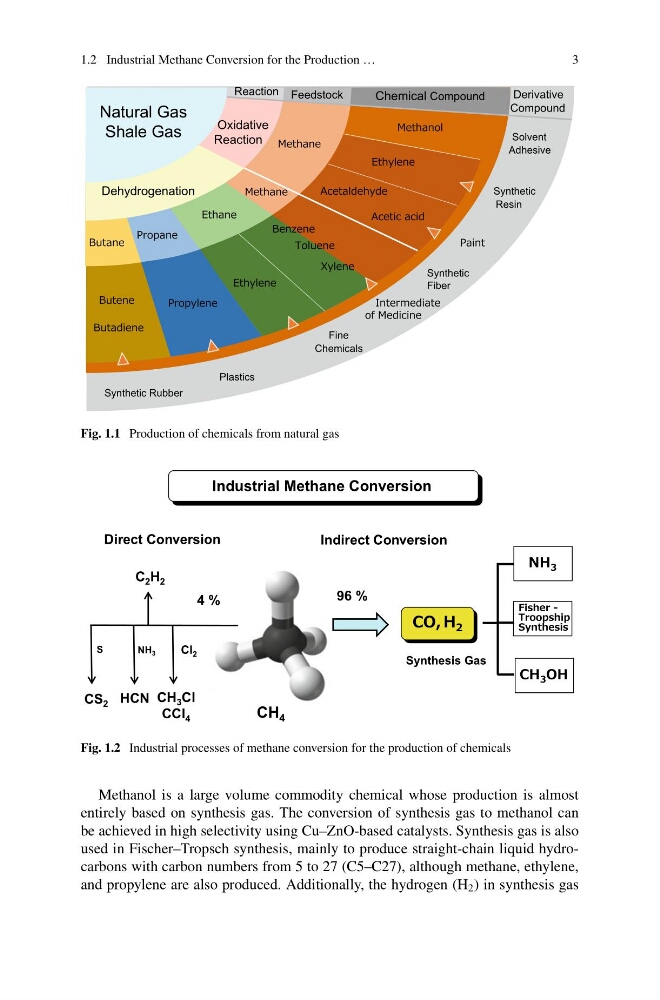
Fig. 1.1 Production of chemicals from natural gas
Cl 2
CH 3 Cl
CCl 4
HCN
CS 2
S
NH 3
Direct Conversion
CH 4
C 2 H 2
Indirect Conversion
Synthesis Gas
Industrial Methane Conversion
96 %
4 %
Fig. 1.2 Industrial processes of methane conversion for the production of chemicals
Methanol is a large volume commodity chemical whose production is almost
entirely based on synthesis gas. The conversion of synthesis gas to methanol can
be achieved in high selectivity using Cu–ZnO-based catalysts. Synthesis gas is also
used in Fischer–Tropsch synthesis, mainly to produce straight-chain liquid hydrocarbons with carbon numbers from 5 to 27 (C5–C27), although methane, ethylene,
and propylene are also produced. Additionally, the hydrogen (H 2 ) in synthesis gas
3
Dehydrogenation
Chemical Compound
Reaction
Natural Gas
Shale Gas
Oxidative
Reaction
Feedstock
Derivative
Compound
Solvent
Adhesive
Synthetic
Resin
Synthetic
Fiber
Synthetic Rubber
Fine
Chemicals
Plastics
Fig. 1.1 Production of chemicals from natural gas
Cl 2
CH 3 Cl
CCl 4
HCN
CS 2
S
NH 3
Direct Conversion
CH 4
C 2 H 2
Indirect Conversion
Synthesis Gas
Industrial Methane Conversion
96 %
4 %
Fig. 1.2 Industrial processes of methane conversion for the production of chemicals
Methanol is a large volume commodity chemical whose production is almost
entirely based on synthesis gas. The conversion of synthesis gas to methanol can
be achieved in high selectivity using Cu–ZnO-based catalysts. Synthesis gas is also
used in Fischer–Tropsch synthesis, mainly to produce straight-chain liquid hydrocarbons with carbon numbers from 5 to 27 (C5–C27), although methane, ethylene,
and propylene are also produced. Additionally, the hydrogen (H 2 ) in synthesis gas