

6
1 The Experimental Approach in Aerodynamic Design
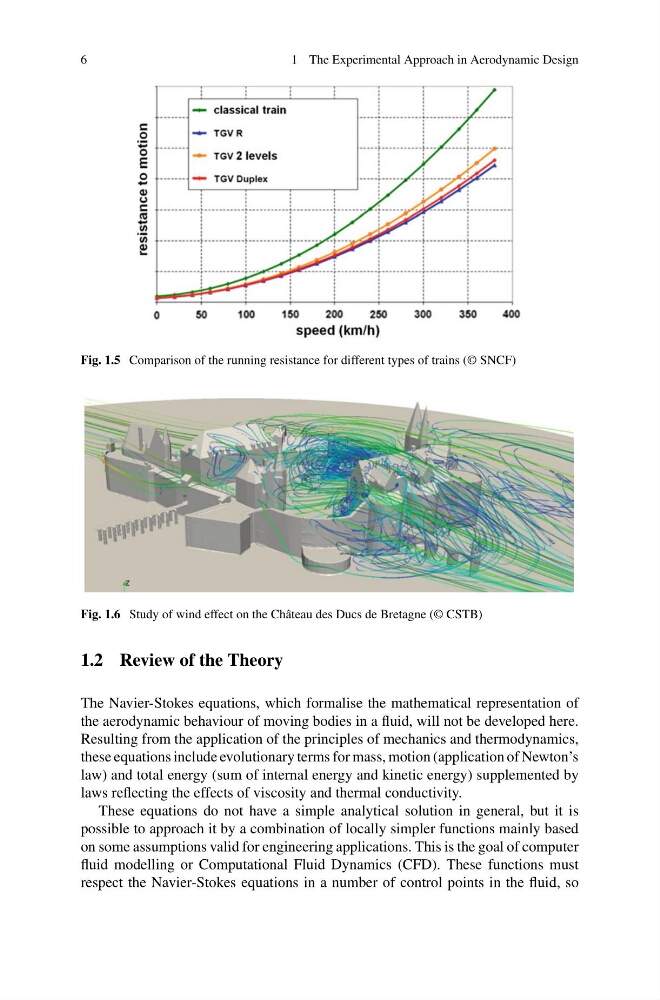
Fig. 1.5 Comparison of the running resistance for different types of trains (© SNCF)
Fig. 1.6 Study of wind effect on the Château des Ducs de Bretagne (© CSTB)
1.2 Review of the Theory
The Navier-Stokes equations, which formalise the mathematical representation of
the aerodynamic behaviour of moving bodies in a fluid, will not be developed here.
Resulting from the application of the principles of mechanics and thermodynamics,
these equations include evolutionary terms for mass, motion (application of Newton’s
law) and total energy (sum of internal energy and kinetic energy) supplemented by
laws reflecting the effects of viscosity and thermal conductivity.
These equations do not have a simple analytical solution in general, but it is
possible to approach it by a combination of locally simpler functions mainly based
on some assumptions valid for engineering applications. This is the goal of computer
fluid modelling or Computational Fluid Dynamics (CFD). These functions must
respect the Navier-Stokes equations in a number of control points in the fluid, so
1 The Experimental Approach in Aerodynamic Design
Fig. 1.5 Comparison of the running resistance for different types of trains (© SNCF)
Fig. 1.6 Study of wind effect on the Château des Ducs de Bretagne (© CSTB)
1.2 Review of the Theory
The Navier-Stokes equations, which formalise the mathematical representation of
the aerodynamic behaviour of moving bodies in a fluid, will not be developed here.
Resulting from the application of the principles of mechanics and thermodynamics,
these equations include evolutionary terms for mass, motion (application of Newton’s
law) and total energy (sum of internal energy and kinetic energy) supplemented by
laws reflecting the effects of viscosity and thermal conductivity.
These equations do not have a simple analytical solution in general, but it is
possible to approach it by a combination of locally simpler functions mainly based
on some assumptions valid for engineering applications. This is the goal of computer
fluid modelling or Computational Fluid Dynamics (CFD). These functions must
respect the Navier-Stokes equations in a number of control points in the fluid, so