

270
12 Laser Spectroscopy and Electron Beam Excitation
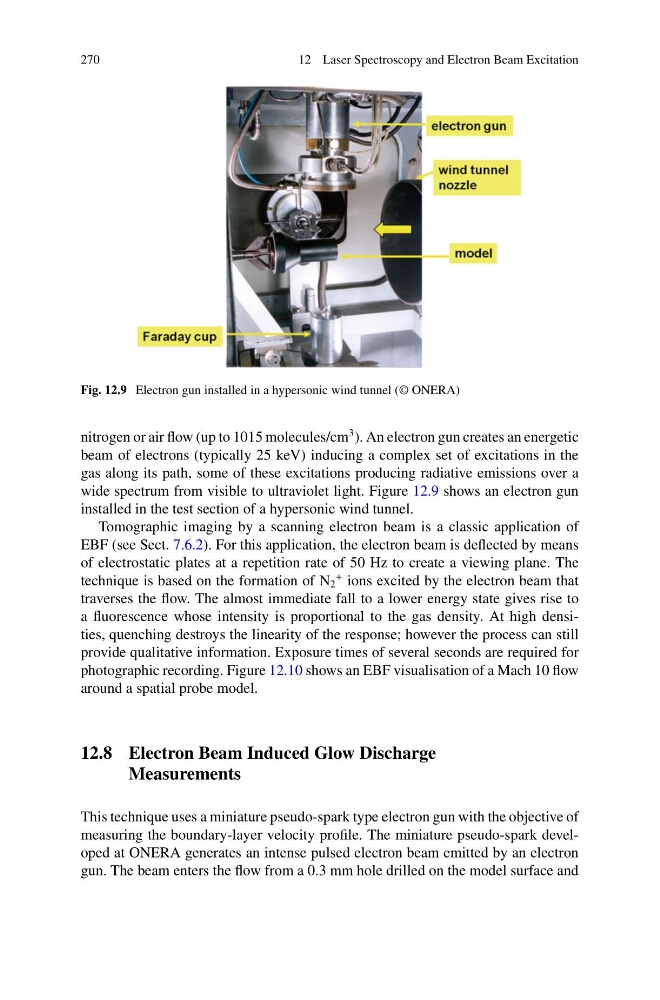
Fig. 12.9 Electron gun installed in a hypersonic wind tunnel (© ONERA)
nitrogen or air flow (up to 1015 molecules/cm
3 ). An electron gun creates an energetic
beam of electrons (typically 25 keV) inducing a complex set of excitations in the
gas along its path, some of these excitations producing radiative emissions over a
wide spectrum from visible to ultraviolet light. Figure 12.9 shows an electron gun
installed in the test section of a hypersonic wind tunnel.
Tomographic imaging by a scanning electron beam is a classic application of
EBF (see Sect. 7.6.2). For this application, the electron beam is deflected by means
of electrostatic plates at a repetition rate of 50 Hz to create a viewing plane. The
technique is based on the formation of N 2
+ ions excited by the electron beam that
traverses the flow. The almost immediate fall to a lower energy state gives rise to
a fluorescence whose intensity is proportional to the gas density. At high densities, quenching destroys the linearity of the response; however the process can still
provide qualitative information. Exposure times of several seconds are required for
photographic recording. Figure 12.10 shows an EBF visualisation of a Mach 10 flow
around a spatial probe model.
12.8 Electron Beam Induced Glow Discharge
Measurements
This technique uses a miniature pseudo-spark type electron gun with the objective of
measuring the boundary-layer velocity profile. The miniature pseudo-spark developed at ONERA generates an intense pulsed electron beam emitted by an electron
gun. The beam enters the flow from a 0.3 mm hole drilled on the model surface and
12 Laser Spectroscopy and Electron Beam Excitation
Fig. 12.9 Electron gun installed in a hypersonic wind tunnel (© ONERA)
nitrogen or air flow (up to 1015 molecules/cm
3 ). An electron gun creates an energetic
beam of electrons (typically 25 keV) inducing a complex set of excitations in the
gas along its path, some of these excitations producing radiative emissions over a
wide spectrum from visible to ultraviolet light. Figure 12.9 shows an electron gun
installed in the test section of a hypersonic wind tunnel.
Tomographic imaging by a scanning electron beam is a classic application of
EBF (see Sect. 7.6.2). For this application, the electron beam is deflected by means
of electrostatic plates at a repetition rate of 50 Hz to create a viewing plane. The
technique is based on the formation of N 2
+ ions excited by the electron beam that
traverses the flow. The almost immediate fall to a lower energy state gives rise to
a fluorescence whose intensity is proportional to the gas density. At high densities, quenching destroys the linearity of the response; however the process can still
provide qualitative information. Exposure times of several seconds are required for
photographic recording. Figure 12.10 shows an EBF visualisation of a Mach 10 flow
around a spatial probe model.
12.8 Electron Beam Induced Glow Discharge
Measurements
This technique uses a miniature pseudo-spark type electron gun with the objective of
measuring the boundary-layer velocity profile. The miniature pseudo-spark developed at ONERA generates an intense pulsed electron beam emitted by an electron
gun. The beam enters the flow from a 0.3 mm hole drilled on the model surface and