

11.4 Laser Doppler Velocimetry or Anemometry
249
well sealed and the ejection is well controlled. Also, the personnel are equipped
with appropriate breathing equipment for prolonged exposure.
– Particles can also adhere to the windows of the test section and blur the view of
the collecting optics. This will result in a drop in sample rate, decrease validation
level and increase uncertainty.
Several types of particles were/are commonly used, a cheap one being incense
smoke. Others are atomised silicon, and olive oil and DEHS (di-ethyl-hexyl-sebacate)
which normally requires a high-pressure atomiser as well for oxides of aluminium
and zinc for high temperature flows. In addition, to the issue of particle entrainment
mentioned above, statistical bias can be introduced by different particle types depending on the location of measurements. In swirling flows or vortices, the centrifugal
force acts to eject the particles away from their centre resulting in poor seeding concentration in that region, an issue also encountered in separated flows due to the low
momentum of the fluid within the recirculation zone. These issues are encountered
during PIV measurements as well which will be covered in Sect. 11.6.
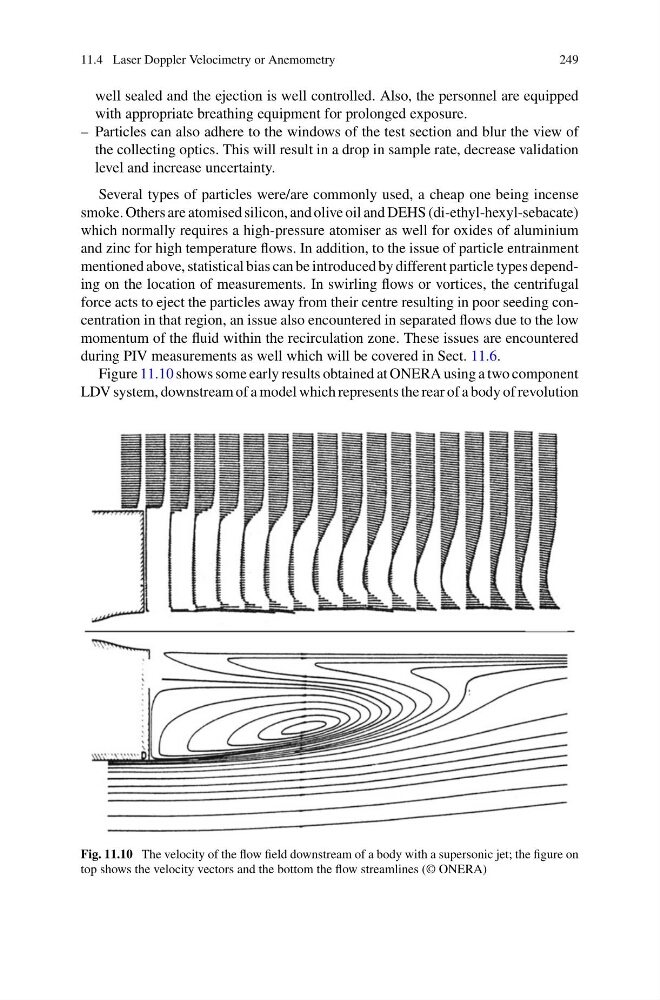
Figure 11.10 shows some early results obtained at ONERA using a two component
LDV system, downstream of a model which represents the rear of a body of revolution
Fig. 11.10 The velocity of the flow field downstream of a body with a supersonic jet; the figure on
top shows the velocity vectors and the bottom the flow streamlines (© ONERA)
249
well sealed and the ejection is well controlled. Also, the personnel are equipped
with appropriate breathing equipment for prolonged exposure.
– Particles can also adhere to the windows of the test section and blur the view of
the collecting optics. This will result in a drop in sample rate, decrease validation
level and increase uncertainty.
Several types of particles were/are commonly used, a cheap one being incense
smoke. Others are atomised silicon, and olive oil and DEHS (di-ethyl-hexyl-sebacate)
which normally requires a high-pressure atomiser as well for oxides of aluminium
and zinc for high temperature flows. In addition, to the issue of particle entrainment
mentioned above, statistical bias can be introduced by different particle types depending on the location of measurements. In swirling flows or vortices, the centrifugal
force acts to eject the particles away from their centre resulting in poor seeding concentration in that region, an issue also encountered in separated flows due to the low
momentum of the fluid within the recirculation zone. These issues are encountered
during PIV measurements as well which will be covered in Sect. 11.6.
Figure 11.10 shows some early results obtained at ONERA using a two component
LDV system, downstream of a model which represents the rear of a body of revolution
Fig. 11.10 The velocity of the flow field downstream of a body with a supersonic jet; the figure on
top shows the velocity vectors and the bottom the flow streamlines (© ONERA)