

202
9 Characterisation of Flow Properties at the Surface
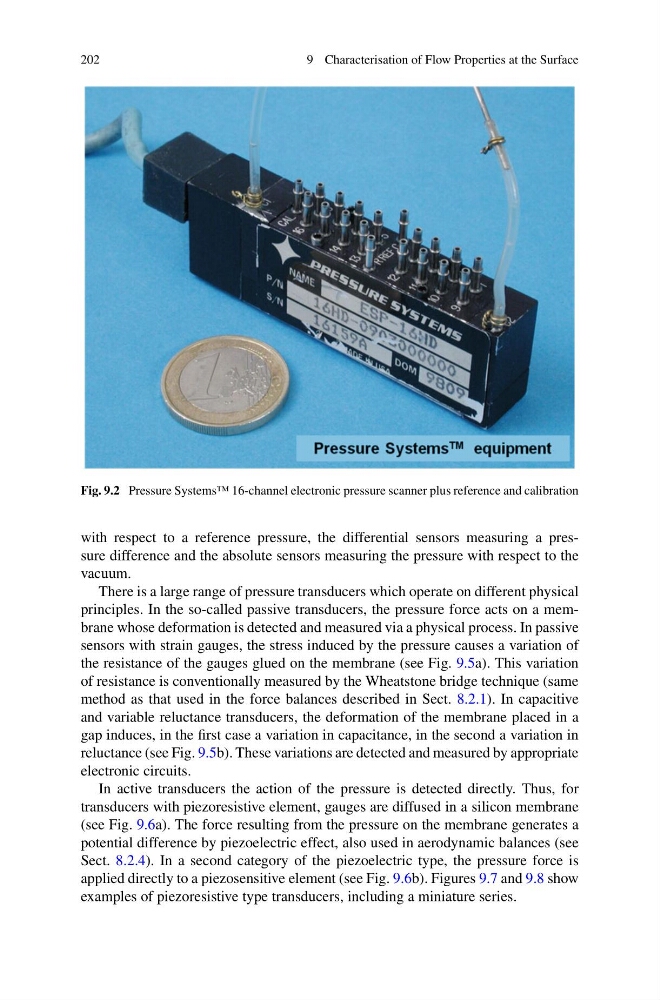
Fig. 9.2 Pressure Systems™ 16-channel electronic pressure scanner plus reference and calibration
with respect to a reference pressure, the differential sensors measuring a pressure difference and the absolute sensors measuring the pressure with respect to the
vacuum.
There is a large range of pressure transducers which operate on different physical
principles. In the so-called passive transducers, the pressure force acts on a membrane whose deformation is detected and measured via a physical process. In passive
sensors with strain gauges, the stress induced by the pressure causes a variation of
the resistance of the gauges glued on the membrane (see Fig. 9.5a). This variation
of resistance is conventionally measured by the Wheatstone bridge technique (same
method as that used in the force balances described in Sect. 8.2.1). In capacitive
and variable reluctance transducers, the deformation of the membrane placed in a
gap induces, in the first case a variation in capacitance, in the second a variation in
reluctance (see Fig. 9.5b). These variations are detected and measured by appropriate
electronic circuits.
In active transducers the action of the pressure is detected directly. Thus, for
transducers with piezoresistive element, gauges are diffused in a silicon membrane
(see Fig. 9.6a). The force resulting from the pressure on the membrane generates a
potential difference by piezoelectric effect, also used in aerodynamic balances (see
Sect. 8.2.4). In a second category of the piezoelectric type, the pressure force is
applied directly to a piezosensitive element (see Fig. 9.6b). Figures 9.7 and 9.8 show
examples of piezoresistive type transducers, including a miniature series.
9 Characterisation of Flow Properties at the Surface
Fig. 9.2 Pressure Systems™ 16-channel electronic pressure scanner plus reference and calibration
with respect to a reference pressure, the differential sensors measuring a pressure difference and the absolute sensors measuring the pressure with respect to the
vacuum.
There is a large range of pressure transducers which operate on different physical
principles. In the so-called passive transducers, the pressure force acts on a membrane whose deformation is detected and measured via a physical process. In passive
sensors with strain gauges, the stress induced by the pressure causes a variation of
the resistance of the gauges glued on the membrane (see Fig. 9.5a). This variation
of resistance is conventionally measured by the Wheatstone bridge technique (same
method as that used in the force balances described in Sect. 8.2.1). In capacitive
and variable reluctance transducers, the deformation of the membrane placed in a
gap induces, in the first case a variation in capacitance, in the second a variation in
reluctance (see Fig. 9.5b). These variations are detected and measured by appropriate
electronic circuits.
In active transducers the action of the pressure is detected directly. Thus, for
transducers with piezoresistive element, gauges are diffused in a silicon membrane
(see Fig. 9.6a). The force resulting from the pressure on the membrane generates a
potential difference by piezoelectric effect, also used in aerodynamic balances (see
Sect. 8.2.4). In a second category of the piezoelectric type, the pressure force is
applied directly to a piezosensitive element (see Fig. 9.6b). Figures 9.7 and 9.8 show
examples of piezoresistive type transducers, including a miniature series.