

9.2 Measurement of Pressure at the Wall
201
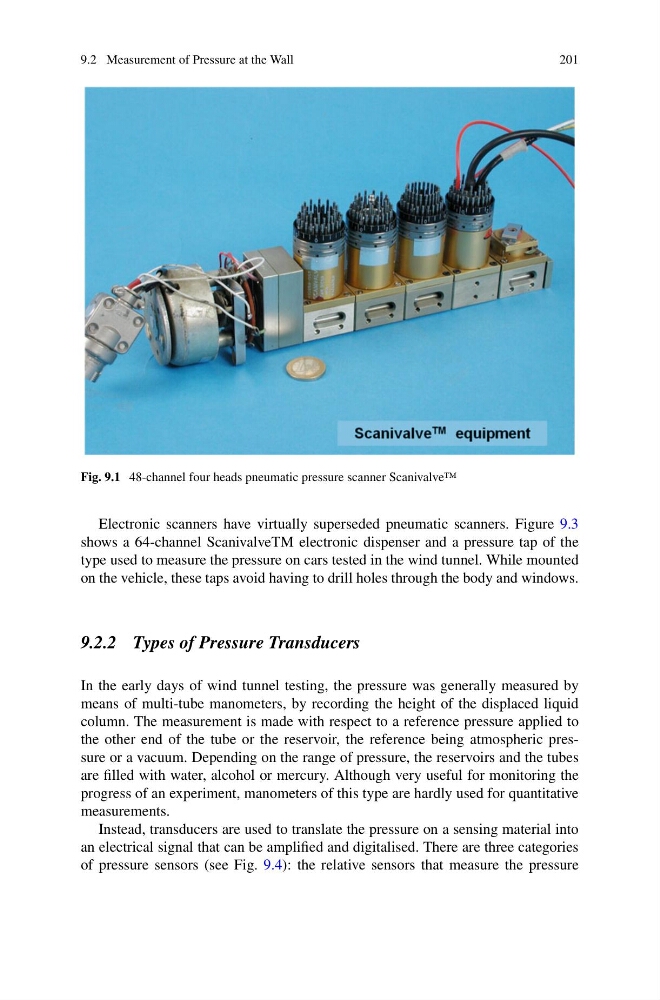
Fig. 9.1 48-channel four heads pneumatic pressure scanner Scanivalve™
Electronic scanners have virtually superseded pneumatic scanners. Figure 9.3
shows a 64-channel ScanivalveTM electronic dispenser and a pressure tap of the
type used to measure the pressure on cars tested in the wind tunnel. While mounted
on the vehicle, these taps avoid having to drill holes through the body and windows.
9.2.2 Types of Pressure Transducers
In the early days of wind tunnel testing, the pressure was generally measured by
means of multi-tube manometers, by recording the height of the displaced liquid
column. The measurement is made with respect to a reference pressure applied to
the other end of the tube or the reservoir, the reference being atmospheric pressure or a vacuum. Depending on the range of pressure, the reservoirs and the tubes
are filled with water, alcohol or mercury. Although very useful for monitoring the
progress of an experiment, manometers of this type are hardly used for quantitative
measurements.
Instead, transducers are used to translate the pressure on a sensing material into
an electrical signal that can be amplified and digitalised. There are three categories
of pressure sensors (see Fig. 9.4): the relative sensors that measure the pressure
201
Fig. 9.1 48-channel four heads pneumatic pressure scanner Scanivalve™
Electronic scanners have virtually superseded pneumatic scanners. Figure 9.3
shows a 64-channel ScanivalveTM electronic dispenser and a pressure tap of the
type used to measure the pressure on cars tested in the wind tunnel. While mounted
on the vehicle, these taps avoid having to drill holes through the body and windows.
9.2.2 Types of Pressure Transducers
In the early days of wind tunnel testing, the pressure was generally measured by
means of multi-tube manometers, by recording the height of the displaced liquid
column. The measurement is made with respect to a reference pressure applied to
the other end of the tube or the reservoir, the reference being atmospheric pressure or a vacuum. Depending on the range of pressure, the reservoirs and the tubes
are filled with water, alcohol or mercury. Although very useful for monitoring the
progress of an experiment, manometers of this type are hardly used for quantitative
measurements.
Instead, transducers are used to translate the pressure on a sensing material into
an electrical signal that can be amplified and digitalised. There are three categories
of pressure sensors (see Fig. 9.4): the relative sensors that measure the pressure